External risks are related to commodity price pressures, supply chain disruptions, weakening external demand, and global financial conditions.
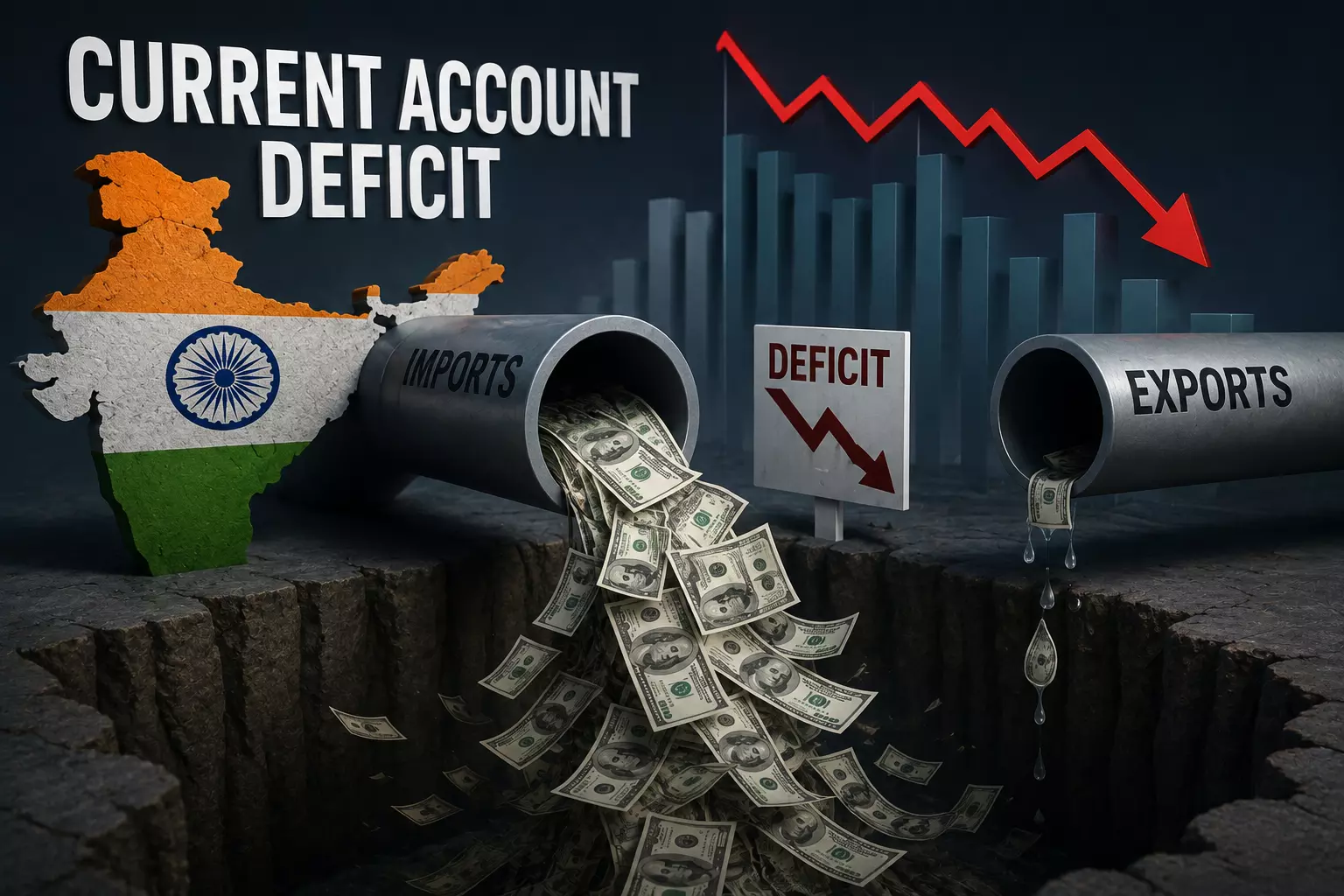
Chennai: India’s Current Account Deficit is expected to increase to 2 per cent of GDP in FY27 from estimated 0.9 per cent in FY26, finds the IMF. India should prioritize reducing import restrictions, especially on intermediate goods, while continuing to improve the business environment to boost private investment and liberalize the FDI regime. Policies should promote transparent, predictable, and mutually beneficial trade policy frameworks.
Buoyant service exports and inward remittances contained the current account deficit at an estimated 0.9 per cent of GDP in FY26, despite precious metal price increases. The CA deficit is expected to increase to 2 per cent of GDP in FY27, reflecting higher commodity prices, before narrowing as commodity prices normalize and then converging close to its estimated norm over the medium term.
External risks are related to commodity price pressures, supply chain disruptions, weakening external demand, and global financial conditions.
India is subject to reduced US tariffs following the interim agreement and the US Supreme Court decision in February 2026 has made progress on bilateral free trade agreements, including with the EU, and has taken incremental steps to lower tariffs and non-tariff trade restrictions. At the same time, its trade and capital account regimes remain relatively restricted, weighing on both exports and imports.
To facilitate medium-term external rebalancing, priority should be given to further reducing import restrictions, especially on intermediate goods, while continuing to improve the business environment to boost private investment and liberalize the FDI regime.
Policies should promote transparent, predictable, and mutually beneficial trade policy frameworks. These efforts should be complemented by the development of trade infrastructure and continued expansion of trade networks.
Industrial policies should be pursued cautiously, remain narrowly targeted to specific objectives where externalities or market failures prevent effective market solutions, and aim to minimize trade and investment distortions.
Exchange rate flexibility should act as the main shock absorber, with intervention limited to periods marked by destabilizing risk premiums.
The IMF also found that gross domestic savings in FY26 are estimated to have slightly declined by 0.8 percentage points to 32.9 per cent of GDP, driven by a rise in private consumption. Gross domestic investment declined by an estimated 0.5 percentage points to 33.9 per cent of GDP, reflecting US tariff hikes and trade policy uncertainty.
The Indian rupee came under depreciation pressure, as India faced 50 per cent additional US tariffs from August 2025 to February 2026. Although US tariffs have since been reduced markedly, commodity price pressures stemming from the conflict in the Middle East and India’s exposure to energy price shocks have contributed to sizable portfolio equity outflows, and INR depreciated by more than 5 percent over January–March 2026.