IIT-M Unveils ThinnAI for Road Safety at India AI Impact Summit

This approach falls under the broader ‘3 Gate Licensing Model’ proposed by IIT-M, focusing on creating responsible road users, rather than merely granting licence
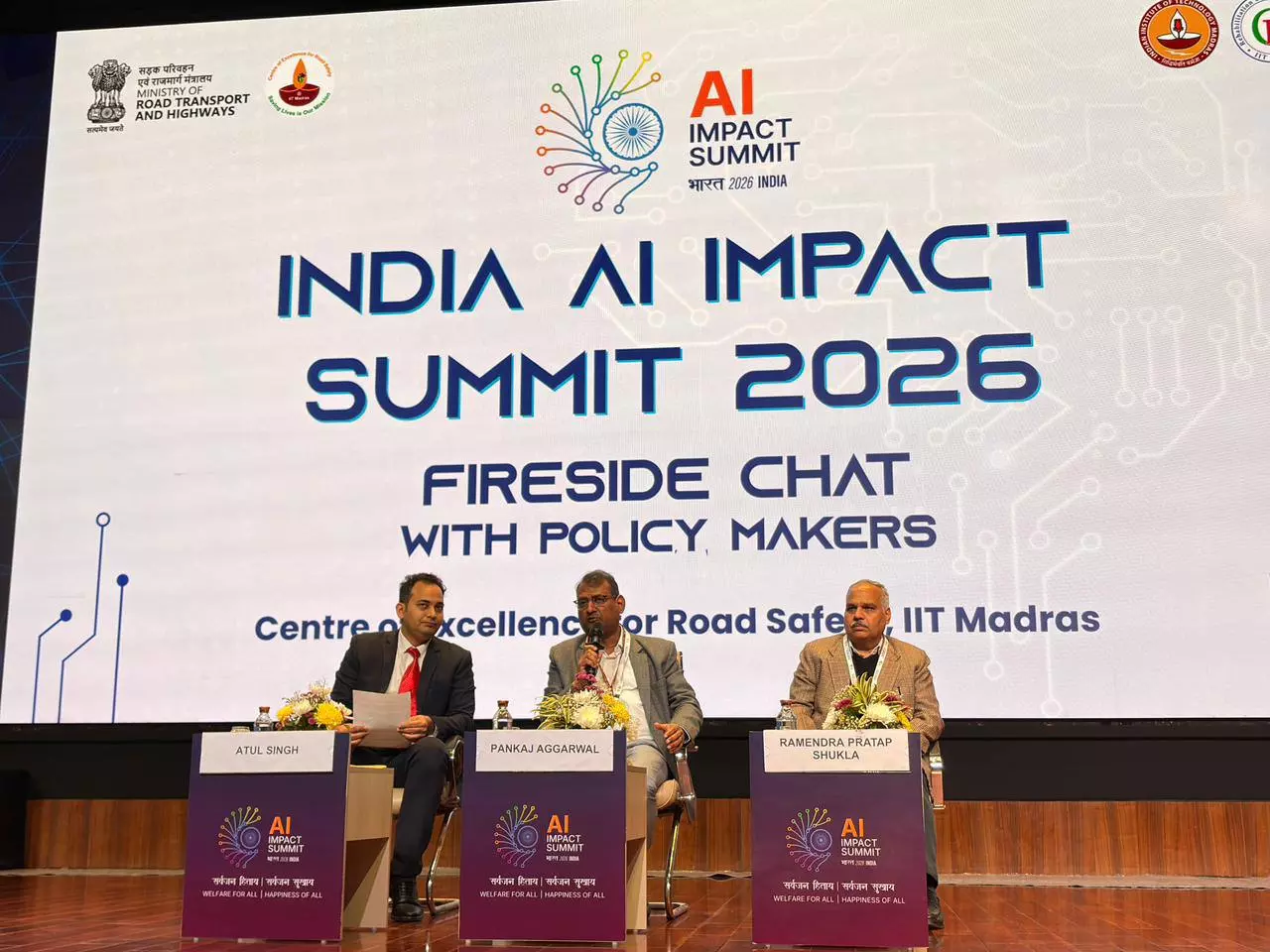
Chennai: At the India AI Impact Summit 2026, held in Delhi, the Centre of Excellence for Road Safety (CoERS) of the Indian Institute of Technology Madras (IIT-M) unveiled ‘ThinnAI’, a personalised, AI-enabled, driver training platform, designed to address India’s road safety crisis by improving driver readiness and enhancing the effectiveness of the licensing process.
The launch of ThinnAI, during the ‘AI for Road Safety’ session, is a response to the country’s alarming road fatality rate, estimated at approximately 1.7 lakh annually.
By moving beyond traditional rote memorisation and focusing on practical skills, ThinnAI promises to revolutionise pre-licensing education and create a safer driving culture across the nation.
ThinnAI targets first-time drivers even before they obtain their learner’s licence, offering a comprehensive, video game-like experience that evaluates knowledge of traffic signs, road rules, motor vehicles, cognitive abilities and physical readiness.
The platform, which operates with zero human intervention, utilizes artificial intelligence to assess and personalise training to ensure that aspiring drivers gain not only the knowledge to pass a test but also critical thinking and behavioural discipline needed for safe driving.
Prof. Venkatesh Balasubramanian, head of CoERS, and Faculty at the Department of Engineering Design, IIT-M, highlighted the importance of behaviour change in road safety. He explained, “Driving is a skill that must be learned, and through controlled learning, good habits form. ThinnAI isn’t just about helping people pass a driving test; it’s about building responsible, aware and well-prepared road-users.”
The platform combines adaptive learning with behavioural science and AI to create a customised learning experience for each user, equipping them with the cognitive skills necessary for risk perception, situational awareness and sound judgment – all crucial for becoming a responsible driver.
This approach falls under the broader ‘3 Gate Licensing Model’ proposed by IIT-M, focusing on creating responsible road users, rather than merely granting licences.
Pankaj Agarwal, chief engineer at the ministry of road transport and highways (MoRTH), emphasised that ThinnAI will serve as a vital tool for preparing young minds for the responsibilities of driving and contributing to the country’s road safety culture.
In addition to the launch of ThinnAI, IIT-M also introduced other initiatives designed to improve road safety governance.
These include RATH, an AI-driven data platform for road safety stakeholders, and the data-driven hyperlocal interventions (DDHI) program, which seeks to monitor vulnerable areas through AI-based tools.
