Cotton Imports Double As Production Fall To 15-Year-Low

Industry wants the import duty to be lifted till the end of the crop year as they feel the exports of textiles will be affected
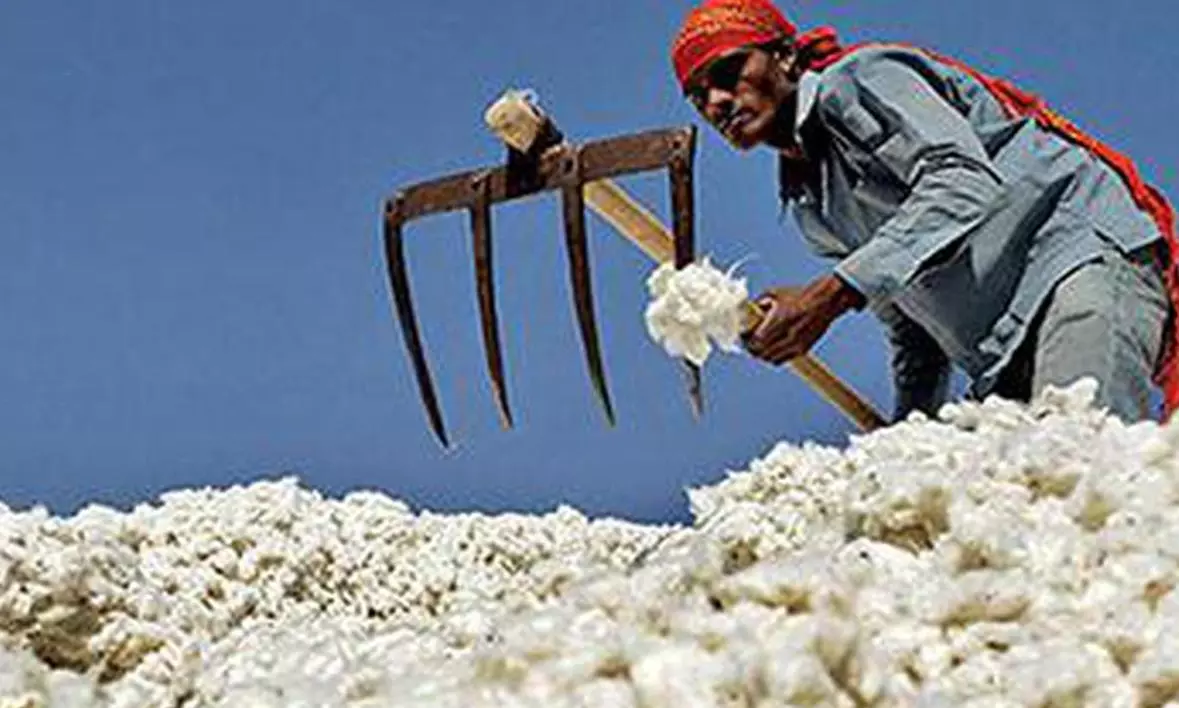
CHENNAI: Cotton imports in April-May have more than doubled compared to that in the same period last year after domestic production fell to a 15-year low. Industry wants the import duty to be lifted till the end of the crop year as they feel the exports of textiles will be affected.
In May, the country imported $102 million valued raw and waste cotton against $43.8 million in the year-ago month, a rise of 133 per cent. During April-May of this fiscal year, a total of $189 million valued cotton was imported against $81.7 million last year. Imports grew 131 per cent in the past two months.
Cotton production in the current crop year is expected to be a 15-year low of 294 million bales. “Usually, India produces 300 to 340 lakh bales and last time the country saw production falling below 300 lakh bales was in 2008-09 to 290 lakh bales. Then the consumption was 229 lakh bales. But now the consumption has gone up to 318 lakh bales,” said K Selvaraju, secretary general, Southern India Mills Association.
Owing to lower production, cotton prices have gone up and are 12 to 20 per cent higher than international prices. The government also increased the minimum support price for cotton. Despite the 11 per cent duty, the industry prefers to buy cotton from overseas markets due to the price differential.
“Further, the realization of the imported cotton is better due to less contamination,” said Chandrima Chatterjee, secretary general of Confederation of Indian Textile Industry.
According to her, the imports are likely to remain higher in the coming months owing to the shortfall in production.
“The industry wants the government to lower the duty till the end of the crop year in October. This will improve the availability of cotton for the downstream industries. The higher prices due to import duty will erode the competitiveness of Indian textiles and apparels and shrink the exports of textile products,” said Selvaraju.