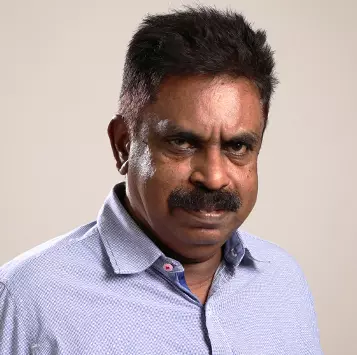
Vijay said Article 130 of the Constitution permitted the Supreme Court to sit in places other than New Delhi with the approval of the President and that Chennai would be an appropriate location for a regional bench, as it is an important centre in South India.

Chennai: Urging Prime Minister Narendra Modi to establish a bench of the Supreme Court in Chennai, Chief Minister C Joseph Vijay on Wednesday said the distance and cost involved in travelling to New Delhi had made access to remedies under Article 32 of the Constitution difficult for citizens, particularly those from southern states and economically weaker sections.
In his letter to the Prime Minister on Wednesday, Vijay said that the demand was first raised by Tamil Nadu in 1980, considering the difficulties faced by litigants from southern states who had to travel to New Delhi to seek justice from the apex court.
The revival of the State’s long-pending demand to improve access to justice for people in the southern states by Vijay gave a new hope to litigants from south India who had been undergoing hardships in approaching the Supreme Court for legal remedies.
Vijay said Article 130 of the Constitution permitted the Supreme Court to sit in places other than New Delhi with the approval of the President and that Chennai would be an appropriate location for a regional bench, as it is an important centre in South India.
He also recalled that the Supreme Court, at a meeting on August 7, 2007, found no justification for changing its earlier resolutions on setting up regional benches, despite Tamil Nadu's assurance that it would provide the required infrastructure and residential facilities for judges.
Vijay referred to a 2016 case of a five-member Constitution Bench of the Supreme Court, V Vasanthakumar vs H C Bhatia and others, and cited the recommendations made by the Parliamentary Standing Committees in 2004, 2006, 2008, and 2021, as well as Law Commission reports supporting permanent regional Benches.
The bench in Chennai would strengthen the federal character of the country without affecting judicial independence, as administrative control would continue to remain with the Chief Justice of India, he said.