Stalin Moves Special Resolution to Continue NREGA

He demanded that the scheme should continue to be named after Mahatma Gandhi in remembrance of the principles laid down and the path he had shown for the nation.
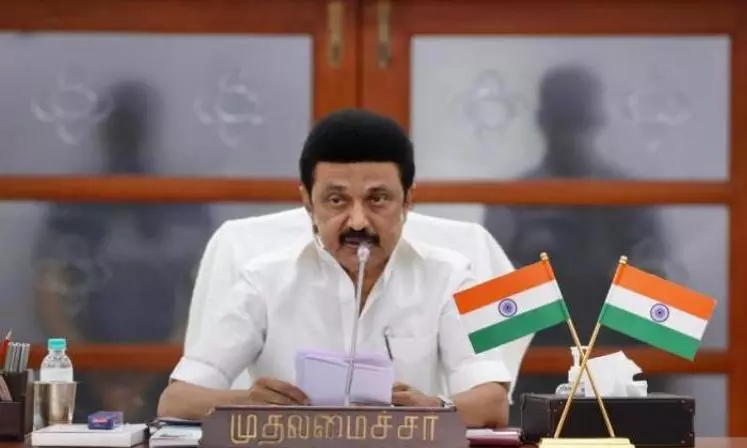
Chennai: Urging the Union Government to protect the demand-driven nature of the Mahatma Gandhi National Rural Employment Guarantee Scheme, popularly known as the 100-day work programme, and ensure adequate fund allocation based on work demand and the performance of the State, Chief Minister M K Stalin wanted the retention of the name Mahatma Gandhi to the scheme.
Moving the special resolution in the State Assembly that was later passed on Friday, Stalin pointed out that the name of the Father of the Nation, Mahatma Gandhi, had been removed from the scheme with various intentions and it had been renamed as 'Viksit Bharat - Guarantee for Rozgar and Ajeevika Mission (Gramin) (VB-G RAM G).'
He demanded that the scheme should continue to be named after Mahatma Gandhi in remembrance of the principles laid down and the path he had shown for the nation.
The proposed new procedure of the Union Government providing allocation on a discretionary basis based on the intended assessment should be abandoned and the practice of providing allocation according to the demand for employment that was followed under MGNREGA be followed, he said.
‘That this August House unanimously urges the Union Government that the Right to Work of the people in rural areas should be established as per the Mahatma Gandhi National Rural Employment Guarantee Act, 2005,’ the resolution said, adding that it should be ensured that the allocation was not less than the allocation made in previous years under the MGNREGA.
Stressing on the need to guarantee social security by providing work continuously to protect the livelihood of women, differently abled persons, Scheduled Castes and Scheduled Tribes, he said the state governments should be allowed to formulate the procedure for allocating the funds according to the demand for employment by respecting the federal principles.
Under this new scheme, since the State Government's contribution rose to 40 percent, the financial burden on the State increased significantly and therefore, it was emphasized that the financial contribution for the new scheme should be similar to that of the MGNREGA scheme.
