Chennai Looks to NE Monsoon as Lakes Drying Up Fast

This despite the storing of Krishna water received at Poondi being sent to the Chembarambakkam reservoir.
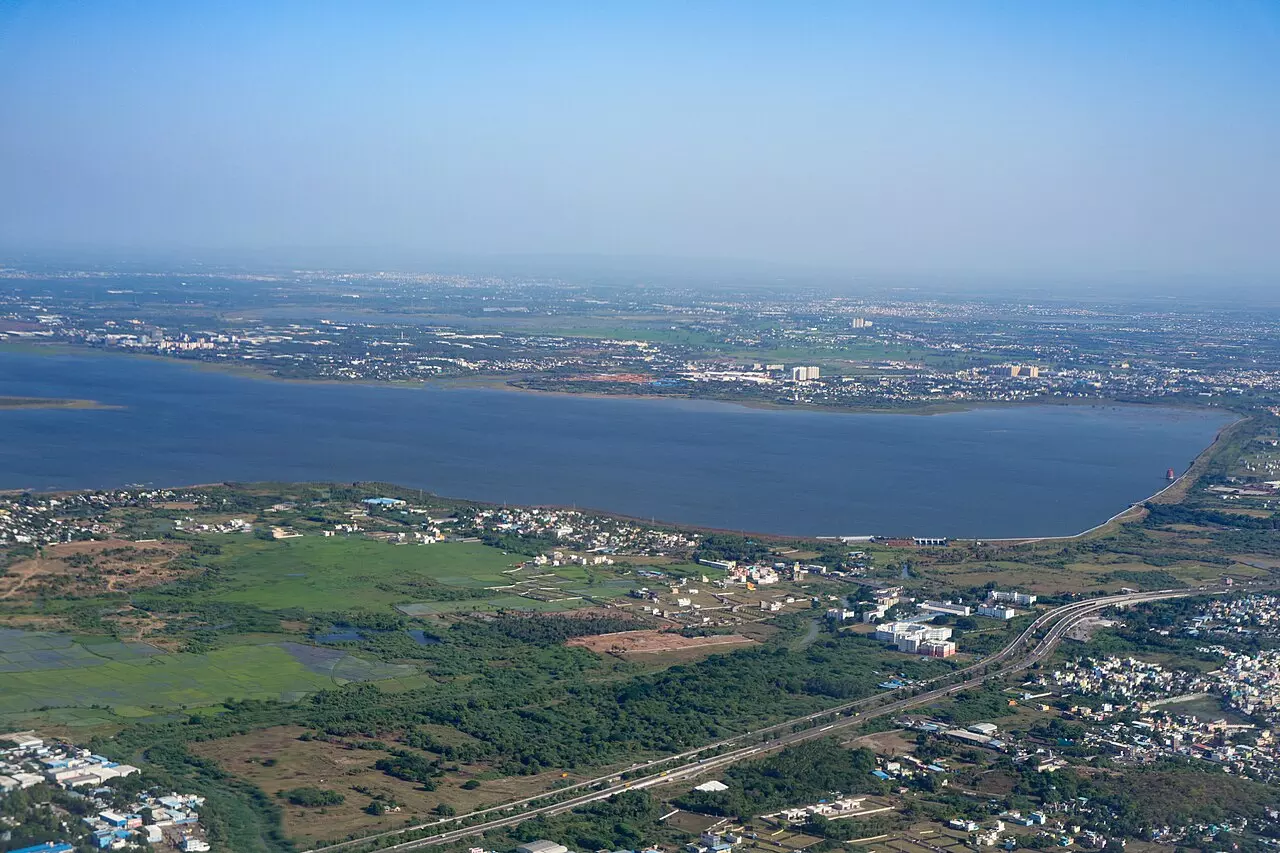
Chennai: The water storage in the lakes supplying drinking water to Chennai has come down drastically compared to the same day last year amidst predictions of reduction of rainfall due to the El nino effect this year. The total storage of water in all the lakes was 9,159 mc ft last year on the same day but now it stands at 4,976 mc ft.
Even in Chembarambakkam, the biggest reservoir providing water for Chennai, the storage of 1,305 mc ft of water is less compared to 1,830 mc ft last year. This despite the storing of Krishna water received at Poondi being sent to the Chembarambakkam reservoir.
The storage position in Chembarambakkam lake is better than last year since Krishna water being received from Andhra Pradesh is being diverted to it from the Poondi reservoir. As most parts of the lakes are dry, there is also a demand to utilise the situation to desilt the water bodies and increase their storage capacity.
At present, five reservoirs Cholavaram, Chembarambakkam, Poondi, Redhills, Kannankottai- Thervaikandigai and Veeranam Tank with a combined capacity of 13.2 tmc cater to the needs of drinking water requirements of Chennai. The annual demand of the city for drinking and industrial requirements is about 22 tmc at present.
Chembarambakkam has the highest capacity of 3,645 mc ft while Puzhal comes next with a total capacity of 3,300 mc ft and Poondi reservoir can store up to 3,231 mc ft. The full capacity of Sholavaram lake is 1.081 mc feet while the new Kannankottai Thervoy Kandigai has a storage capacity of 500 mc ft. Water is also brought from the Veeranam lake in Cuddalore district and its total capacity comes to 1,465 mc feet.
As per the Chennai Metro Water Supply and Sewerage Board (CMWSSB) statistics, the Poondi dam has 946 mc feet of water compared to 2,518 mc feet on the same day last year. The Sholavaram lake had stored 181 mc ft of water last year but the present storage is only 134 mc ft. The water stored in Puzhal stands at 1,856 mc ft at present and it was 2,924 mc ft at the same time last year.
The Veeranam lake remains dry with a storage of 475 mc ft while it was 1,270 mc ft last year. Kannankottai Thervoy Kandigai with 260 mc feet of water now too has less storage compared to last year ‘s storage of 436 mc ft at the same time.
Chembarambakkam, the biggest reservoir providing water for Chennai has 1,305 mc ft of water compared to 1,830 mc ft last year. The storage in Chembarambakkam lake is better than last year since Krishna water received at Poondi is being diverted to it. The drinking water situation is precarious and the future supply of water depends on the onset of the north-east monsoon which provides good rains in the districts surrounding the capital city.
The CMWSSB officials say they could supply drinking water for another five months since the mercury is expected to drop in October reducing the rate of evaporation. However, if the temperature remains high and water continues to evaporate, the drinking water could be supplied for only three months.
The Water Resources Department officials are taking steps to use the water in the Sikkarayapuram stone quarries in Kundrathur and they also carried out inspections. There are 23 stone quarries in Sikkarayapuram near Kundrathur and their depth ranges from 300 to 400 feet. The quarries are filled with rain water which could be purified and supplied for drinking.
In 2017 when there was severe water scarcity and even the Chembarambakkam lake too had gone dry, the officials took measures to pump out the water in the quarries using motors. It was sent to the Chembarambakkam water treatment plant and supplied after treatment. In 2019 also, the water in the stone quarries was supplied to the people of Chennai. If the onset of rains are delayed, the government is planning to use the water in the Sikkarayapuram stone quarries.
The desalination plants will continue to provide water to the city and its suburbs but the water supply depends on the reservoirs also. There was scarcity of filters in the desalination plants but the supply of filters is increasing gradually.
Metro water is carrying out works to avoid leakage in the pipes supplying water to the houses. The government will also regulate the timings for water supply and create awareness on using water economically. The officials also point out that the Indian Meteorological Department has predicted the onset of northeast monsoon in the second or third week of October. The filling of the lakes will depend on the amount of rain received in the suburban districts where the reservoirs supplying drinking water to Chennai are located.
In the long term, the “Greater Chennai Water Supply Augmentation and Flood Mitigation Resilient to Climate Change” at a budget of Rs. 22.004 crore is planned. This comes after the unprecedented climatic changes of high temperature and heavy floods caused by the impact of climate change.
Unprecedented flash floods in many parts of Chennai, Kanchipuram, Chengalpet and Thiruvallur districts had been witnessed. So the project had been planned with the objective of bridging the gap between the water demand and supply. The objective of the proposal is flood mitigation and rainwater conservation for deficit years in and around the city. The plan aims at enhancing the rainwater storage capacity in the upstream of Chennai by creation of new storage structures, increasing the storage capacity of existing water bodies, improving the conveyance efficiency and interconnecting the feasible water bodies.
An additional 20.5 tmc of storage capacity would be created due to the project to meet the drinking water requirements of Chennai and find permanent mitigation measures for the flood vulnerable areas in and around the city. The scheme has been formulated at an estimated cost of Rs.22,004 crore tentatively.
