The Housing and Urban Development Department issued the G.O following directions from the Chief Minister to Joseph Vijay
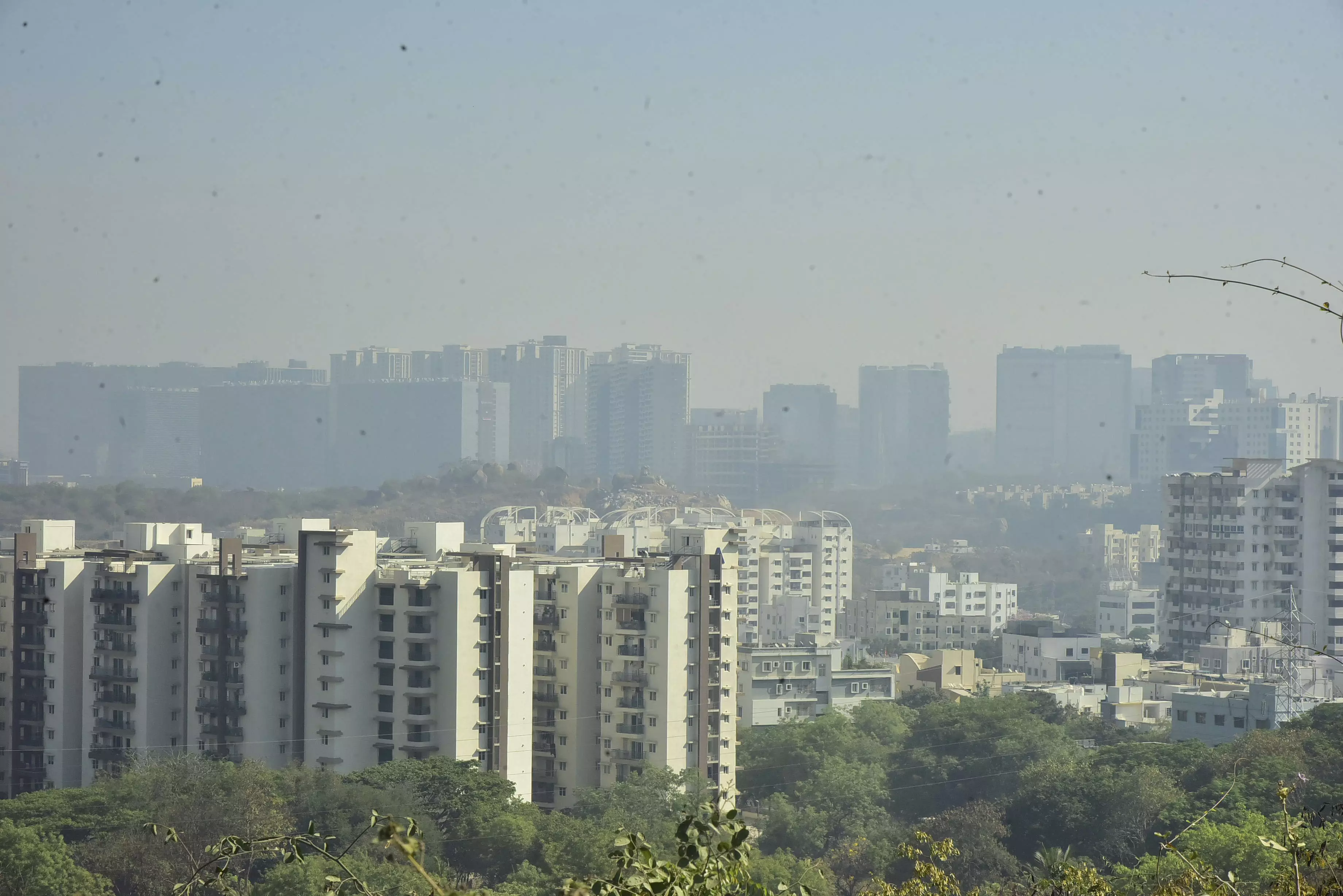
The government order of June 15 to empower the Chennai Metropolitan Development Authority (CMDA), to grant direct permission for high-rise buildings in Chennai Metropolitan Area (CMA) has come as a boost to the third master plan which envisages vertical development of the city.
Most of the cities in Europe and the United States have allowed vertical growth in a limited area while keeping a large portion of the land outside the city untouched preserving the natural surroundings, water bodies and forests. However, the discouraging of the vertical growth in the past has led to horizontal spread and expansion of the city resulting in loss of water bodies and agriculture fields.
The Housing and Urban Development Department issued the G.O following directions from the Chief Minister to Joseph Vijay. Earlier, the plans for high-rise buildings in CMA were scrutinised and forwarded to the state government with the recommendations of a panel for approval under the Tamil Nadu Combined Development of Building Rule, 2019.
The HUD noted that the government has decided to reconstitute the panel to scrutinise the plan and to empower CMDA to directly grant or refuse the plan and permission for high-rise buildings. Under the new system, applications submitted by developers will continue to undergo field inspection and be shall before a three-tier scrutiny.
The reconstituted panel will be chaired by the CMDA Member Secretary and comprise representatives from the Directorate of Fire and Rescue Services, Chennai Metropolitan Water Supply and Sewerage Board, Greater Chennai Corporation, Tamil Nadu Generation and Distribution Corporation (Tangedco), Water Resources Department, Public Works Department, Chennai Traffic Police and an independent architect. The panel will scrutinise applications, assess compliance with planning and safety norms and make recommendations to the CMDA for final approval.
City spreads over 1,189 sq. km Chennai Metropolitan Area (CMA) with a total area of 1189 sq.km and had a population of nearly five million in 2011. It is the largest urban agglomeration in India after Mumbai, Delhi and Kolkata metropolitan regions. The metropolitan area covers the entire Chennai district and parts of Thiruvallar and Kancheepuram districts. The Chennai district is 426 sq.km in area.
As per CMDA's second master plan, CMDA's population is expected to increase to 14.8 million by 2026. The Chennai City Corporation with an area of 426 sq. km has seen its population growth to nearly 4.85 million in 2011. In the same year, the city area was revised to 426 sq.km with a population of about 6.6 million.
The CMDA is planning vertical development in designated areas in the city under the third master plan. This is a major shift from the policy two decades ago when policy framework favoured horizontal development as it will create growth in suburban areas and lead to depletion of ground water and other resources.
However, the discouraging of the vertical growth in the past has led to horizontal growth expanding the city's suburban areas to the suburban areas where the same policies providing water for development of buildings were encroached and pollution. The same policy of providing transport from the heart of the city and the growth of two wheelers too has added to pollution, reduction of green cover to the city and global warming.
In 2021, the State government authorised the CMDA to review the second master plan, update rules and initiate preparations for the third master plan. CMDA has started the preparation of the third master plan which will be implemented from 2021 to 2046 under the World Bank-assisted Tamil Nadu Housing and Urban Habitat Development Project (TNHUDP).
The third master plan aims to upgrade Chennai city to the levels of modern cities like Singapore, Barcelona and Manchester. The CMDA had identified nine fast growing centres in the city. The government is planning to develop Chennai, Poonamallee, Thiruvallar, Thirumudivakkam, Minjur and Maraimalainagar as major urban centres.
The Floor Space Index (FSI) in key areas will be raised to allow for larger buildings on existing plots, facilitating growth upwards instead of outwards. The FSI increase will be focused on areas with existing infrastructure such as metro corridors, commercial hubs and industrial belts to maximise land use and align vertical development with transport works. The master plan will allow the existence of residential, commercial and institutional spaces within the same zone to reduce commutation time and improve accessibility. The strategy will be to enhance the integrated traffic networks and reduce reliance on private vehicles.
The vertical growth prevents outward expansion which causes pollution and environmental strain. The plan will help people to live closer to the workplaces and have the transport hubs and vertical development offers a solution to the housing problem by providing homes to people without consuming vast stretches of agricultural land.
The first master plan for the Madras Metropolitan Area which is now the Chennai Metropolitan Area (CMA) was formulated in 1976. The main objective of the first plan was decongesting the city, boosting the regional economy and providing necessary facilities and infrastructure for the growth of the region. Under this plan, areas including Ambattur, Avadi, Minjur, Ennore, Manali and Sholinganallur were linked to Chennai.
The effective implementation of the first master plan was the foundation for the second master plan 2006-2026. This was aimed to create a more compact city while addressing the environmental and sustainable development challenges, including flood management, traffic control, increasing green cover and conservation of water bodies.
The construction of the Kilambakkam and Muttukadu link road, the Madhavaram bus terminus and the MRTS formation of metro rail projects form part of the second master plan. It also included establishing regulatory framework for ecologically sensitive zones and established regulations for catchment and aquifer recharge zones, limiting development and discouraging high-density construction within these zones. The second plan also implemented various regulatory measures and developmental rights including premium floor space index, transfer of development rights to effectively attain its stated objectives.