13th Century Hero Stone Helps Understand Medieval History

In view of the relative rarity of inscriptions from the period of Vira Vishwanatha in Tamil Nadu, this discovery represents a significant documentary source for further research into the region’s medieval political history
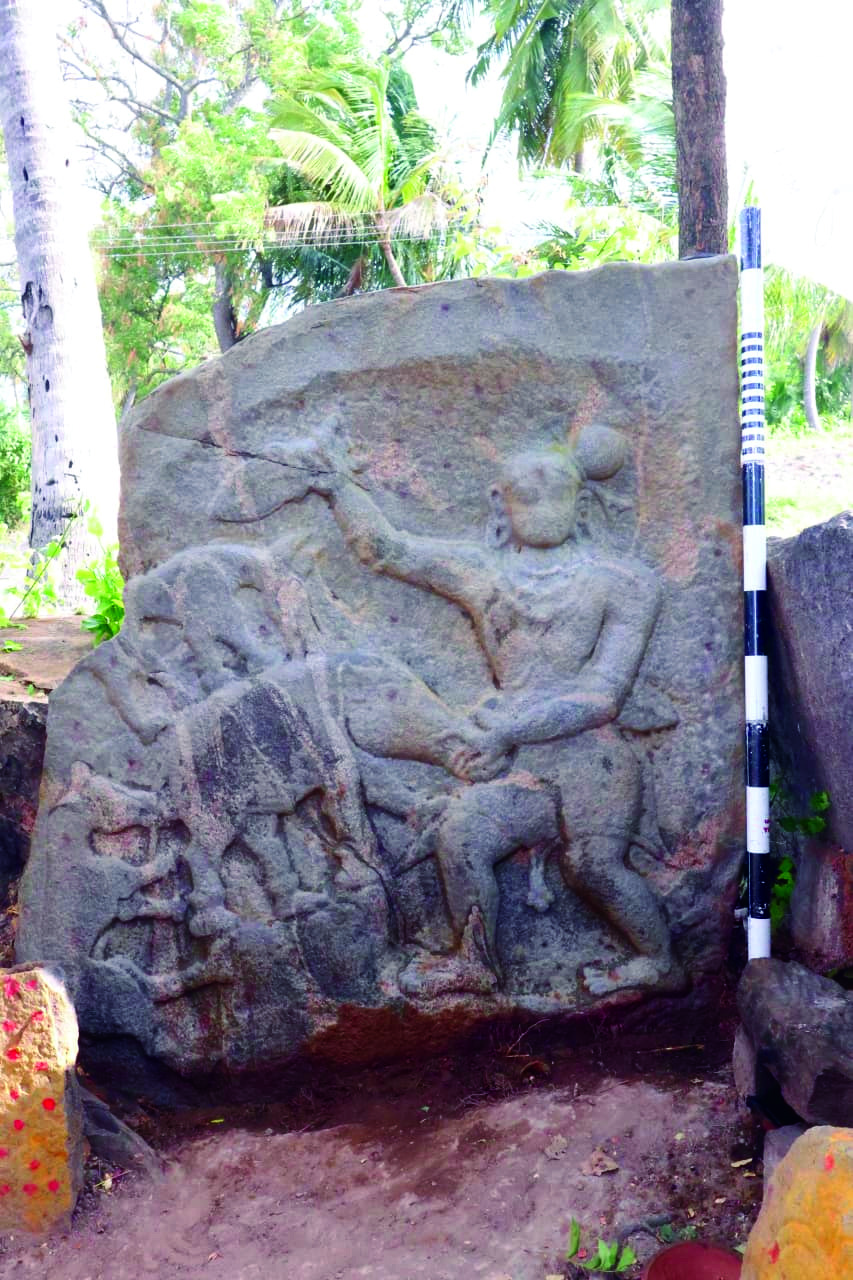
COIMBATORE: On the discovery and documentation of a 13th-century hero stone at Sottandahalli, in Palacode taluk limits in Dharmapuri, Kumaravel Ramasamy said its sculptures are published in the KHRD Blog. Further studies showed it dates to 1299 CE, during the reign of Vira Vishwanatha.
The inscribed stone slab measures approximately 94 cm in height, 110 cm in width, and 17 cm in thickness.
The king’s name appears in the inscription as Vira Vijayanadevar, a form associated with the name Vira Vishwanatha in local usage.
The inscription identifies his grandfather as Vira Someshwara and his father as Vira Ramanatha. These genealogical references provide important evidence for studying the Hoysala royal lineage and its political connections with the Tagadur region.
In view of the relative rarity of inscriptions from the period of Vira Vishwanatha in Tamil Nadu, this discovery represents a significant documentary source for further research into the region’s medieval political history.
“The inscription commemorates a warrior named Umaidevan, who died while protecting the settlement against wild boars. It also mentions a place called Simidayattru Pulikkal and a local authority named Adhikari Velali Puliyan. These details contribute to our understanding of settlement history, local leadership, and the responsibilities associated with protecting communities and their resources. The hero stone measures approximately 123 cm in height, 113 cm in width, and 16 cm in thickness. Its sculptural details include a short sword in the warrior’s right hand, ear ornaments, necklaces, armlets or warrior’s bracelets, and a waistcloth secured with a clothing belt. Hunting dogs and a wild boar are also depicted, providing visual evidence of the circumstances associated with the warrior’s death,” N. Bala added.
Elaborating on the significance of the discoveries, Sudhakar Nalliyappan said the two newly-documented hero stones in the Dharmapuri region offer valuable evidence for understanding different periods of Tamil Nadu’s history.
The Malluthu inscription sheds light on 6th century political relationships, cattle-related conflicts, social hierarchy and early Tamil inscriptional practices.
The Sottandahalli inscription contributes to the study of 13th century political genealogy, local administration, settlement protection and the cultural practice of commemorating warriors.
Together, the inscriptions demonstrate the historical value of hero stones as primary sources for studying political authority, social organisation, regional language practices and the relationship between communities and their landscapes. Their combination of inscriptions and sculptural representations also provides opportunities to investigate changes in weaponry, ornaments, clothing and commemorative traditions across different historical periods, he added.
The Yaakkai Trust field documentation adds to the archaeological record of Dharmapuri district and highlights the importance of systematic field research in identifying, documenting, and preserving Tamil Nadu’s historical heritage, he added.
