Man-animal conflict wreaks havoc in Kerala as loss of human lives, damage to crops, livestock, and property increase alarmingly: Reports
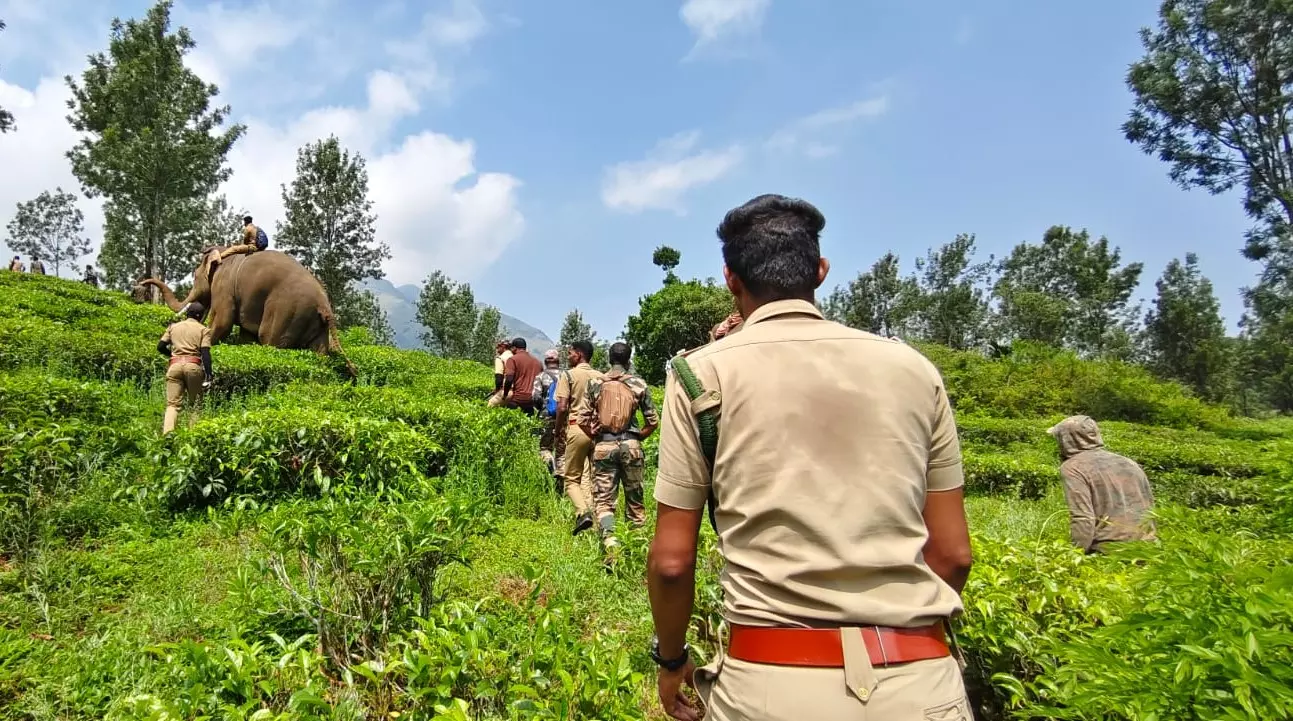
GILVESTER ASSARY: Kerala is witnessing an unprecedented surge in man-animal conflicts, with frequent attacks by elephants, wild boars, tigers and leopards claiming lives and causing widespread damage to crops and livestock besides injecting fear among the people.
Districts like Wayanad, Idukki and Palakkad are at the epicentre of this crisis, but threat has spread to other areas including Malappuram, Kannur, Thrissur, Kozhikode, Idukki, Pathanamthitta , Kottayam and Thiruvananthapuram.
With Palakkad and Wayanad reporting the highest mortality rates, the situation demands immediate attention and action.
Living in fear
This year alone, 27 people have lost their lives to wildlife attacks. As many as 460 people were killed and 4530 suffered injuries in similar incidents, reflecting the scale of the problem.
Life hangs in the balance for residents living in the shadow of wild animal attacks. The threat is constant, and the outcome can be deadly. Fear grips the community, making everyday activities daunting. Children dread going to school, farmers and plantation works live with the risk of being trampled or mauled, and drivers hold their breath navigating forest roads.
The statistics are alarming; 275 out of the 941 villages across 14 districts are frequently affected by wild animal attacks on humans, crops and property. The state government has identified 281 panchayats as high-risk zones prone to human-wildlife conflict. The situation demands urgent attention to protect lives and livelihoods.
Threat to agriculture, livelihood
The wild animal issue poses a dual threat endangering human lives and crippling the agricultural economy in these regions. The destruction of vegetable farms, plantain fields and plantation crops by wild animals results in staggering losses worth crores of rupees, jeopardising the livelihoods of residents.
According to experts, over 40 types of crops, including plantain, banana, coconut, coffee, and arecanut, are frequently ravaged by wild animals, exacerbating the economic burden on vulnerable communities.
Legendary rogue elephants, such as `Arikomban', notorious for raiding ration stores and homes, `Chakka Komban', famous for its jackfruit obsession, have become integral to the region's folklore. Their `daring' foray into human territory have earned them iconic status.
Arikomban, which killed 11 villagers, was captured by the forest department after a month-long hunt in 2023. The event was shown live by all Malayalam news channels with record viewership.
Forest cover under threat
Kerala's 29.67 per cent forest area is facing various threats. Habitat degradation is accelerating, pushing wildlife into human settlements in search of sustenance. Plantation expansion, construction and infrastructure development near the forest are driving this trend. Despite this, Kerala's elephant population is thriving, with over 25 per cent of India's total count, and tiger numbers are also increasing. Therefore, effective conservation strategies are crucial to balance human needs with wildlife preservation.
The Kerala government led by Chief Minister Pinarayi Vijayan has declared human-wildlife conflict a state-specific disaster due to the rising number of fatalities and injuries from wild animal attacks. The government aims to mitigate the issue through coordinated efforts, including setting up committees at various levels and engaging the State Disaster Management Authority.
Kerala seeks amendment to Wildlife (Protection) Act 1972
The chief minister believes the Wildlife Protection Act, 1972, is outdated and needs amendments to allow for controlled culling of dangerous animals. However. the central government has rejected proposals for mass culling of protected species like tigers and wild boars, sparking resentment among locals.
Kerala has sought the following changes in the Act; transfer power to issue "kill permits " from Chief Wildlife Wardens to Chief Conservators of Forests for faster decision making, classify wild boars as Vermin - allow controlled culling of wild boars, which cause significant agricultural damage and threaten human lives, remove Bonnet Macaques from Schedule 1 to enable capture and relocation of these crop raiding monkeys and provide legal safeguards to protect farmers and officials acting against wildlife threats, encouraging proactive measures.
The chief minister is also of the view that the Centre's guidelines for handling tigers and elephants entering populated areas are entirely unfeasible.
Political slugfest
The Opposition Congress-led UDF has squarely blamed both the central and the state governments for the escalating issue of wild animal attacks. Led by Opposition Leader V D Satheeshan, the party organised a "Malayaora Jatha" (high range march) demanding immediate intervention from both governments. Citing alarming statistics, Satheeshan highlighted that Kerala has witnessed over 60,000 wildlife attacks in the past seven years, resulting in more than 1000 human fatalities and 5000 cattle deaths.
BJP state president Rajeev Chandrashekhar has slammed the state government for not leveraging Centre-granted powers to tackle the issue.
Priyanka Gandhi Vadra, Congress MP from Wayanad, has raised concerns about human-wildlife conflict in Parliament, seeking the Centre's immediate intervention.
The wildlife attack issue has snowballed into a major political issue, especially with local body and assembly elections in Kerala approaching.
A section of experts argue that the claim of an increase in the wild elephant population is unfounded.
They point out that Kerala's elephant population has gone down from over 5000 to less than 3000 during the period from 2017 to 2023. This number has further reduced to nearly 1800 owing to a host of reasons including habitat loss, fragmentation, migration, disease and mortality.
Steps to mitigate man-animal conflict
Many activists argue that before culling wild animals, a scientific study is crucial. Unfortunately, the successive governments have not addressed the root causes, such as habitat loss due to plantations. Given this lapse, efforts should be undertaken to restore natural forests, grasslands and create water holes to reduce human-animal conflict and protect diversity.
Activists propose relocating human settlements from degraded forests to rural or semi-rural areas, offering compensation to willing residents, as a potential solution to mitigate man-animal conflicts. This suggestion is aimed at reducing encounters between humans and wildlife, prompting coexistence and conservation.
A fresh initiative also came up from the Ministry a few days ago. Union Minister for Environment, Forest and Climate Change Bhupendra Yadav proposed the setting up of a Centre of Excellence dedicated to human-wildlife conflict management. The idea is to mitigate the conflicts and ensure a balance between wildlife and communities that depend on forest resources.
Valparai model
Experts say Kerala can adopt the successful Valparai model from Tamil Nadu to tackle man-animal conflicts. This model uses virtual fencing with infrared sensors, solar-powered and alarm systems that detect animals within 100 meters. In Valparai, it reduced human deaths from 49 (1991-2021) to zero (2021-23) and elephant damage incidents from 75 to 11.
Many believe this model can be highly effective in Kerala due to similar conditions.
Bullet points
Kerala forest department recorded 39,484 cases of man-animal conflict between 2019-20 and 2023-24
Kerala government informed the Legislative Assembly - 915 people lost their lives in man-animal conflict in nine years. The highest mortality in a year was in 2019-20 when 146 people lost their lives, 8000 sustained injuries.
Kerala government has disbursed Rs 24 crore as compensation.
Spent Rs 33.19 crore for preventive measures like construction of solar fence, trenches, defence walls, hanging fence, crash guard fence, stone walls, rail walls and compound walls.

