Tulu is one of the five Dravidian languages and is believed to be the oldest among them.
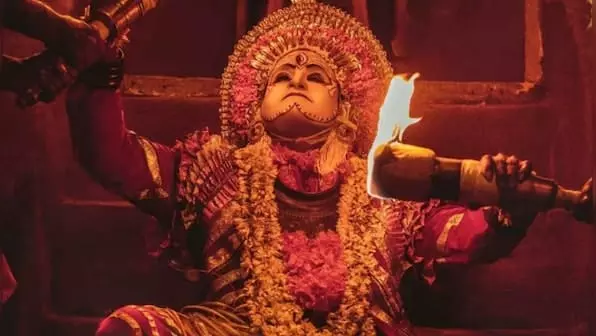
Mangaluru: The global success of films like Kantara has turned the spotlight on Tuluva culture. Yet in its homeland, Tulu still awaits recognition as the second official language of the state. As the state government prepares to send a committee to states such as Telangana to study how multiple official languages can be implemented in administration and education, hopes are rising that Tulu’s long struggle for its rightful status as the second official language of the state may finally bear fruit.
Tulu is one of the five Dravidian languages and is believed to be the oldest among them. “The Tulu language carries more influence of the Proto-Dravidian tongue. It has a history of about 2,500 years, and scholars agree on its antiquity,” says Prof. K. Chinnappa Gowda, noted folklorist and former Vice-Chancellor of Karnataka Folklore University. “Scholar Caldwell has even described Tulu as a highly culturally developed language.”
The region’s oral traditions — Paddanas (epic narrative songs), Kabite (work songs), folk tales and dance songs — form the living library of the language. “The Siri Kavya we compiled alone runs into 15,683 lines. The story of Koti and Chennaya runs over 10,000 lines. Even today, some people can recite Paddanas of 2,000–3,000 lines from memory,” Prof. Gowda says.
Tulu’s written tradition dates back at least five centuries, first in the Tulu script and later in Kannada script. Few know that Tulu once had its own script, used for temple manuscripts containing mantras and tantras. “We still find manuscripts, but the script did not survive beyond certain circles,” Prof. Gowda explains.
For advocates, recognition means more than pride. If Tulu becomes Karnataka’s additional official language, it can be used in government offices and taught in schools and colleges across Tulu-speaking districts. Official status would also unlock resources for translation, research and academic recognition. “It would mean that works in Tulu finally find their place in national literary platforms, including the Sahitya Akademi,” say supporters.
Many political leaders, including Oscar Fernandes, B. K. Hariprasad and V. Sunil Kumar, have long backed the demand, while Puttur MLA Ashok Kumar Rai has taken an active lead in the recent days. He arranged for a team to study how states with more than one official language — West Bengal, Telangana and Bihar — have implemented it. The team submitted its report six months ago.
“A five-member committee has been formed with officials from the law, Kannada and culture, and finance departments, along with a representative from the Tulu Academy. They will soon visit other states including Telangana. Based on their report, the Chief Minister will decide. The team will leave in about a week,” Rai told Deccan Chronicle.
Minister for Kannada and culture Shivaraj Tangadagi said the government was serious. “We are waiting for the report from the teams. Once it is submitted, the next step will be taken,” he said. The recognition of Tulu as an official language is closely tied to its long-pending inclusion in the Eighth Schedule of the Constitution. While both demands are separate, experts believe that recognition at the state level would strengthen the case for national acceptance.
Tulu is not just spoken in coastal homes. It is performed, sung and lived through rituals, literature and culture. The success of Kantara carried Tuluva traditions to global screens, introducing its folklore and spirituality to new audiences. For now, the people of the coast wait — for their language, ancient and alive, to find its place not only in their hearts but in the records of government and academia. Recognition, they believe, will ensure that the stories, songs and spirit of Tulu endure for generations.
Tulunadu has produced some of the country’s most celebrated personalities across cinema, culture, politics, spirituality, and business. In the world of cinema, the region boasts global icons like Aishwarya Rai Bachchan, Anushka Shetty, Suniel Shetty, Shilpa Shetty, Rakshit Shetty, Rishab Shetty, and Raj B. Shetty. Multilingual actor Prakash Raj, also traces his roots to Tulunadu.
In literature and culture, Tulunadu gifted the nation with Jnanpith awardee Dr. K. Shivaram Karanth. The political landscape has been shaped by leaders like former Chief Ministers M. Veerappa Moily and D. V. Sadananda Gowda, former Union Ministers Oscar Fernandes and B. Janardhana Poojary, and the present Speaker of the Karnataka Legislative Assembly, U. T. Khader. Late Shri Vishwesha Teertha Swamiji of Pejawar Math was a prominent spiritual leader.
Tulunadu’s contribution to industry, education, and banking is equally remarkable. Visionaries such as Dr TMA Pai, Dr TA Pai, KV Kamanth, TV Mohandas Pai, BR Shetty have made their mark nationally and globally. The region is often described as the “cradle of banking” since institutions like Syndicate Bank, Canara Bank, Corporation Bank, and Karnataka Bank were all born here. Adding to its unique identity, Tulunadu is also known as the “Ice Cream Capital” of India, home to iconic brands such as Ideal and Naturals.

