Safari Set To Resume in Bandipur, Nagarahole in a Phased Manner With Reduced Timings Initially

The ban is in force from November 7 last year.
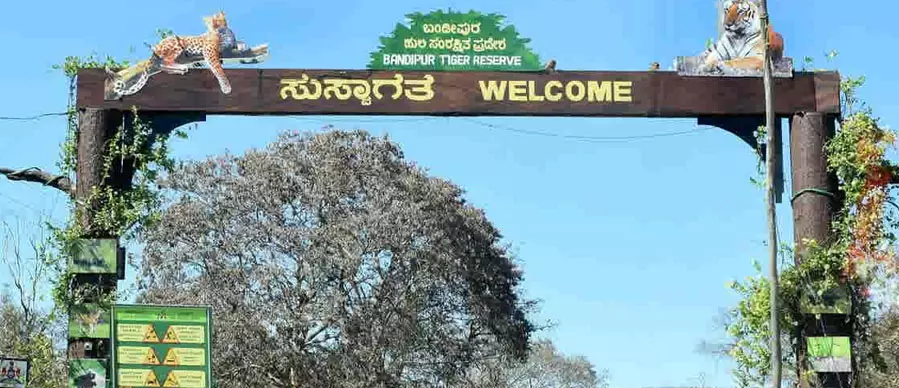
Bengaluru: Since there is no scientific backing to the theory behind operating safari vehicles, as part of eco-tourism, led to straying of tigers to villages on the borders of Tiger Reserves, Minister of Forests and Environment Eshwar B. Khandre on Wednesday said to lift the ban on safaris currently in force in Bandipur and Nagarahole tigers reserves in a phased manner. The ban is in force from November 7 last year.
But, the decision to resume safaris met with opposition from farmers on the periphery of Bandipur Tiger Reserve. A farmer leader Honnur Prakash told Deccan Chronicle opposed the decision to reopen safari in Bandipur and Nagarahole and he said to hold a protest in Bandipur on Thursday.
“Let them take visitors to the zoo and show them the wild animals,” he said and questioned the rationale of the Minister to allow safari in Tiger Reserves. He termed the decision of the Minister to be against the interests of farmers who get killed by tigers and other wild animals on border villages.
Meanwhile, the safari vehicles will operate with reduced timings once the ban is lifted, said the Minister and stated safari hours in Bandipur lasted for 8-hours which will now come down to 5-hours. Safari at Damanakatte in Nagarahole Tiger Reserve will have 6-hours of safari timings and in Nagarahole safari zone, vehicles will operate for about 4-hours.
The ban on safaris in Bandipur and Nagarahole tiger reserves was imposed on November 7 previous year after straying tigers’ mauled 3 persons on the border villages of Bandipur Tiger Reserve in Mysuru district. Bandipur is spread across Mysuru and Chamarajnagar districts while Nagarahole covers Mysuru and Kodagu districts.
After a meeting with officials concerned, Eshwar Khandre told reporters in Bengaluru a technical committee constituted to study on impact of safari in Tiger Reserves included Additional Principal Chief Conservator of Forests, a scientist attached to Wildlife Institute of India and a Professor attached to Indian Institute of Forest Management (IIFM), Bhopal submitted its interim report and a decision to reopen safaris in Bandipur and Nagarahole Tiger Reserves was taken.
Khandre pointed to the safari vehicles in limited zones in Bandipur and Nagarahole Tiger Reserves. The area of Bandipur is 1036 sq km while its safari zone is 80 sq kms which comes to about 8 percent for eco-tourism. Likewise, Nagarahole covers 844 sq kms and safari is conducted 63 sq km which is about 7.5 percent area used for safaris.
A part of the money from ecotourism activities, the Minister said, will be utilized for skill development of locals on the borders of Tiger Reserves, augmentation of fodder among others.
