Lighting the Past: Pattadakal Monuments Glow After Night

After the testing phase, the illumination system will be inaugurated and operated on a regular basis
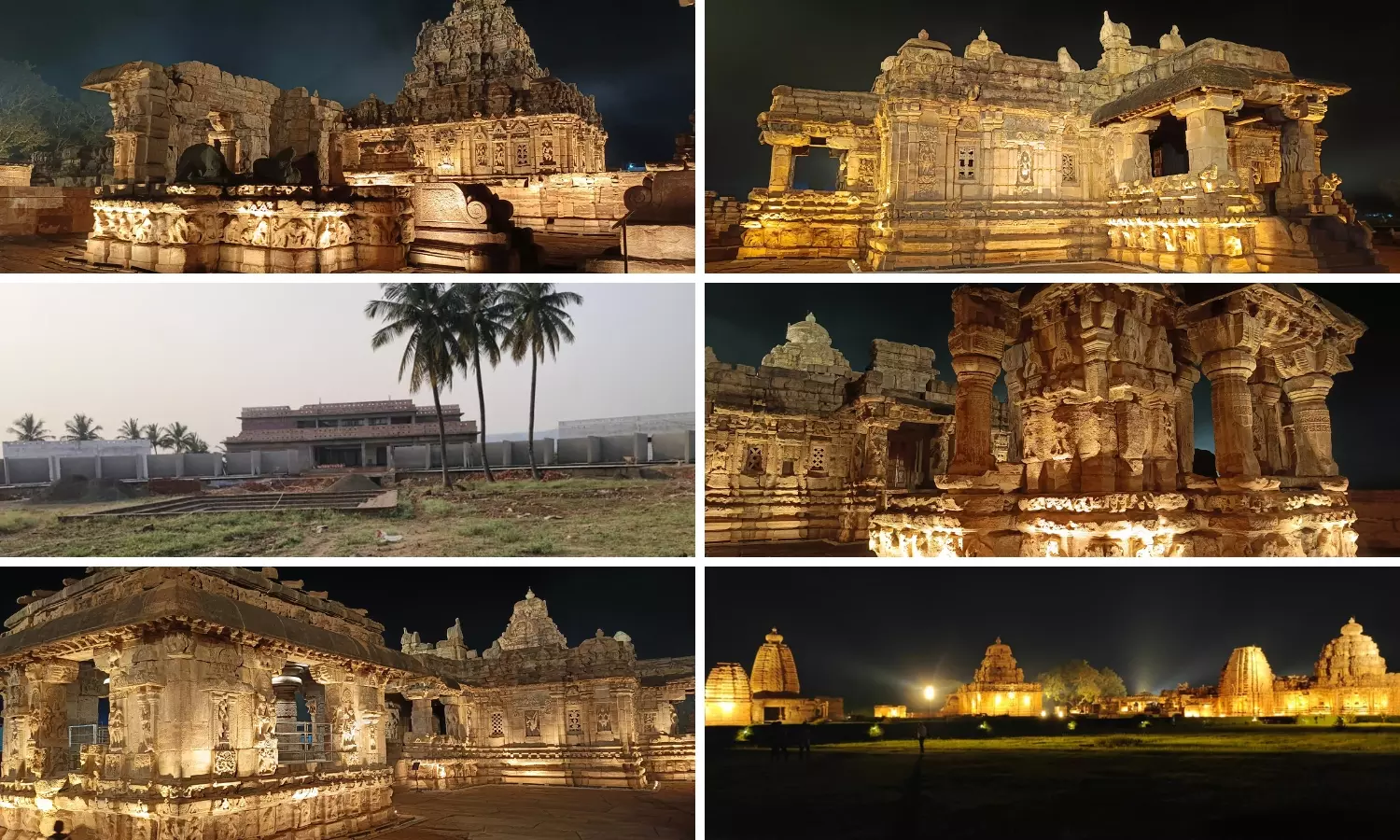
Bagalkot: As the sun dips behind the Malaprabha river in Karnataka, and silence settles over the ancient city of Pattadakal, the monuments begin to glow softly at first, then in full splendour. Amid the cool evening breeze, visitors lingering after sunset watch history unfold under lights for the very first time.
The newly installed illumination system has transformed this Unesco world heritage site into an after‑dark spectacle, drawing tourists who pause in wonder as the temples emerge from the shadows in warm golden hues.
In an effort to boost tourism, electric illumination has been installed at Pattadakal and is being showcased as part of a three‑day demo beginning December 19, with the temples lit between 6 pm and 9 pm. Officials said the trial run is aimed at testing the system and making any necessary corrections.
Until now, visitors had to leave the site before dusk. The illumination is set to change that rhythm, allowing people to slow down, pause, and absorb the architecture in silence. From a distance, the temples appear almost theatrical, their finely carved stone surfaces revealing details often missed in the daylight. The lighting is so thoughtfully designed that even frequent visitors discover new details and enhanced beauty.
After the testing phase, the illumination system will be inaugurated and operated on a regular basis. This is the first such project in Bagalkot district. “We illuminated the Gol Gumbaz in Vijayapura district last year and it received a good response. This is the second such project. The lighting will illuminate the entire Pattadakal group of monuments,” said Ramesh S. Mulimani, superintending archaeologist, ASI, Dharwad Circle, speaking to Deccan Chronicle.
The system has been installed at a cost of ₹1.5 crore under Indian Oil Corporation’s Corporate Social Responsibility initiative and implemented by the archaeological survey of India (ASI). A portion of the energy requirement is met through solar power, with the rest drawn from conventional electric lines. Maintenance will be handled by Indian Oil Corporation for three years, after which it will be taken over by the ASI.
Pattadakal’s significance goes far beyond its visual appeal. Along with Badami and Aihole, it forms a historic triad of Chalukyan architecture three sites that together narrate the story of a dynasty that shaped early temple architecture in the Deccan. Badami served as the Chalukyan capital, Aihole was known for its temples, and Pattadakal stood as the ceremonial heart of the empire. It was here that Chalukyan kings were crowned, a fact reflected in the very name “Pattadakal,” which translates to “place of coronation.”
Situated on the banks of the Malaprabha river, Pattadakal was referred to by the foreign traveller Ptolemy as Petrigal. The place was also known as Raktapura and Kisuvolal, names believed to mean “valley of red soil.” Between the 7th and 9th centuries, when the Chalukyan empire was at its zenith, Pattadakal reached the height of its glory as a royal commemorative site, where art, power, and devotion came together in stone.
The temple complex comprising about ten major temples surrounded by smaller shrines and plinths represents the finest expression of Chalukyan architecture. The Jambulinga, Virupaksha, Galaganatha, Sangameshwara, Kadasiddheshwara, Mallikarjuna, Papanatha, and Jain temples are among the most famous and historically significant structures at Pattadakal. Under King Vikramaditya II, and with the patronage of his art‑loving queens Lokamahadevi and Trailokyamahadevi, sculptors were brought from Kanchipuram to create many of the temples, resulting in a rare confluence of northern and southern architectural styles.
Tourism officials believe the illumination will significantly enhance visitor experience and boost footfalls. According to official data, Badami recorded 4.37 lakh domestic tourists and 53,000 foreign visitors last year. Pattadakal received 3.20 lakh domestic and 3,671 foreign tourists, while Aihole saw over 2.11 lakh domestic and 3,419 foreign visitors during the same period.
Infrastructure improvements are also underway. The government has initiated two major projects at Pattadakal a dedicated parking facility and the proposed Pattadakal Plaza. Planned on 24 acres, the plaza will include a restaurant, restrooms, exhibition spaces showcasing local arts and handicrafts such as Amingad karadantu and Ilkal sarees, along with other visitor amenities. About two acres have been earmarked exclusively for parking. There are also plans to introduce sound‑and‑light shows at Badami, while the administration has sent a proposal to include Aihole in the Unesco world heritage list.
Pattadakal’s story does not begin with the Chalukyas alone. Archaeological evidence points to prehistoric habitation, with Iron Age dolmens found at Bachinagudda near Pattadakal quiet reminders that human presence here stretches far deeper into time.
