Karnataka’s Sannati Set for Global Spotlight as Buddhist Heritage Hub

Today, Sannati is on the verge of a renaissance. With government backing, archaeologists, historians and local communities hope the site will regain its stature
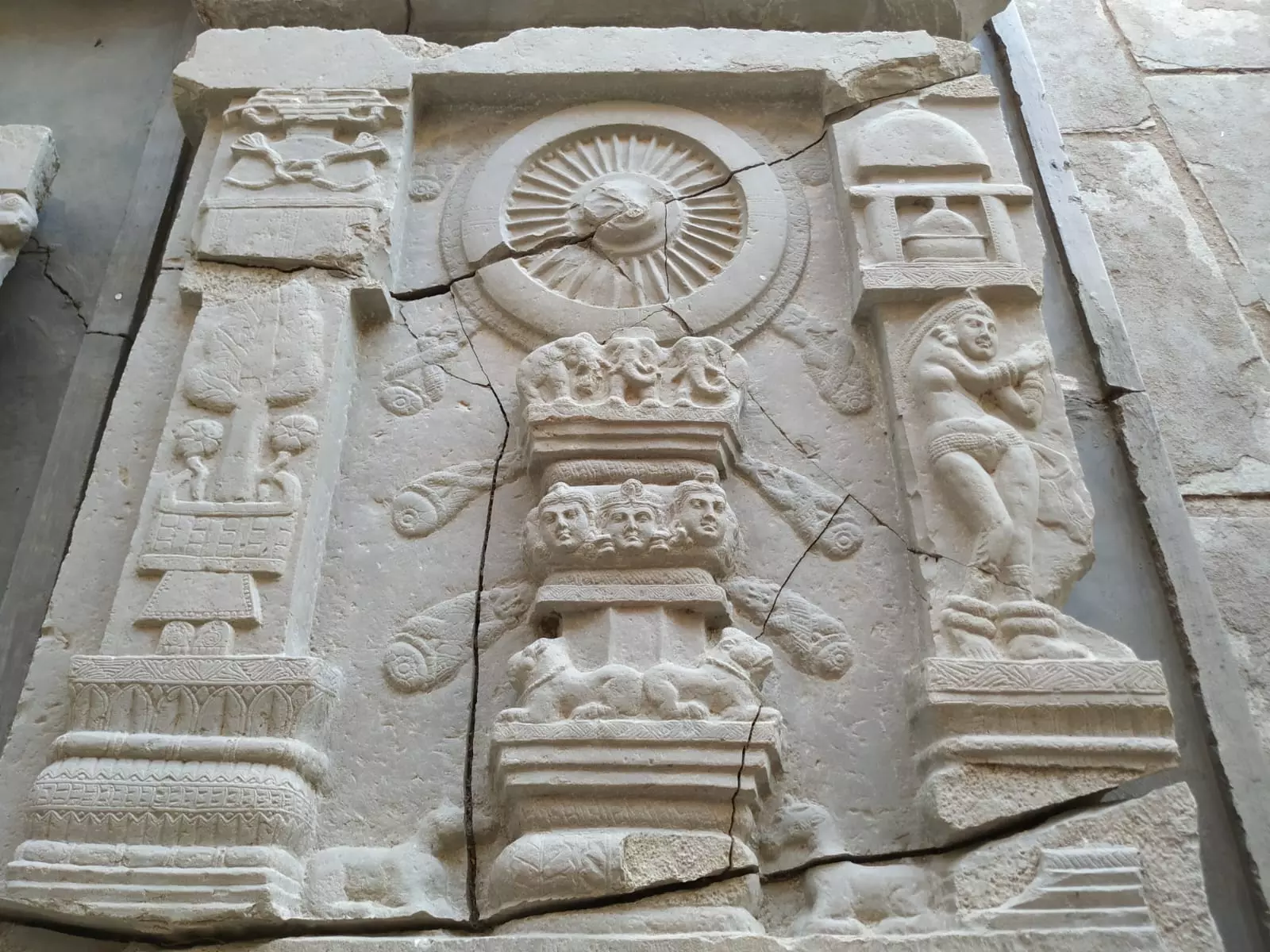
Kalaburagi: On the quiet banks of the Bhima River, Sannati lies like a forgotten chapter of history. Few places in Karnataka boast a timeline that runs from the prehistoric era to the Mauryan and Shatavahana periods — and fewer still hold within them a grand Buddhist Mahastupa that once attracted monks, merchants and travellers from across the subcontinent.
A New Initiative
Sannati and its twin site, Kanaganahalli, are now preparing for long-overdue global recognition. The renewed push has come from Chittapur MLA and IT-BT Minister Priyank Kharge, who has initiated a comprehensive master plan for both heritage clusters.
Kharge, along with Kalaburagi MP Radhakrishna, recently reviewed the project with Tourism and Archaeology officials. “The master plan for conservation, interpretation and development is ready. The DPR will be completed within two months, and Phase I will begin soon after,” Kharge told Deccan Chronicle.
For him, the top priority is clear:
“Curation. We have to tell the full story of this place to the people,” he said.
Kharge envisions a second, more ambitious phase — transforming Sannati into a global Buddhist hub where countries with Buddhist traditions can showcase their heritage and diverse thought streams.
Twin Sites, Shared History
Separated by barely three kilometres, Sannati and Kanaganahalli share deep historical roots. Sannati is known for its Ashokan edict, while Kanaganahalli is renowned for its extraordinary stupa and carved panels, excavated between 1993 and 2006 by ASI archaeologist T.M. Keshava.
Around the same time, the State Archaeology Department under H.T. Talwar excavated the Ranamandala area near Kanaganahalli, which revealed habitation layers dating back to prehistoric and early historic periods — offering rare insights into everyday life, trade and worship nearly two millennia ago.
Layers Beneath the Soil
Sannati’s story predates Ashoka. Excavations led by Talwar uncovered neolithic and paleolithic tools, proving continuous habitation since prehistoric times.
Among the most remarkable finds was a 5-cm medallion-like disc carved from northern soapstone — likely from the early Mauryan period and the only one of its kind in South India.
Other discoveries included Northern Black Polished Ware (NBP), ivory stupa replicas, bowls used by Buddhist monks (one reinforced with copper), Shatavahana coins, terracotta figures including Lajja Gauri, and even objects linked to the Roman Empire and Persia — evidence of a thriving trade network.
Locals still call Sannati “Santhi,” meaning market — a name archaeologists believe reflects its historical role as a major trade and religious centre.
Ashoka’s Southern Seat?
Archaeologist T. Murugeshi believes Emperor Ashoka likely visited Sannati, which may have served as his southern headquarters, Suvarnagiri. He suggests Ashoka built the earliest mud stupa, later expanded by the Shatavahanas.
Sannati once lay along major commercial and religious routes connecting Badami, Chitradurga, Banavasi and Mangaluru — making it a key centre for the spread of Buddhism across Karnataka.
Ashokan Edict
Sannati’s famous Ashokan edict emerged unexpectedly during renovations at the Chandralamba Temple, where it was found on the floor of a damaged shrine.
How the Stupa Re-emerged
The rediscovery of the Kanaganahalli stupa is a story in itself. What villagers used as an “open well” turned out to be the collapsed centre of a massive stupa. With their consent, Keshava’s team excavated the area and uncovered exquisitely carved panels — many shattered and painstakingly reconstructed.
Two features make this stupa exceptional: a carved portrait of Ashoka with Queen Devi Samivati, and the inscription Raya Asoko. Kanaganahalli also contains about 200 inscriptions, offering a rare timeline of script evolution from the Ashokan to Shatavahana eras.
Panels depict Jataka tales, scenes from Buddha’s life, and worship of the Bodhi tree, serpent and Buddha idol.
Why the Stupa Collapsed
Evidence suggests the stupa collapsed due to a massive earthquake, likely centred just four kilometres away in Hasargundige village. The fallen dome created a depression that locals mistook for a well for generations.
Though habitation continued in Sannati, Buddhist activity eventually faded after the Shatavahana era.
A New Awakening
Today, Sannati is on the verge of a renaissance. With government backing, archaeologists, historians and local communities hope the site will regain its stature — perhaps even emerge as Karnataka’s own Bodh Gaya.
If developed as part of a larger Buddhist circuit linking Nagarjunakonda, Amaravati and sites in Maharashtra, Sannati could become a major pilgrimage and heritage destination.
And with more excavation, it may yet reveal new chapters of Buddhism waiting beneath the soil.
