Karnataka: Kateel Mela Expands with Seventh Yakshagana Troupe
The expansion marks another milestone in a divine tradition where art and worship merge seamlessly
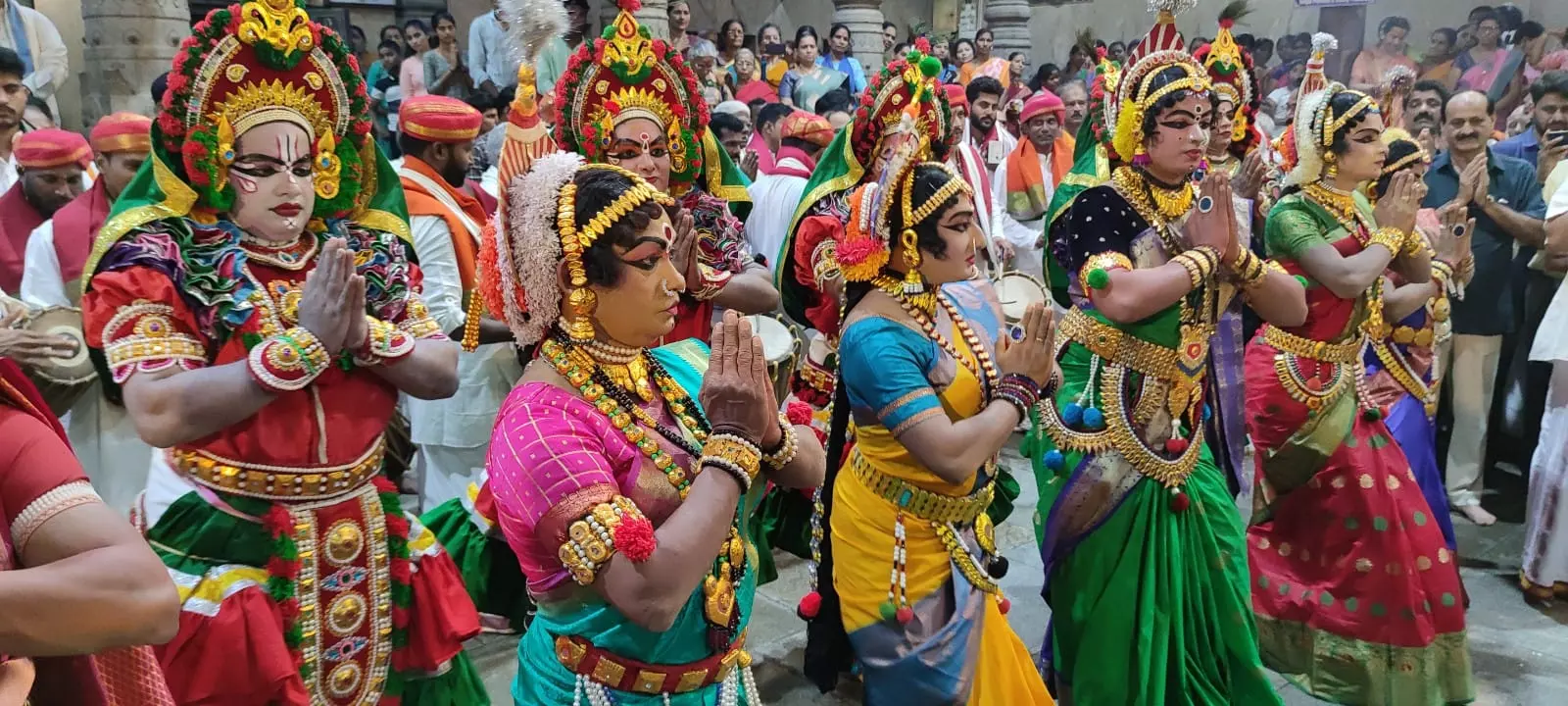
In the sacred village of Kateel, faith finds expression in theatre and devotion wears the colours of Yakshagana. As the river Nandini murmurs its eternal hymns, the famed Kateel Mela — Yakshagana troupes run by the Sri Durgaparameshwari Temple — is set to enter a new chapter on November 16 with the launch of its seventh troupe. The expansion marks another milestone in a divine tradition where art and worship merge seamlessly.
Located about 20 km from Mangaluru, Kateel is home to the ancient Sri Durgaparameshwari Temple, nestled on an island formed by the Nandini river. Here, Yakshagana is not mere performance — it is seva, an act of devotion. Though the exact origins of the Kateel Yakshagana tradition are unclear, it is believed to be nearly two centuries old.
Each performance revolves around a prasanga (narrative). The most popular among them is Sri Devi Mahatme, depicting the triumph of the Mother Goddess, followed by Kateelu Kshetra Mahatme, which narrates the origin and glory of the temple deity. Every show — whether performed or witnessed — is considered a form of prayer. “In Kateel, even watching Yakshagana is an act of seva,” says Mahesh, a devotee.
The Yakshagana troupes of Kateelu Sri Durgaparameshwari Prasadita Dashavatara Yakshagana Mandali, popularly known as Kateelu Mela, are led by Kalladi Deviprasad Shetty. The season runs from November (after Tulasi Pooja) to May (Pattanaje), with all troupes performing together at the temple on the opening and closing days. The rest of the year, they tour villages across Dakshina Kannada, Udupi, Uttara Kannada, and nearby districts.
Devotees can host Yakshagana in their villages or sponsor shows at Kateel, where two venues — Saraswati Sadana and Mahalakshmi Sadana — already exist and a third is being prepared. While performances once lasted all night, they now conclude by midnight, drawing larger modern audiences.
With the seventh troupe’s launch, Kateel Mela becomes the only Yakshagana organisation with so many troupes — surpassing even Mandarthi Mela, which has five. “Each troupe performs about 180 shows a year,” says Sriharinarayanadasa Asranna, hereditary archak of the temple. “With the seventh troupe, we can add nearly 180 more performances — yet the demand continues to grow. Bookings are already full for the next 15 years.”
Every troupe functions like a mobile temple. Daily poojas are offered to the deities — a large crown representing the Goddess, a smaller one for Lord Ganesha, and the chakra symbolising Lord Mahavishnu. Before each performance, lamps are lit, prayers are offered, and devotees believe the Goddess herself travels with the troupe. “Wherever the play is staged, that place becomes Kateel for the day,” says Yakshagana enthusiast Janardhan Bhat.
Over 350 artistes and support staff tour relentlessly through the coastal and Malnad regions, transforming courtyards and fields into sacred theatres under the night sky. Devotees unable to host shows in their villages sponsor them at Kateel itself — where, interestingly, Devi Mahatme and Kateelu Kshetra Mahatme are never performed, since the Goddess is already believed to be present.
The Kateel Yakshagana’s enduring charm lies in its spontaneity and devotion. “I’ve watched Devi Mahatme a hundred times,” says Pranam Shetty of the Hindu Seva Samithi, Bolpugudde. “Every show feels new — the dialogues, the expressions, the singing. The artist’s delivery changes each night, keeping the performance alive and vibrant.”
The cast lists, announced each year, spark excitement among fans, while devotees and professionals alike follow the art through community groups and social media. “Despite modern entertainment, Yakshagana’s appeal is growing,” says advocate and enthusiast Deviprakash Hegde.
The first Kateel troupe’s origin remains undocumented, but the second was launched in 1975, followed by the third in 1982, the fourth in 1993, the fifth in 2010, the sixth in 2013, and now the seventh in 2025.
Kateel is also home to Sri Durga Makkala Mela, a unique initiative that trains children in every aspect of Yakshagana — from dance and makeup to drumming, singing, and dialogue delivery. Conducted on weekends, the free classes aim to nurture confident young artistes and preserve the centuries-old tradition.
For devotees of Kateelamma, Yakshagana is not just art — it is a living prayer. Each song, gesture, and rhythm carries generations of faith. As cymbals clash and drums rise into the night, the line between performer and devotee fades — and the Goddess once again takes the stage.
