Activists Seek Study Of Mining Impact On Environment, Farming And Public Health

The representation sought an independent assessment of the cumulative impact of mining in Sandur taluk and the mining-affected areas of Ballari, Chitradurga and Vijayanagara districts.
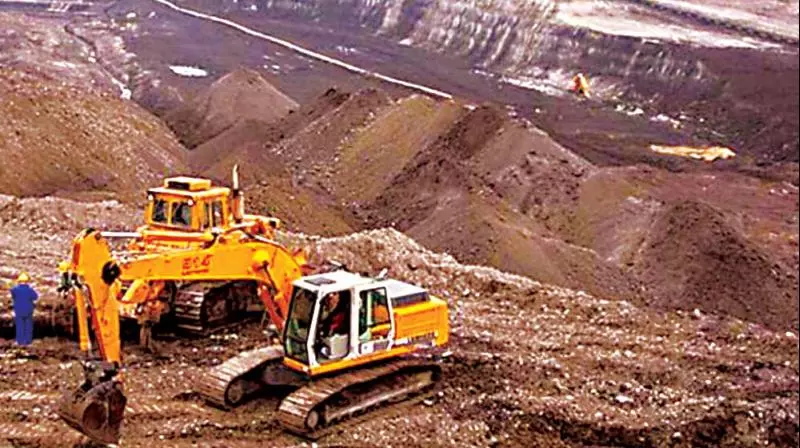
Ballari: Mining-Affected Environment and People's Livelihoods Restoration Struggle Committee has urged the Supreme Court-appointed Monitoring Committee to conduct an independent study of the impact of iron ore mining on the environment, agriculture and livelihoods in Ballari.
It has also sought a review of the existing production limits of mines until such an assessment is completed.
In a representation submitted to Monitoring Committee chairman Deepak Sharma and member UV Singh on November 2, the Mining-Affected Environment and People's Livelihoods Restoration Struggle Committee alleged that large-scale mining and the movement of ore-laden trucks had caused extensive damage to the environment and affected the health and livelihoods of residents.
Janasangrama Parishat state president TM Shivakumar, farmer leader MLK Naidu, Sreeshaila Aldalli of Parishat, activists GK Nagaraj and Virupakshi submitted the representation.
“Mining waste and overburden are entering streams, water bodies and reservoirs, thereby adversely affecting wildlife, aquatic organisms and the surrounding ecosystems.
Thousands of ore-laden trucks pass through village roads every day, adversely affecting the health and safety of villagers, particularly children and elderly persons," the representation said.
It pointed out that despite the availability of conveyor corridors and railway sidings, an adequate alternative road network had not been established to transport iron ore outside village limits.
The movement of heavy vehicles had also damaged roads and bridges, while dust from ore transportation had affected agricultural land and crop yields.
The letter raised particular concerns over the transportation of ore from NMDC's Kumaraswamy Iron Ore Mine (KIOM), alleging that the conveyor belt system proposed for transporting the mineral had remained non-operational for the past four years.
Consequently, trucks were allegedly carrying ore through Ranjithpura, Narasingapura, Subbarayanahalli and Nandihalli villages.
The committee also referred to an inspection by officials of the Karnataka regional office of the Union Ministry of Environment, Forest and Climate Change, which reportedly recorded violations of environmental safeguards and environmental clearance conditions by the mine.
It said that despite a show-cause notice being issued to NMDC, the matter remained ‘under process.’
Citing the Central Empowered Committee's report submitted to the Supreme Court in April 2025, the activists questioned the suitability of existing roads for handling heavy mineral transportation.
The CEC had raised concerns over the use of standard road-capacity guidelines for mining roads and village roads that were not designed to withstand heavy truck traffic.
The committee said the prevailing situation in mining areas was raising concerns similar to those witnessed during the period of illegal mining between 2004 and 2010.
The letter stated that despite the deterioration of the environment, the adverse impacts on public health and livelihoods, and the continued absence of adequate infrastructure for mineral transportation, successive governments have continued to enhance the permissible production limits of mining leaseholders.
“It is particularly concerning that the Monitoring Committee, which is expected to regulate and monitor mining activities, has also recommended enhancement of iron ore production limits.
Such recommendations have further aggravated the concerns of mining-affected communities and the already deteriorating environmental conditions,” it added.
It stated that the recommendations for enhanced mineral production by the CEC and the Monitoring Committee, without ensuring the establishment of an adequate and scientifically designed mineral transportation network, are contrary to the objectives of environmental restoration.
“Such decisions are also likely to adversely affect the implementation of KMERC's Comprehensive Environmental Plans for Mining Impact Zones (CEPMIZ).
Except for the fact that the present mining operations are being carried out under the label of legal mining, the prevailing conditions indicate a recurrence of the severe environmental degradation, public health concerns, agricultural losses, groundwater depletion and excessive dust pollution that characterised the period of illegal mining between 2004 and 2010,” the letter added.
The representation sought an independent assessment of the cumulative impact of mining in Sandur taluk and the mining-affected areas of Ballari, Chitradurga and Vijayanagara districts.
It urges the Monitoring Committee to conduct field visits and record the concerns of villagers, farmers and livestock owners instead of relying solely on reports from mining companies and government officials.
It also called for a review of existing iron ore production limits until the assessment is completed, citing environmental carrying capacity, public health and infrastructure concerns.
“Justice B Sudershan Reddy, head of the KMERC Monitoring Authority, had recommended restricting annual iron ore production to 20 million tonnes (MTPA), based on available reserves and the principle of inter-generational equity.
This recommendation deserves serious consideration in the larger public interest,” the representation added.
