10 Years of Tulu Wikipedia: Taking a Coastal Language to the World
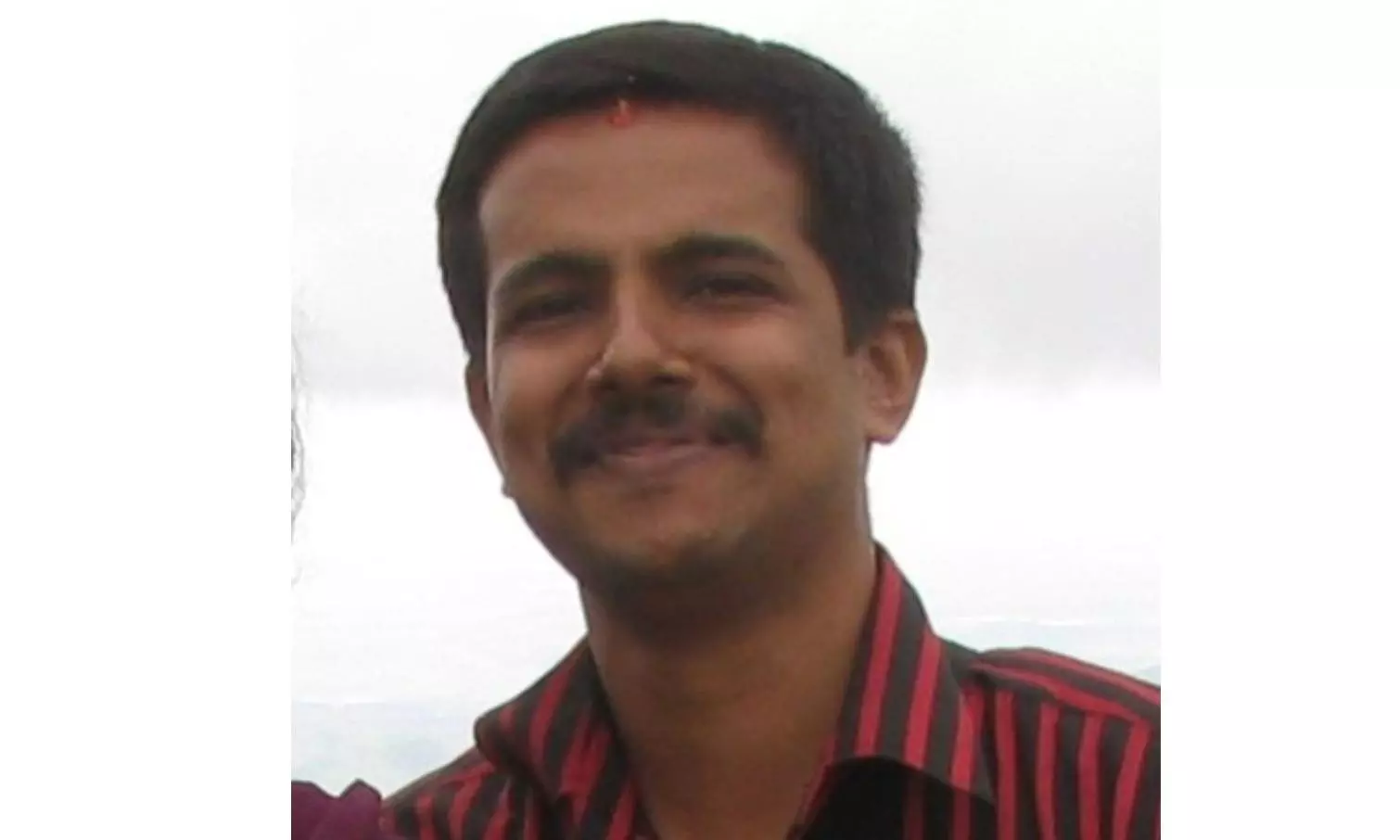
The journey was not straightforward. Work on Tulu Wikipedia began in 2008, but it remained in the incubator for nearly eight years before becoming a live edition in 2016.

Mangaluru: Tulu has lived for centuries through conversations, folk songs, paddanas, rituals and stories passed from one generation to another. Over the last decade, a group of volunteers has been working to give the language a strong presence in another place that increasingly matters — the internet.
Tulu Wikipedia completed 10 years as a live edition on August 6. It may not have attracted the kind of attention normally associated with a decade-long milestone, but for the small group of volunteers who worked for years to bring Tulu into the digital world, and for those who have been closely following, it is an achievement worth remembering.
The journey was not straightforward. Work on Tulu Wikipedia began in 2008, but it remained in the incubator for nearly eight years before becoming a live edition in 2016.
Today, the platform has information on Tulu culture, traditions, personalities, places, festivals, art, language and several other subjects. Much of this work has been done by volunteers who have their own professions and spend their evenings and weekends working on articles, photographs, references and corrections.
Tulu Wikipedia has more than 3,700 articles covering a wide range of topics.
“Many people in Karnataka and even in the country may not know about Tulu. But when Tulu Wikipedia became live, the world came to know that there is a language called Tulu,” says Dr Vishwanath Badikana, president of the Karavali Wikimedians User Group and one of the volunteers associated with the initiative from its early days.
For Badikana and his colleagues, getting Tulu on Wikipedia was about more than putting articles on the internet. It was also about ensuring that information about a language and its people would be available when the younger generation increasingly turns to the internet for information.
It started from zero
Wikipedia was launched in 2001, and the Kannada Wikipedia followed in 2003. The first work towards a Tulu Wikipedia began in 2008.
But having a language spoken by the people of Coastal Karnataka did not automatically mean that it could get its own Wikipedia edition. The volunteers had to build the content, develop editors, and show that there was a community capable of maintaining the edition.
The effort received a push in 2014 when Dr UB Pavanaja, who was associated with the Centre for Internet and Society in Bengaluru, began encouraging the Tulu enthusiasts to work in a more organised manner.
“A meeting was held which was attended by scholars like Viveka Rai, AV Navada, KP Rao, Vaman Nandavara, Kishore Kumar Rai and others. We too were invited for that. We had started the work, but Pavanaja was behind us asking us to work systematically and make Tulu Wikipedia live,” Badikana recalls.
The volunteers had a clear target. They needed about 1,000 writups to go live.
At one stage there were around 500 articles, but then they needed 1,000. So the volunteers started conducting workshops at different places and colleges.
The work took them to several educational institutions. The Ramakrishna PU College at Bunts Hostel was made available for the volunteers. Workshops were also conducted at Sahyadri Engineering College and St Aloysius College, while Pavanaja took the initiative of holding sessions for PU students in Udupi.
The push for Tulu Wikipedia got a boost with the help of scholar and former JNU professor Purushottam Bilimale. When the volunteers were looking for a professor who could speak about Tulu to the Wikimedia Foundation, they approached Bilimale.
“We approached him. Though he is an Arebhashe speaker, Bilimale agreed to speak on behalf of the Tulu community. His intervention came at a crucial stage, when the volunteers had completed the required work,” Vishwanath added.
A surprise in Chandigarh
The day Tulu Wikipedia finally became a live edition remains one of the most memorable moments for those involved.
Badikana, along with Bharatesh and Pavanaja, had travelled to Chandigarh for a Wikimedia conference in 2016. They had gone there as participants and did not know that something important for Tulu was about to happen.
At the conference, the CEO made an announcement. Tulu was announced as the 23rd Indian-language Wikipedia edition.
“We did not know about it. As soon as the announcement was made, suddenly, many journalists came and surrounded us. They were asking us about Tulu because many of them did not know about the language,” Badikana recollects.
The volunteers had not even informed the Kannada media about the launch because they themselves were unaware that it would be announced that day.
“It was a very memorable day for us. Suddenly it became national news and news agencies covered it. At one time, many people came to know about Tulu and Tulu Wikipedia,” he says.
The long wait in the Incubator had finally ended.
More than culture
The early Tulu Wikipedia articles were largely about the culture of Tulunadu.
Articles on Bhoota Kola, Daivas like Panjurli, traditional games, dances and other aspects of local culture formed an important part of the initial work. But the volunteers gradually started moving into other areas.
There are now efforts to document people, villages, taluks, institutions, artists, films, nature and other subjects.
Volunteers believe there is still a huge amount of material available locally that can be brought to Wikipedia.
“There are many Tulu movies. If a new Tulu film is released, we can write about the film, the director, the actors, the music and others associated with it. One film itself can give us several articles,” a contributor felt.
The same can be done with plays, artists and local personalities.
“If 10 films are documented, hundreds of people associated with those films can get an online presence,” he says.
The volunteers also want local bodies and educational institutions to take up documentation.
A village or a taluk, for instance, can have its own Wikipedia entry with information about its history, important places and people. This in turn will also help boost tourism as new places will get highlighted online.
He added that panchayats and colleges can help identify such subjects and provide information, which can then be verified and developed into Wikipedia articles.
Teaching students to edit
The Karavali Wikimedians User Group was formed in January 2017 with Vishwanath Badikana as President, Dr UB Pavanaja as secretary and Dr Kishore Kumar Rai as treasurer. The group, which also has an executive committee, acts as a community through which Wikimedia can contact.
The group has worked with colleges and conducted workshops to encourage students to become contributors. It has MoUs with institutions including Alva's College, SDM Ujire and St Aloysius College.
The workshops generally take two days.
On the first day, students are introduced to Wikipedia, how it started, how articles are edited, and what kind of information can be included. They are also taught about references and citations.
Students are then asked to identify a subject, collect information, and bring photographs and sources.
The next day, they work on the article for Wikipedia.
The volunteers also teach students about photographs and categorisation, which are important parts of Wikipedia.
After 15 days, some of them may forget what they learnt. So sometimes after three months another one-day training is held. The volunteers have noticed that many young people are interested once they understand what they can contribute.
The Tulu words have their own challenges. Some students initially struggle with characters and forms that they are not used to typing. But the volunteers say many of them learn quickly once they start using the system.
Aati brought hundreds of articles
One of the larger community efforts was around Aati, the traditional Tulu month of Karkataka Masa.
The volunteers organised a special programme last year and encouraged contributors to write about the month, its food, customs, practices and other aspects.
Hundreds of articles were generated around the theme.
For those associated with Wikipedia, this demonstrates what can happen when people contribute information on subjects that they already know from their homes and communities.
“If information is available online, people do not have to depend only on some scholar coming and giving a speech about it. They can read it themselves and understand it and local people share the information,” Badikana says.
That is also one of the reasons the volunteers believe Wikipedia can become a useful tool for preserving traditional knowledge.
Teachers who contribute to Wikipedia many a time find an interesting connection when checking their students’ assignments. Some of the information submitted by students turns out to be familiar, as they themselves had earlier written about the subject on Wikipedia. When asked about their source, the students often say they found it through Google, unaware that the information had originally come from their teacher’s own Wikipedia write-up.
What happens when AI reads Tulu?
The importance of the work has increased with the growth of artificial intelligence and machine translation.
The internet is no longer only a place where people search for information. Search engines, translation tools and AI systems also depend on large quantities of digital information.
For languages such as Tulu, which have much less digital content than English, Kannada or other major languages, every reliable piece of information added online becomes important.
Badikana points out that Wikipedia's open content can also contribute to the wider digital ecosystem as AI can easily go through it.
Tulu Wikipedia content has helped improve the availability of Tulu material for digital translation and language tools. As more information becomes available online, the language gets a larger digital footprint.
For the volunteers, this is one reason they want the content to grow from the present level measured in megabytes to much larger volumes.
“We are still in MB when you look at the global statistics. We have to reach GB,” Badikana says.
The comparison may sound small in a world where digital data is measured in terabytes and petabytes. But for a language like Tulu, every additional article represents another piece of information that can be found, searched and potentially reused.
The challenge
The challenge before Tulu Wikipedia is not that there are no Tulu speakers.
There are millions of people who speak or understand the language across coastal Karnataka and parts of northern Kerala and elsewhere. The bigger challenge is getting more of them to contribute.
Wikipedia is not for one person. Hundreds of people have to come and type. The younger generation, which spends a large amount of time online, needs to move from being only consumers of digital content to contributors as well.
The volunteers now want colleges, panchayats and other institutions to help identify subjects and encourage people to document them.
A language beyond its borders
Tulu has a long cultural and literary tradition, but its official recognition remains a continuing demand among sections of the Tulu-speaking community. It is not a state language and is not included in the Eighth Schedule.
Wikipedia cannot change that.
But it has given Tulu something else — a place where anyone with an internet connection can encounter the language and learn about its people and culture.
For the volunteers, that itself is significant.
A word can be documented, a village can be described, a folk tradition can be explained, an artist can be introduce, a film can be recorded and photograph can be preserved.
And once that information exists in Tulu, it can potentially connect with other languages too.
That is the work the volunteers have been doing for the last 10 years — often without much public attention and without payment.
Their immediate target is not complicated. They want more people to contribute. They want colleges to send students. They want local bodies to share information. They want writers, artists, teachers and ordinary Tulu speakers to put their knowledge online.
Because a language may continue to be spoken in homes for generations. But in today's world, if it is not also present in the digital space, a large part of its knowledge can remain invisible to the wider world.
“We do it out of interest. It is really nice to see the Tulu Wikipedia growing. We put something new to Wikipedia,” Bharathesha Alasandemajalu says.
“Once there is good content in Tulu, it goes to other languages also. What is there is Tulu reaches various parts of the world,” he added.
Bharathesha also says that Tulu Wikipedia contributes in the growth of the language academically.
“While writing in Tulu some words which are used less or have been forgotten can return. Readers will get this word and it may be come for usage also,” he added.
“Today there are many contributors, of which some are very active,” he added.
Decennial celebration
To mark 10 years of Tulu Wikipedia, the Karavali Wikimedians User Group has planned a two-day celebration in Mangaluru on September 12 and 13. The event will bring together Wikimedians, students, educators, language enthusiasts and community members to look back at the journey so far, recognise the contributions of volunteers and discuss plans for taking the initiative forward.
