Year of Welfare Surge, Economic Revival for Andhra Pradesh

Approvals by the state investment promotion board added another Rs 8.55 lakh crore. New industrial policies, escrow-backed incentives and the creation of MSME parks in all 175 assembly constituencies “underscored the administration’s pro-industry stand.”
Vijayawada: The year, 2025, marked a decisive turnaround for Andhra Pradesh as the alliance government led by Chief Minister N. Chandrababu Naidu translated its electoral promises into tangible outcomes, blending expensive welfare delivery with renewed economic momentum.
After assuming office with a massive mandate in 2024, Naidu spent the initial months restoring administrative systems which, it maintained, had been “weakened” during the YSRC rule --between 2019 and 2024. The CM stated that by early 2025, governance would be stabilized, paving the way for “an unprecedented phase of welfare-led growth.”
At the heart of this push were the much-publicised Super Six welfare programmes, which reached out to almost every section of society. For instance, under Talliki Vandanam, Rs 10,090 crore was transferred directly to mothers’ accounts, benefitting over 6.7 million students and reinforcing the government’s focus on education-linked social security.
Farmers received a major boost through Annadata Sukhibhava, with Rs 6,310 crore credited to 4.6 million cultivators, providing them timely financial support amid rising input costs. The Deepam–2 scheme eased household burdens, with nearly two crore free LPG cylinders distributed at an outlay of Rs 2,684 crore.
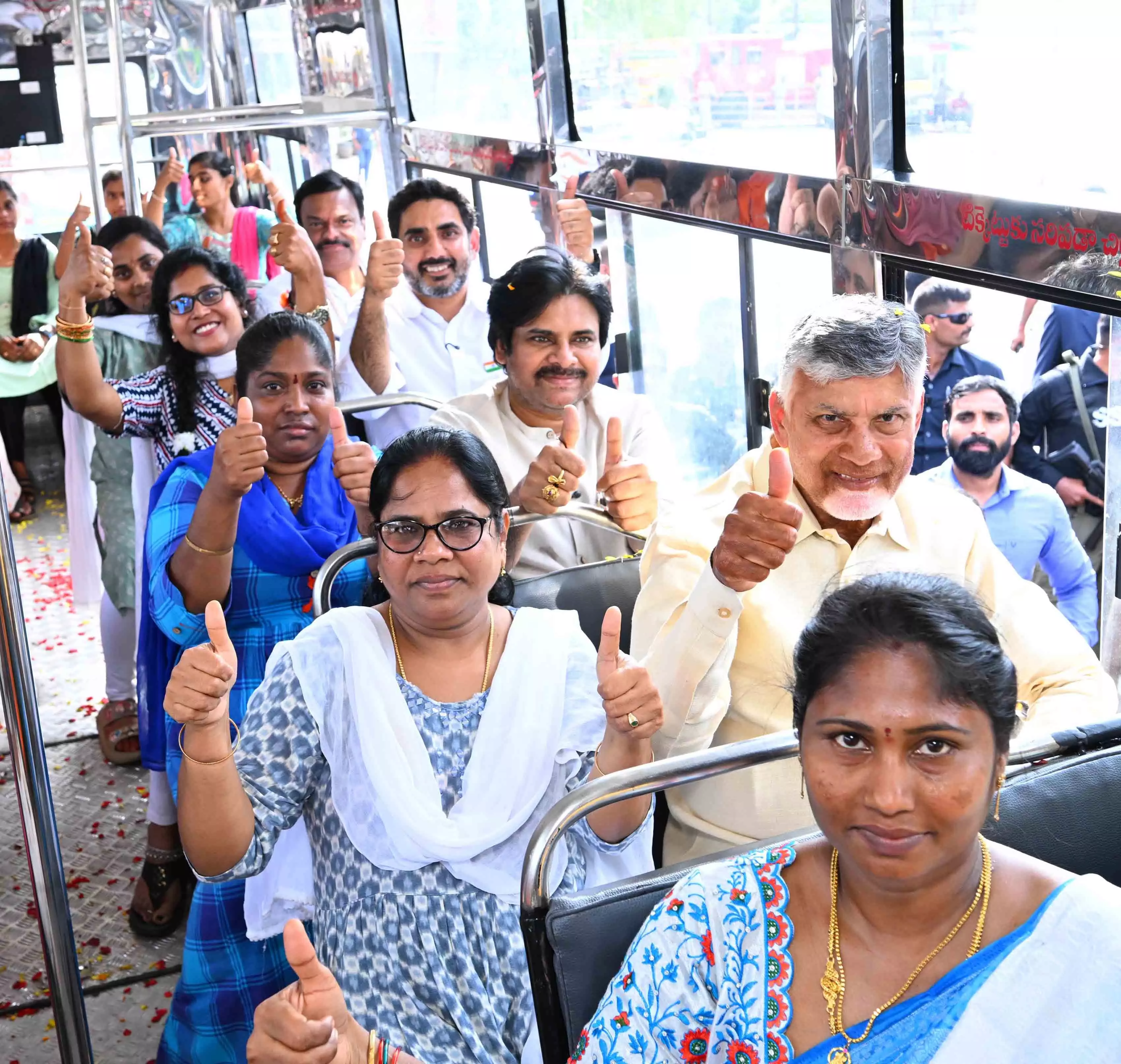
Women-centric initiatives stood out as a defining feature of the year. The launch of Stree Shakti on August 15 facilitated free bus travel to women across the state, recording over 3.25 crore journeys so far at a cost of Rs 1,144 crore borne by the exchequer. The facility was extended to persons with disabilities while reforms offered greater flexibility in accessing pensions.
Targeted assistance reached fisherfolk, auto drivers, weavers and toddy tappers, while cumulative pension disbursements under NTR Bharosa crossed the Rs 50,000-crore mark, a significant milestone in social security spending.
Minority and faith-based welfare also received renewed attention. The government allocated Rs 3,670 crore for minority welfare, extended honorariums to pastors, imams, muezzins and priests, and strengthened temple services, including daily annadanam in 15 major shrines across the state.
On the development front, 2025 witnessed a strong investment surge. The confederation of Indian industry (CII) summit alone resulted in the signing of 610 memoranda of understanding worth Rs 13.25 lakh crore, with the potential to generate over 16 lakh jobs.
Approvals by the state investment promotion board added another Rs 8.55 lakh crore. New industrial policies, escrow-backed incentives and the creation of MSME parks in all 175 assembly constituencies “underscored the administration’s pro-industry stand.”
Visakhapatnam emerged as a technology hub, with IT majors and data centres taking shape, alongside the first steps towards a proposed Quantum Valley.
Fields like infrastructure and irrigation regained momentum, with works being accelerated on the Polavaram project, the Veligonda tunnel and the Handri–Neeva canal system. Groundwater levels showed improvement, large-scale road repairs were taken up, and national highway projects worth over Rs 1 lakh crore moved forward.
Capital city works in Amaravati also gathered pace after a few years of stagnation.
Governance reforms formed another pillar of the state government’s agenda. Village sabhas were conducted across the state, digital service delivery was expanded through WhatsApp governance, crime reduction initiatives were intensified, and nearly 90 central schemes were revived with New Delhi’s support.
With economic growth touching 11.28 per cent, rising capital expenditure and a three-region development strategy centered on Visakhapatnam, Amaravati and Tirupati, the TD-JS-BJP government’s performance in 2025 has set a new benchmark for welfare-driven growth and administrative speed in Andhra Pradesh.
