Women Leading Organic Farming Revolution In AP’s Tribal Districts

7 March 2026 11:31 PM IST7 March 2026 11:31 PM IST
A. Lakshmi, from Jarrela panchayat in Nittama Midipalem of Gudenkottaveedhi mandal in ASR district, exemplifies this transformation
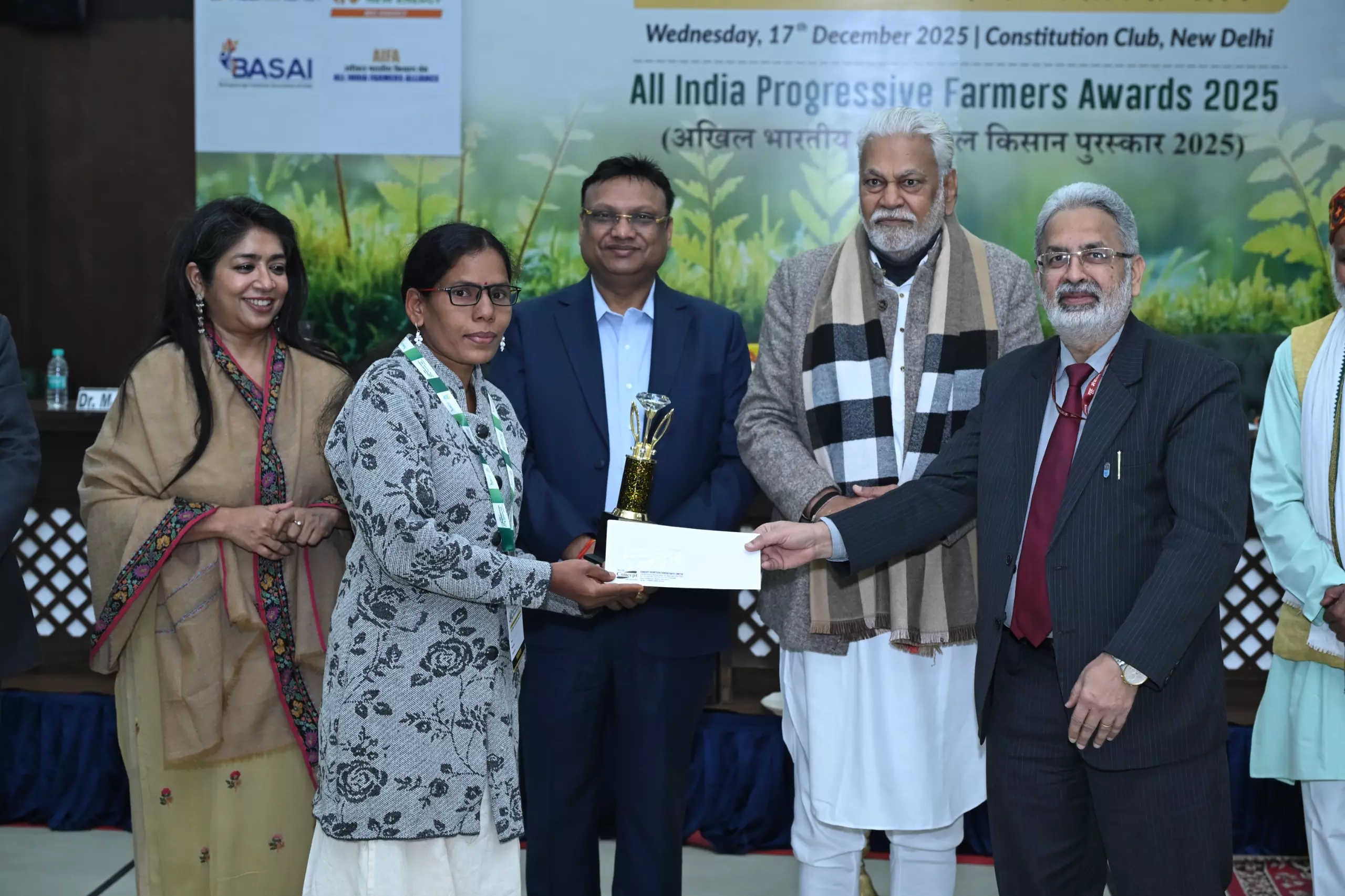
A. Lakshmi from Jarrela panchayat, Nittama Midipalem, Gudenkottaveedhi mandal, receives the Rythu Nestham Puraskar for excellence in organic farming, presented by former Vice President M. Venkaiah Naidu. (Image:DC)
Visakhapatnam: A quiet revolution is unfolding at the fields in the remote tribal belts of Alluri Sitarama Raju and Parvathipuram Manyam districts. Women, once confined to traditional roles, are now playing a leading role in organic farming, challenging the dominance of chemical fertilisers. In the process, they have gone on to prove that sustainable agriculture can be both profitable and empowering.
A. Lakshmi, from Jarrela panchayat in Nittama Midipalem of Gudenkottaveedhi mandal in ASR district, exemplifies this transformation. Despite completing her M.A. and B. Ed. from Andhra University in 2015, her true calling has turned out to be the soil. She has mastered the art of organic farming, cultivating a diverse range of crops in a planned manner, ensuring both ecological balance and economic returns.
Lakshmi’s efforts have earned her the prestigious Rythu Nestham Puraskar which she received from former vice president M. Venkaiah Naidu for excellence in organic farming, marketing, and food processing. She asserts that the demand for healthy food is rising, and organic farming is the answer. “If you cultivate organically without using any chemicals, you will definitely get profits. Once you master agricultural and allied sectors, you will not lose. That is why I chose organic farming,” she says with conviction.
Equally inspiring is the work of Aarika Narasamma from Durubili village in Parvathipuram Manyam district. With just one acre of land, she has turned her farm into a living laboratory of natural farming. Once dependent on chemical fertilisers and pesticides, she struggled with declining soil health and mounting debts. In 2019, Narasamma embraced natural farming through the Rythu Sadhikara Samstha (RySS).
Though initial days had been fraught with challenges, she persisted, adopting practices like Pre-Monsoon Dry Sowing (PMDS) and preparing her own natural stimulants such as Jeevamrut and Bijamarut. Today, her farm is thriving with earthworms and microbial activity, a sign of rejuvenated soil.
Narasamma cultivates 15 to 18 varieties of vegetables, greens, and pulses under the “Any Time Money” model, which ensures daily income. Her earnings have multiplied from ₹11,200 per season to nearly ₹47,824, enabling her to build a house and secure her family’s future. Narasamma is now regarded as a “farmer scientist,” sharing her knowledge with hundreds of women farmers.
These individual triumphs are part of a larger movement under the Andhra Pradesh Community Managed Natural Farming (APCNF) programme, hailed as the world’s largest agri-ecological initiative. Women are at the forefront of the programme, redefining agriculture from chemical dependency to ecological balance. Their farms, once burdened by debt and declining productivity, now flourish with biodiversity and sustainable yields. The success of Lakshmi, Narasamma, and countless others demonstrates that organic farming is not a gamble but a viable, profitable, and resilient model. More importantly, it is reshaping rural communities, empowering women, and restoring faith in farming as a dignified livelihood. ( Source : Deccan Chronicle )

Next Story