Vijayawada: CPM to Tour Andhra Pradesh to Assess Drought Conditions

The CPM has appealed to farmers, tenant farmers, agricultural labourers, and artisans to meet the drought assessment teams and explain their problems, so that their grievances could be brought to the state government’s attention.
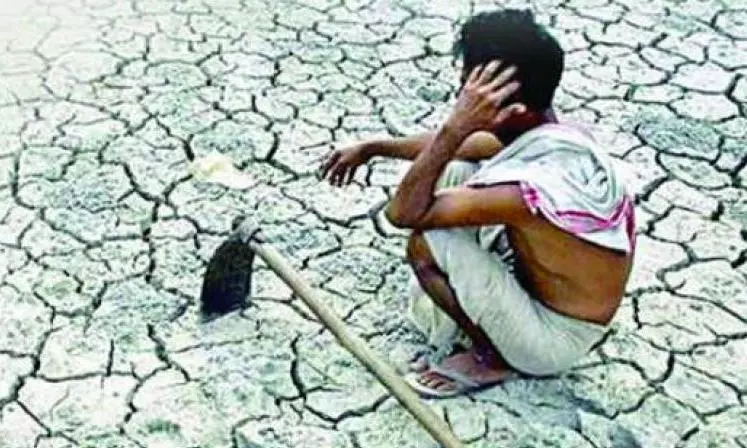
Vijayawada: Three teams of the CPI (M) Andhra Pradesh committee will tour the entire state from Wednesday to September 21 to assess drought conditions in AP.
CPM state secretary V. Srinivasa Rao said as per their reports, 655 mandals have faced deficient rainfall and nearly 80 per cent of crops have not been sown. Wherever sown, crops have suffered damage. Agricultural labourers are facing a lack of employment.
In the interim, the CPM state secretary said, rising prices of essential commodities has aggravated the economic crisis.
He accused the state government of not taking any mitigation measures, though the crop losses exceed ₹5 lakh crore.
“No Central teams have so far visited the state to assess the ground situation,” Srinivasa Rao pointed out.
He said the first team will be led by CPM state secretariat member K. Prabhakar Reddy and comprising D. Ramadevi, V. Krishnaiah, C.H. Baburao, M. Haribabu and the respective district party secretaries. It will tour West Godavari, Eluru, Krishna, NTR, Guntur, Palnadu, Bapatla, Prakasam and Markapuram districts.
The second team led by B. Balaram and comprising B. Tulasidas, K. Subbaravamma, Y. Venkateswara Rao, M. Suryanarayana and the respective district party secretaries will visit East Godavari, Dr. B.R. Ambedkar Konaseema, Kakinada, Anakapalli, Alluri Sitarama Raju, Polavaram, Parvathipuram Manyam, Vizianagaram, and Srikakulam districts.
The third team led by CPM central committee member K. Lokanatham and comprising M. Ramesh, V. Rambhoopal, Dadala Subbarao, and the respective district party secretaries, will tour Nellore, Tirupati, Chittoor, Nandyal, YSR Kadapa, Annamayya, Anantapur, Sri Sathya Sai, and Kurnool districts.
The CPM has appealed to farmers, tenant farmers, agricultural labourers, and artisans to meet the drought assessment teams and explain their problems, so that their grievances could be brought to the state government’s attention.
