Valmiki Caves --Bearing Secrets Of An Ancient Past

One of the most intriguing features of these caves is the presence of naturally resonant limestone formations. Gently tapped, some formations produce sounds resembling a tabala or bell. Visitors have been cautioned against touching or striking such formations, as uncontrolled access could damage the fragile geological structures
ANANTAPUR: The Valmiki Caves are where sage Valmiki is believed to have composed the epic, Ramayana. These natural attractions offer visitors a rare glimpse into the geological and environmental history of Rayalaseema, with rock formations dating back to nearly 1.6 billion years.
The caves, located near the historic Gooty Fort, are part of the ancient dolomite formations. Geologists have identified these rocks as among the oldest exposed formations in the region. These contain, among other things, evidence of ancient blue-green algae that gives clues to the environmental conditions that prevailed on the earth millions of years ago.
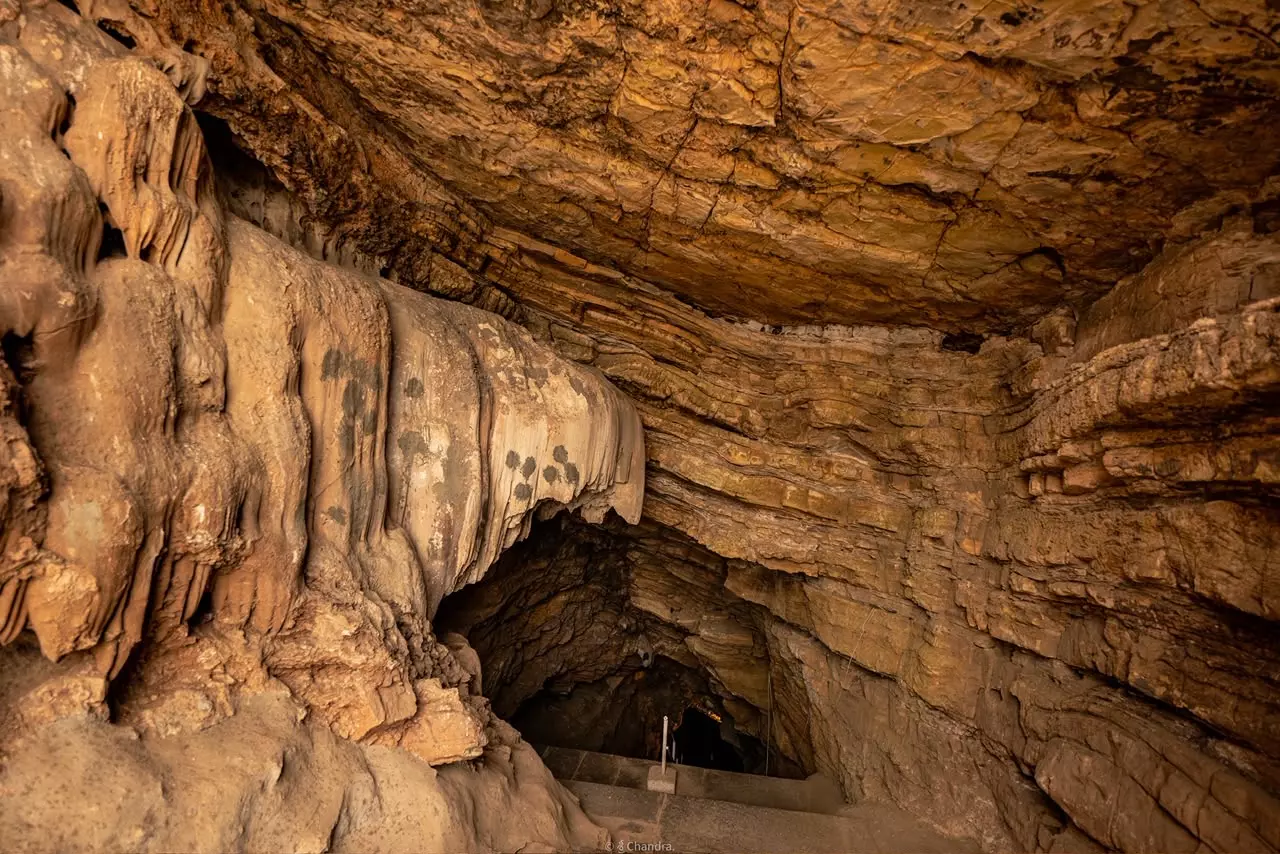
A recent visit and study by historians K Jayachandra and (his wife) Sridevi to the caves revealed an extraordinary landscape of stalactites, stalagmites, flowstones, curtains and honeycomb-like formations, many of which were sculptures created by nature. The cave formations have developed over geological time through the deposition of limestone dissolved in water.
The caves are also significant from a palaeo-climatic perspective. Studies based on oxygen isotope ratios preserved in stalagmites from the Valmiki Caves have been used to reconstruct past climatic conditions. Research indicates major climatic changes following the end of the last Ice Age around 11,700 years ago, including strengthening monsoons and increased rainfall.
The caves are believed to be among the deepest cave systems in south India. Surveys conducted in the 1980s by a team led by HD Gebauer documented their considerable depth. More than 300 steps have now been constructed, making access considerably easier than in the past, when explorers reportedly had to descend using ropes and torchlight.
“Inside the caves, natural formations resembling a Nandi, Shiva Lingam and other religious symbols have attracted the devotion of local communities. The caves are considered sacred by villagers, who traditionally conduct special prayers during Maha Shivaratri”, local guide N Hari notes.
One of the most intriguing features of these caves is the presence of naturally resonant limestone formations. Gently tapped, some formations produce sounds resembling a tabala or bell. Visitors have been cautioned against touching or striking such formations, as uncontrolled access could damage the fragile geological structures.
The surrounding landscape adds to the caves’ attraction, with the Erramala hill ranges, small forests and agricultural fields forming a scenic approach to the caves. However, the region’s present-day water stress and declining groundwater levels underline the sharp contrast between its wet geological past and current arid conditions.
Sridevi stressed the need to bring the caves more accessible to tourists with facilities.
For historians, geologists, researchers and tourists, the Valmiki Caves represent more than a natural attraction. They provide a window into a landscape that has undergone dramatic transformations—from ancient seas and glacial conditions to a monsoon-driven environment and the dry Rayalaseema landscape of today.
==
Mythological significance
The Valmiki Caves are situated near the Gooty –Mantralayam Road. The caves are linked to the Hindu mythology, as the belief is that Sage Valmiki composed the epic, Ramayana,in these caves.
==
.Modern-day discovery:
Year 1993: The caves were discovered and explored by a group of German tourists.
Sculptured entirely by nature over thousands of years through the action of water on lime stones, these formations have geological features like stalactites, stalagmites, calcite pillar, caves, curtains, honeycomb structures etc
Hidden underground water bodies:
The cave ecosystem features pristine, clear underground water bodies (Edu Bavulu or Gundalu) that add to the mysterious and untouched allure of the subterranean layout.
Beyond tourism, the caves have attracted scientific interest. Stalagmite deposits inside the Valmiki Caves have served as crucial sites for paleo-climate research, helping scientists study the historical Indian Summer Monsoon (ISM) variations.
==
Challenging access and terrain:
Reaching the cave is an adventure in itself. It requires a trek over rugged hill terrain, a short walk from the main road, and a steep descent or ascent through a small, hidden natural opening.
