Unsafe Practices Among Fishermen Causing Boat Mishaps in Sea

They do not keep life jackets and life buoys in the boats to use them in case of an emergency
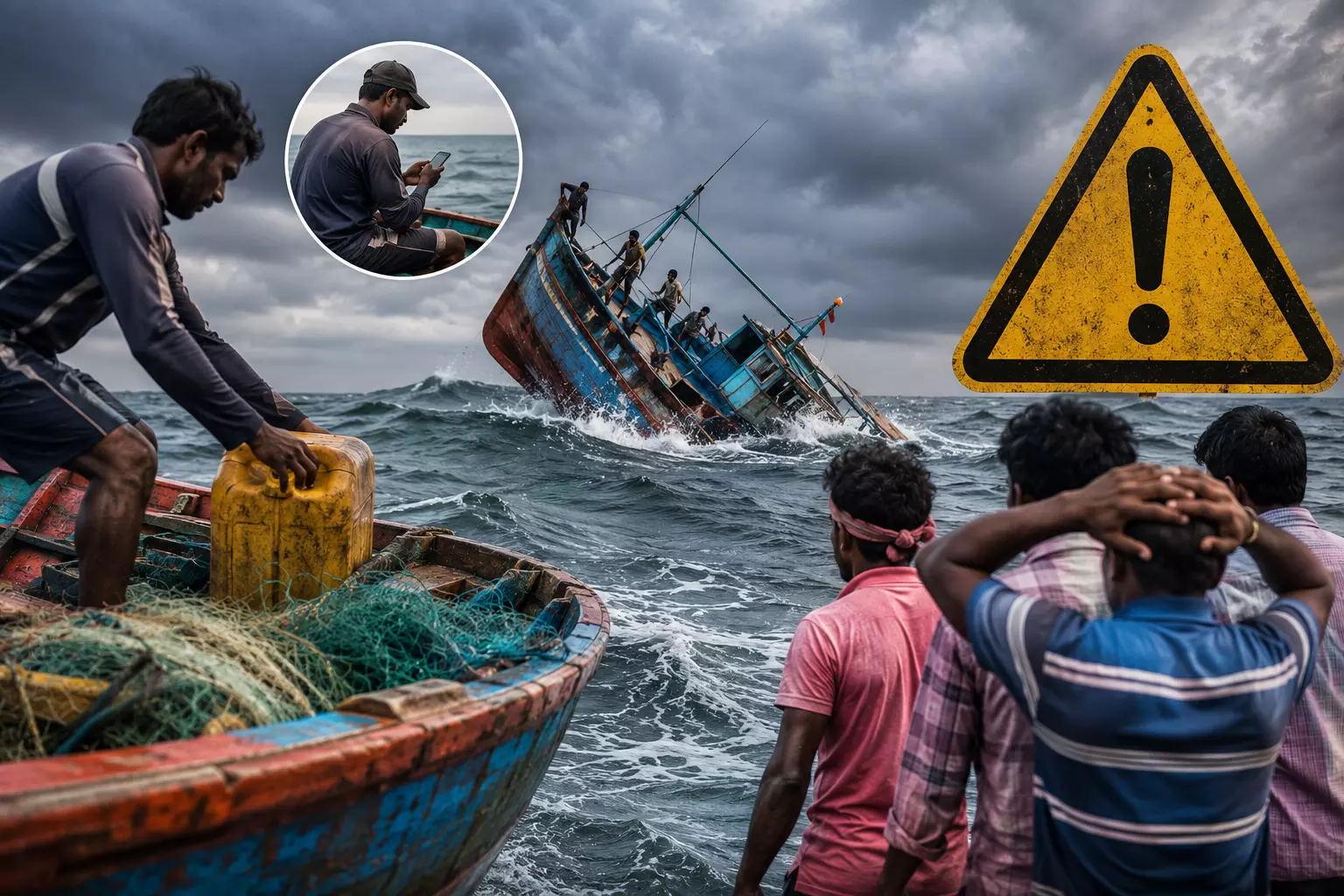
Vijayawada: Unsafe practices among the fishermen while in sea for fishing are prime reasons for boat mishaps and the resultant fatalities in Andhra Pradesh.
Several fishermen are not switching on the satellite based transponders while fishing in the sea on mechanized/ motor boats even though these are of much help in tracking the boats up to 200 nautical miles called exclusive economic zone from the coastline.
While they go into the deep sea, they do not want fellow fishermen to identity the location where they got a big catch. Some carry out fishing in shallow waters in violation of norms. There is also a fear of outage of battery in the boats as the transponders consume more power.
Some boats are unfit for sea voyage. Some fishermen ignore safety gear. They do not keep life jackets and life buoys in the boats to use them in case of an emergency.
AP has nearly 23,842 motorised/mechanised boats. Of these, the central government has allocated transponders to 8,305 boats. So far, transponders have been installed to 7,892 boats. Some 413 transponders are yet to be installed.
Both the Central and state governments are providing satellite-based transponders worth `38,000 each, free of cost, to fisherman under the Pradhan Mantri Matsya Sampada Yojana. Efforts are on to get allotment of transponders for the remaining boats too.
Following a series of mishaps involving fishing boats in the sea and also the recent missing of seven fishermen near Visakhapatnam coast, the state fisheries authorities have reviewed the situation and came up with some findings.
These are: transponder usage gap and battery limitation. The boat battery gets connected to self motor, VHF set, cabin lighting system and high power consumption by the transponder.
The authorities also noticed the safety and tracking gap as switching off of transponders results in loss of real-time tracking of the boat to monitor and respond in case of an emergency.
They recommended technology intervention like use of high-capacity batteries, longer-duration power solutions and alternate power sources to enable transponders to become operational. They proposed making transponders operational continuously throughout the sea voyage.
The authorities have also noticed the El Niño effect in the sea resulting in a rise in sea surface temperature leading to unstable weather and occurrence of sudden tornadoes and severe storms. This, in turn, causes the fish to migrate to deeper sea and hence the fishermen moving into deep sea for fishing and becoming vulnerable for trouble.
Low-pressure zones, absence of life saving equipment, inadequate communication tools, unskilled crew and frequent mid-sea fires are also causing boat mishaps in the sea.
The fisheries authorities have urged the government to initiate measures like ensuring transponder installation, regular holding of awareness meetings for fishermen, special drives to promote transponder usage and Nabh Mitra App, mandatory safety checks on usage of safety gear, use of communication devices and valid seaworthiness certificate, regular community interactions on distress alert system and emergency response procedure and amendment to AP Marine Fishing Regulation Act, 1995 in line with Centre’s guidelines and issue of catch certificates to ensure traceability.
Fisheries additional director Dr Sankara Rao said, “We are intensifying our efforts to sensitize fishermen to continuously use transponders while on sea voyage, carry safety gear and seek help of the rescue agencies in case of emergency.
East Godavari district fishermen cooperative society president and APCOB vice chairman B Ranga Rao said, “We have submitted a report to the government to provide solar power to the boats to avoid power issues for transponders -- similar to the practice in Karnataka -- and also to provide satellite phones to the fishing boats like in Tamil Nadu so that they may help safe voyage in the sea.”
Death of AP fishermen: 248 from 2020-2026
Bay of Bengal records more fishermen fatalities than the Arabian Sea
Growth Rate in fishing and aquaculture:1.28 lakh crore gross value added with 14.98% growth in 2024-25 and 1.52 lakh crore GVA with 19.07% growth in 2025-26
AP’s marine fish production: 6 lakh metric tonne, bags fourth place in India after Karnataka, Gujarat and Kerala
Special steps: Setting up of joint task force team for monitoring entry and exit of fishing boats at fish harbours and fish landing centres
Orientation courses … for active fishermen on sea safety, navigation and usage of communications devices
Safety standards: To enable boats to have transponders, VHF, fire-fighting equipment
Objective: Zero loss of life at sea through technology, safety standards and strong field-level monitoring system
