Tusker Keshava’s Chance to Turn From Rogue to Kumki

After losing its herd in a road accident and turning aggressive, rescued tusker Keshava is undergoing training to become a kumki elephant.
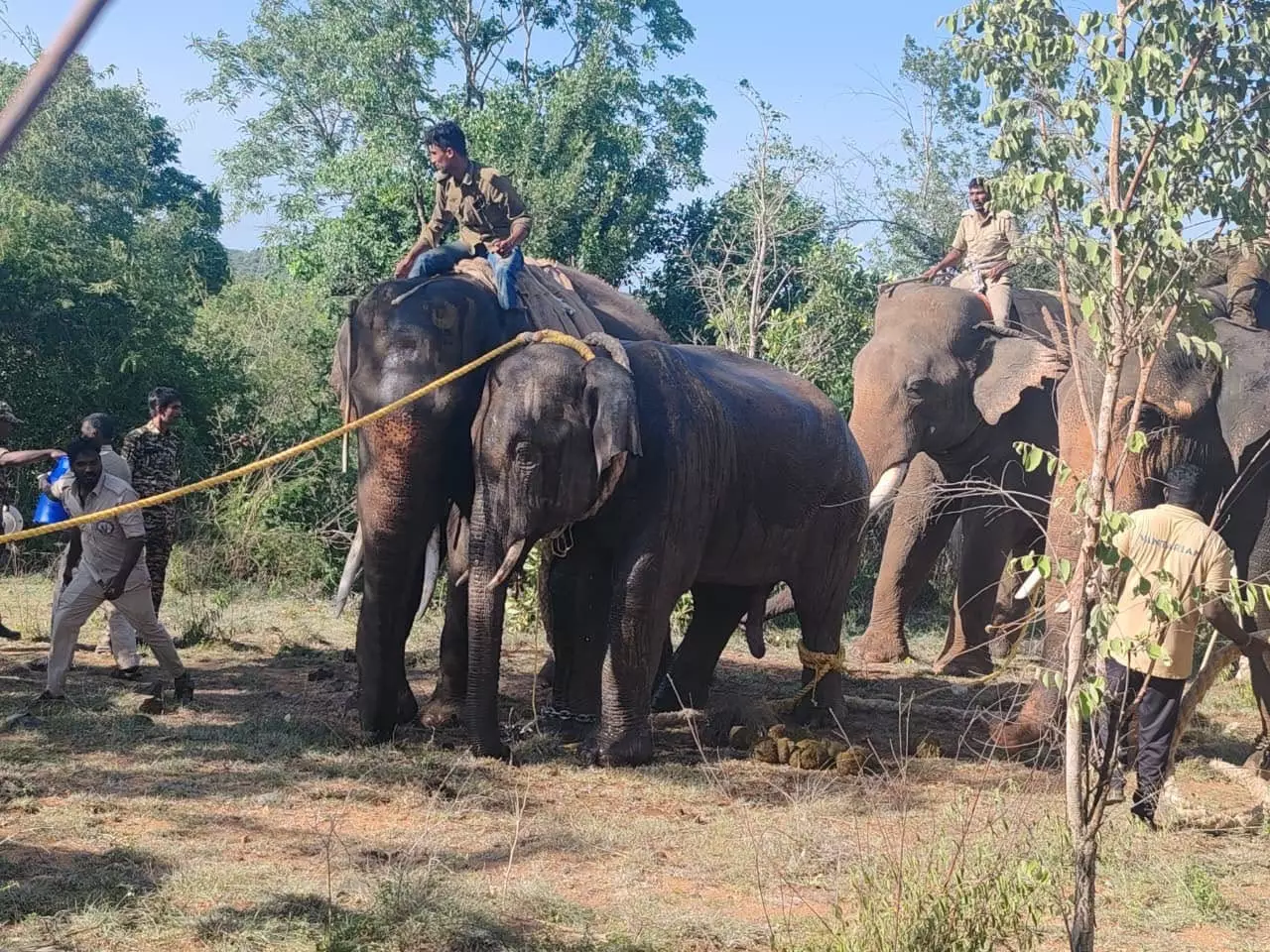
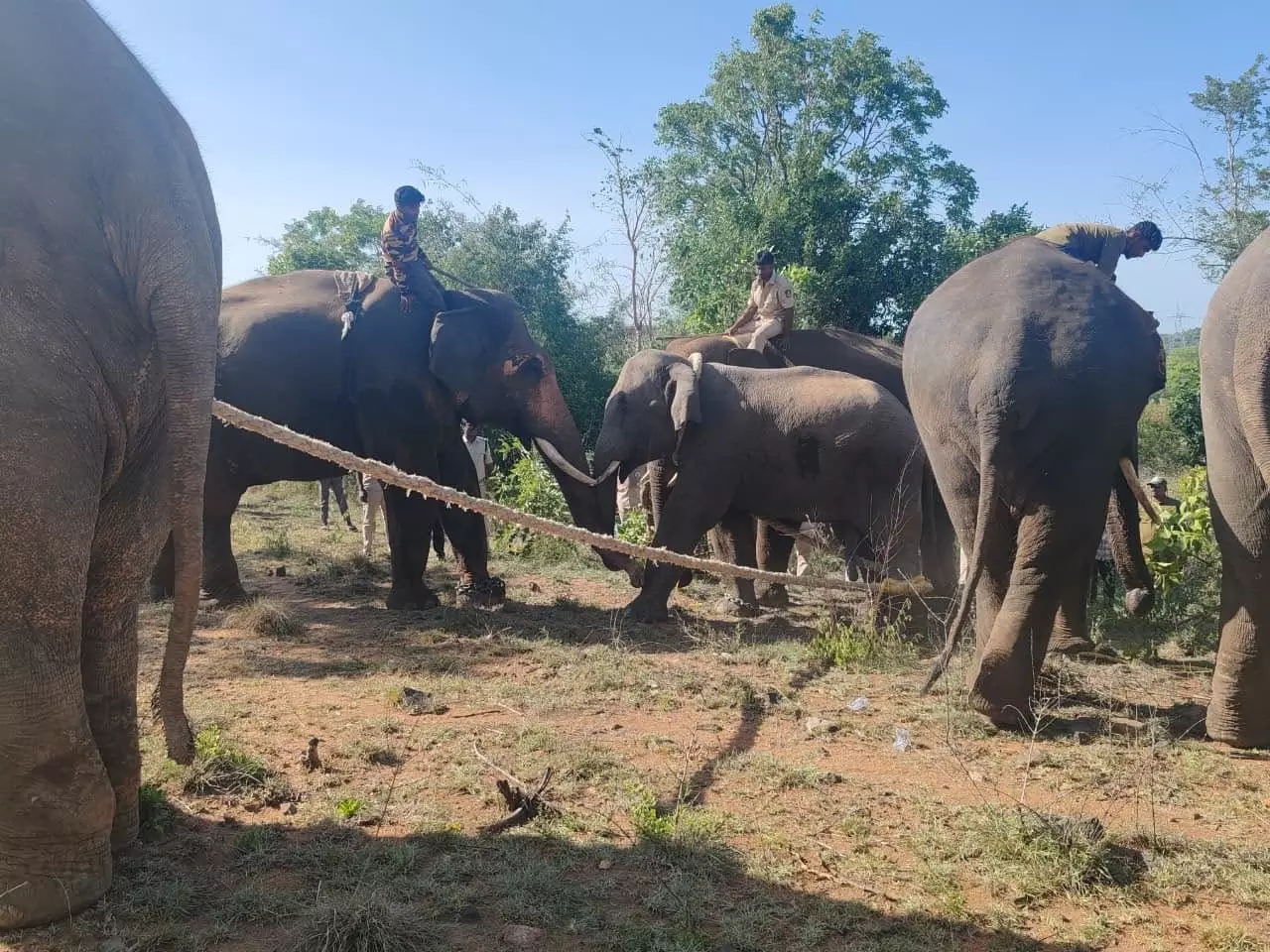
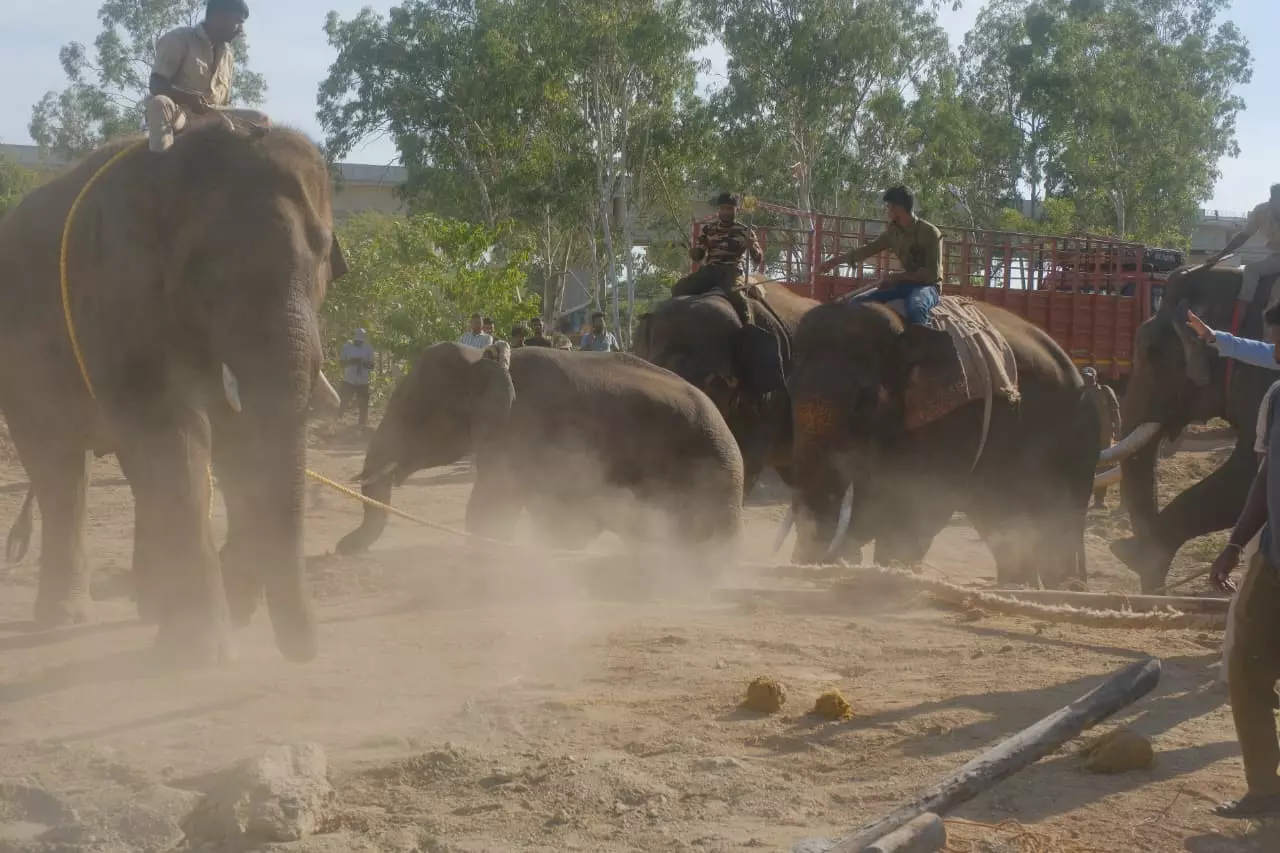
A road accident near Palamaner in Chittoor district of AP has changed the life of a young wild tusker forever.
In 2023, a speeding truck hit a herd of four elephants while they had been crossing the road, killing three of them on the spot. The surviving tusker repeatedly returned to the site where forests had buried the dead elephants. It gradually turned aggressive, started damaging crops, attacked cattle, and spread fear among villages on fringes of the forests in Chittoor district.
Forest officials finally managed to capture the elephant on July 16, 2016. They named the captured tusker Keshava and owing to its build and nature, have begun training it as a kumki. On a reformation path, Keshava could one day protect villages from the very kind of wild elephant herds it once belonged to.
Keshava's story has its origin in what happened long before the 2023 accident. Years ago, 21 elephants started migrating from the Mudumalai forests in Kerala. Gradually, they moved into the forest of Tamil Nadu, Karnataka, and Andhra Pradesh. Their population grew to more than 100. The elephants split into several herds, roaming the forests of Palamaner, Kuppam, Krishnagiri, and Kolar. Keshava belonged to one such wild herd before tragedy left it isolated.
Over time, the lone tusker became unpredictable. It damaged crops, attacked livestock, and entered villages. During one incident near Gangavaram, it seriously injured a forest section officer. After repeated complaints and a detailed assessment, the Forest department obtained permission from the Chief Wildlife Warden under the Wildlife (Protection) Act, 1972, to capture the elephant.
District Forest Officer G. Subburaj said, "We chose to capture this elephant after continuously monitoring it and assessing the threat it posed. The tusker largely depended on naturally available food and caused comparatively less damage to crops than other elephants. We feel it is suitable for kumki training."
Operation Tusker to capture the elephant involved five kumki elephants, 50 forest personnel, veterinarians, mahouts, and elephant trackers. Thermal drones tracked the tusker for three days, before teams launched the operation. The elephant escaped on the first day. On the second day, veterinarians tranquilised it and kumki elephants helped officials to subdue the tusker and secure it with ropes before shifting it to the training camp.
Forest officials say moving Keshava to the training camp is only the first step. The real challenge is to turn the wild tusker into a kumki.
"Elephants selected to be kumkis are first calmed inside secure enclosures. Mahouts gradually build trust through daily interaction, simple commands, and rewards like jaggery and sugarcane. The three-year training programme teaches the elephant to obey commands, accompany mahouts, and assist in forest operations. A kumki is considered fully trained only after it reliably returns to its camp on command even from the forest," a senior forest officer said.
For now, Keshava will spend nearly three years learning commands, building trust with its mahouts, and preparing for life as a kumki. If the training succeeds, the tusker that once wandered alone after losing its herd could one day return to the forests in a different role, helping drive wild elephant herds away from villages.
