Staff Crunch Hits Andhra Pradesh Drug Testing Labs

The laboratory currently functions with only 25 staff members, against a minimum requirement of 83 to ensure smooth operations and maintain drug quality standards.
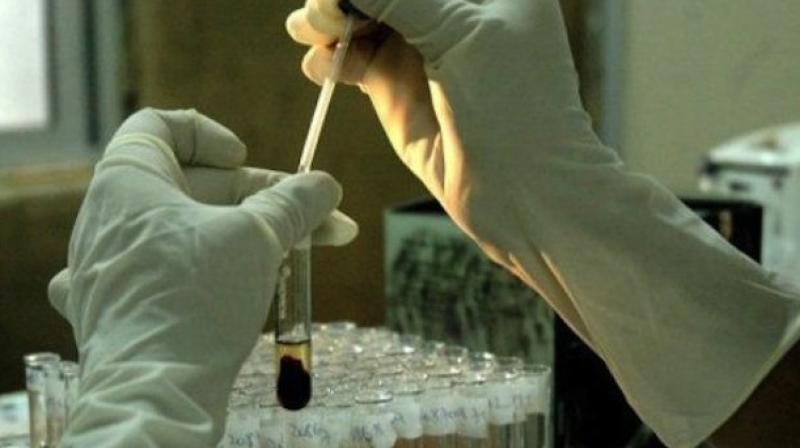
Vijayawada: A severe shortage of manpower has become a major concern at the Andhra Pradesh Drug Testing Laboratory in Vijayawada, affecting its ability to effectively test the quality of medicines collected from retail and wholesale outlets and manufacturing units across the State.
The laboratory currently functions with only 25 staff members, against a minimum requirement of 83 to ensure smooth operations and maintain drug quality standards.
Of the sanctioned strength, 12 posts of senior and junior scientific officers (analysts) are to be filled through departmental promotions, as recruitment through the AP Public Service Commission may take considerable time. A proposal has also been made to fill 71 posts on an outsourcing basis, including 38 junior analysts (22 for the State lab and eight each for the newly established regional labs in Visakhapatnam and Kurnool), nine junior assistants, six lab technicians, seven lab attendants, three electricians, four sweepers and four watchmen.
Officials said every position, from analysts to watchmen, is essential as analysts perform crucial testing while watchmen safeguard high-value equipment and sample integrity.
At present, the State lab handles around 4,000 drug samples annually. With Central funds sanctioned to upgrade the existing facility and establish two regional labs, the testing target has now been increased to 13,000 samples per year. To meet this target, the labs require the full sanctioned strength of 83 personnel. Equipment worth Rs 6 crore has recently been indented with the AP Medical Services and Infrastructure Development Corporation.
Drug inspectors collect suspicious samples from medical shops and pharma units and send them for analysis. Samples that fail standard parameters are declared “Not of Standard Quality,” triggering legal action under the Drugs and Cosmetics Act, 1940.
However, the State lab presently has no notified analysts and lacks state-of-the-art facilities to detect impurities in injectable and biological drugs, or to test cosmetic products. In important cases, samples are being sent to the Central Drug Laboratory in Kolkata.
A senior drug control administration official said that “There is an urgent need to provide adequate manpower to the three labs and to install advanced equipment so that drug quality can be monitored effectively and public health is protected.”
