Srisailam Goshala Boosts Temple Revenue With Cow-Based Products

Srisailam was the first temple in the state to introduce Goadharita (cow-based) products in 2019, setting a precedent for others like Tirumala, Kakani, Dwaraka Tirumala, Penuganchiprolu, and Annavaram temples, which later adopted similar initiatives.
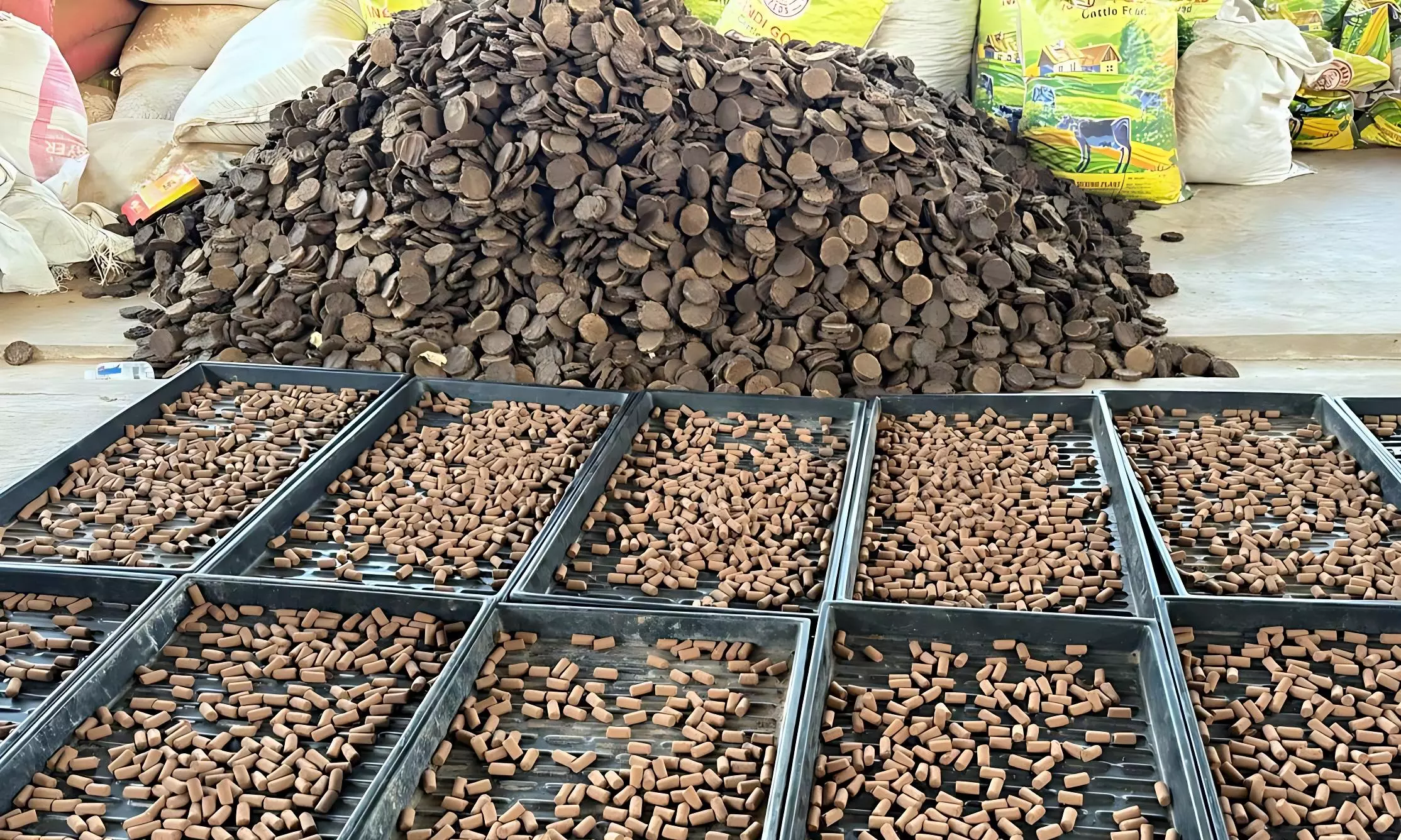
Kurnool: Srisailam temple stands as a prime example of the state government's "waste to wealth" initiative, generating around Rs 30 lakh annually through high-demand byproducts made from cow dung and urine. The Srisailam Goshala, home to nearly 1,050 cows, ensures that this daily output is put to meaningful use rather than being wasted.
Srisailam was the first temple in the state to introduce Goadharita (cow-based) products in 2019, setting a precedent for others like Tirumala, Kakani, Dwaraka Tirumala, Penuganchiprolu, and Annavaram temples, which later adopted similar initiatives. Maintaining high cleanliness standards in its Gosamrakshanashala, Srisailam Devasthanam follows traditional methods in production, ensuring authenticity with specially trained staff. A qualified technician, who has completed an Advanced Diploma in Panchagavya Therapy (ADPT) from Hyderabad, oversees the production and quality control of these products. ADPT, a two-year technical course for cow-based product development, is available in Hyderabad, Bhimavaram, and other places in Telugu states. Kancheepuram in Tamil Nadu has an authentic Panchagavya Therapy Training Centre run by Kanchikamakoti Peetham.
Since 2019, the temple has been producing Dhoop Sticks, Danthamanjan (Toothpowder), Go-Ark (Purified Cow Urine), Homam Pidakalu, and Vibhuti. These products, which are currently sold only in the temple town and not available online, have gained immense popularity. Among them, Vibhuti (sacred ash) holds deep spiritual significance, especially for Kannadiga devotees.
Many devotees, considering the Bhramaramba temple their spiritual home, walk over 100 km to offer sarees for Ugadi, and wearing temple-made Vibhuti is an essential part of their religious practice. The temple’s dhoop sticks, marketed under names like Aishwaryam, Bhasmam, and Bhasmitam, are also widely sought after.
The production process involves meticulous steps to ensure purity and quality. For Vibhuti and Danthamanjan, cow dung is dried, burnt in a kiln, and powdered. To enhance its sanctity, sacred ash from temple rituals such as Rudra Homam, Chandi Homam, Mrityunjaya Homam, and Ganapati Homam is blended into the final product.
Each week, the temple produces around 500 kg of Vibhuti, which is packaged in various sizes and sold to devotees. The Danthamanjan is prepared by mixing the ashes with herbal ingredients like ajwain (Vamu), Uttareni, Triphala Churnam, mint, edible camphor, and clove powder.
Another widely used byproduct is Go-Ark, which is prepared by collecting cow urine during Brahma Muhurtham (early morning), filtering it through 14 layers of cloth, and distilling it with cumin, Nela Usiri, Nela Vemu, Tippa Theega, mint, and ginger. Ayurvedic practitioners consider Go-Ark a powerful natural remedy, and many devotees believe in its medicinal benefits, especially during health crises like Covid-19.
The temple goshala operates on a large scale, using 40 litres of cow urine and 1,000-2,000 kg of cow dung daily for production. A team of 40 dedicated staff members ensures high-quality Panchagavya products. Despite being unavailable on e-commerce platforms, these items generate around Rs 2.50 lakh in monthly sales.
