Srikalahasteeswara Temple Defies Eclipse Closure Norm; Grahana Kalabhishekam to Be Performed

Ancient Shaivite shrine keeps sanctum open during lunar eclipse, marking the celestial event with special Rahu–Ketu rituals instead of closure.
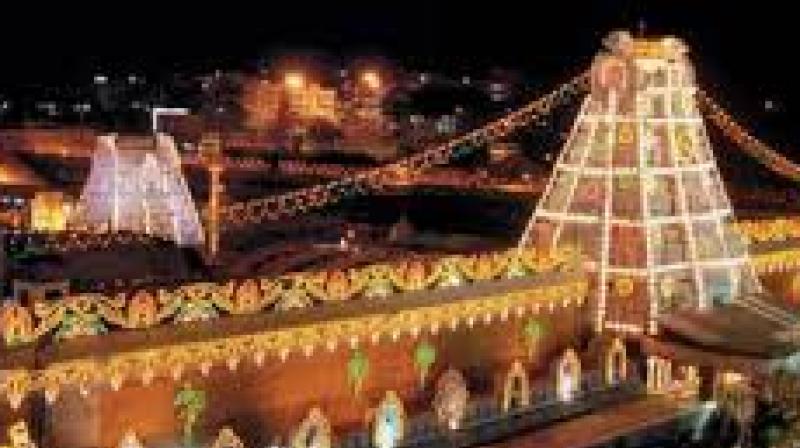
Tirupati: The Srikalahasteeswara Swamy Vari temple at Srikalahasti town in Tirupati district will follow its centuries-old practice of keeping the sanctum sanctorum open for special rituals during Tuesday’s lunar eclipse.
In most Hindu temples, this remains closed during solar and lunar eclipses and is reopened only after purification rituals. However, priests at Srikalahasti said the temple has followed a different practice for generations. Daily worship would continue uninterrupted even during eclipse periods.
Yet, the eclipse is treated as a spiritually significant time at the temple and marked with Grahana Kalabhishekam and Rahu-Ketu pujas instead of a suspension of the rituals.
The temple, developed under the Chola rulers in the 12th Century, is revered as one of the five Panchabhoota Sthanams representing the element of air. It holds an important place in the Shaivite tradition and is associated with the legend of Kannappa, the hunter-devotee who offered his eyes to Lord Shiva in an act of devotion and was granted redemption.
This association has long drawn devotees to the shrine seeking relief from planetary afflictions.
Priests said the temple remains open during eclipses because Lord Srikalahasteeswara is believed to maintain cosmic balance. The kavacham adorning the main deity bears symbols of all 27 nakshatras and the nine grahas, signifying the Lord’s control over celestial forces. This belief forms the basis for continuing the worship when many other temples close their doors during eclipse hours.
The shrine also has a close link with Rahu and Ketu, the shadow planets traditionally associated with eclipses in Hindu belief. A five-headed serpent representing Ketu is placed on the crown of the deity, while Rahu is symbolised by an ornament on the waist of Goddess Ammavaru.
Priests say these symbolic forms indicate that the influence of these planetary forces is neutralised at Srikalahasti -- which is why the rituals there are not interrupted.
Tuesday’s lunar eclipse will begin at 3.20pm and end at 6.47 pm. Priests would perform Grahana Kalabhishekam at the midpoint of the eclipse and conduct Rahu-Ketu pujas as part of the observances.
Devotees, particularly those seeking relief from Rahu-Ketu dosha in their horoscopes, are expected to visit the temple during the eclipse period and offer prayers to Lord Shiva and Goddess Ammavaru after performing the rituals.
