Scoring With Kumkis, AP On Next Steps Of Dealing With Wild Elephants

The first operation conducted over the weekend saw three trained kumkis – Jayanth, Vinayak and Krishna, brought in from Karnataka, successfully driving a group of wild elephants away from mango orchards back into the Koundinya Wildlife Sanctuary: Reports
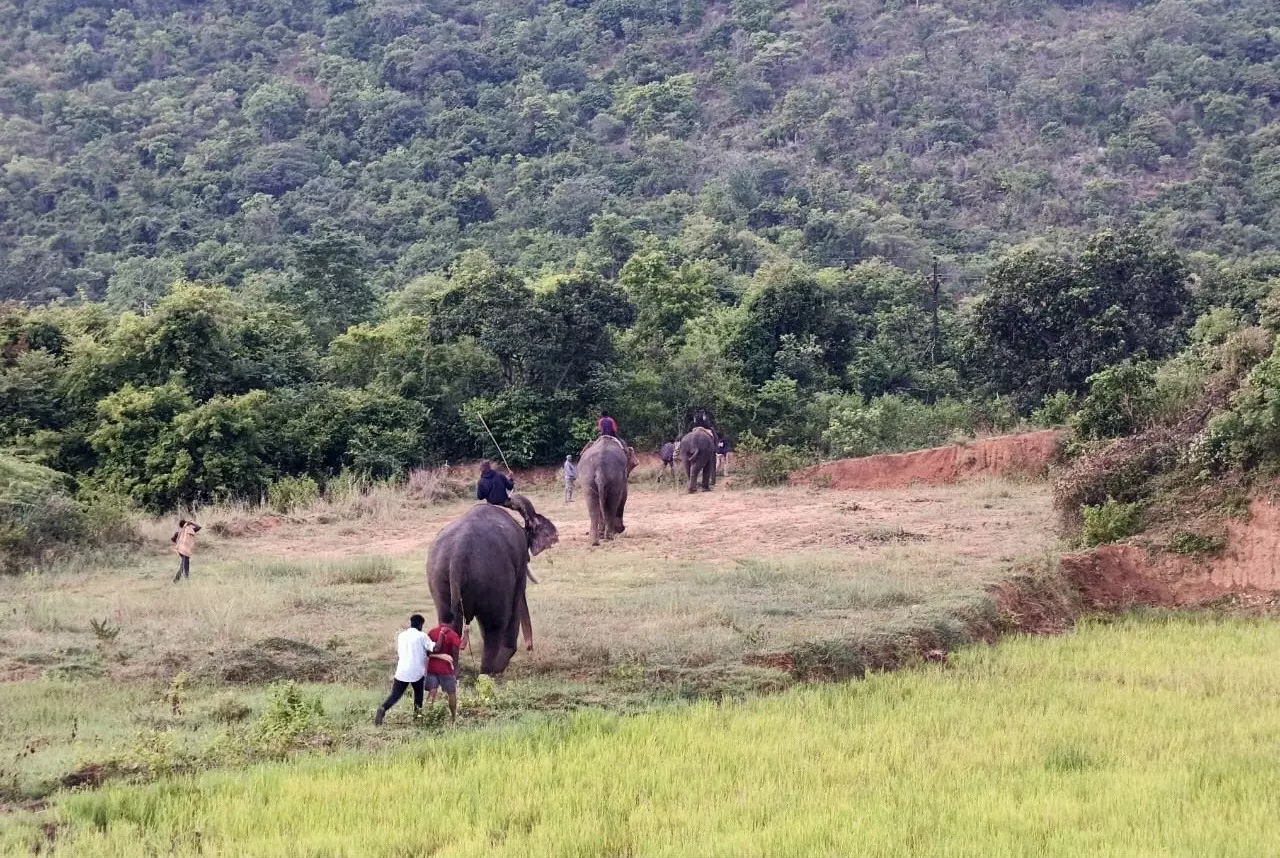
TIRUPATI: A day after their first successful deployment of trained kumki elephants, AP forest officials are formalising their strategy for using kumkis to drive away wild elephants back into forests, before the pachyderms cause any harm to agricultural or horticultural crops on the fringes of forests.
Forest authorities are fine-tuning the recent operation they carried out near Mogili in Chittoor district, marking a strategic shift in the state's approach to managing human-elephant conflict. Authorities are improving on that experience to pursue their second mission using kumki elephants, this time in the Punganur forest region of Chittoor district.
The first operation conducted over the weekend saw three trained kumkis – Jayanth, Vinayak and Krishna, brought in from Karnataka, successfully driving a group of wild elephants away from mango orchards back into the Koundinya Wildlife Sanctuary. This intervention brought in a much-needed relief to farmers of the region, who had suffered years of crop losses due to the presence of wild elephants.
Forest officials believe this marks a significant shift in the way Andhra Pradesh has been handling the recurring elephant-related conflicts, particularly in the border areas adjoining Karnataka and Tamil Nadu. “It’s not just about chasing elephants. This is about building confidence among local farmers that the state has a plan of successfully dealing with their recurrent problem,” said a forest official involved in the operation.
Deputy Chief Minister K. Pawan Kalyan, who holds the Forest portfolio, on Monday praised the Mogili operation as a first step in the coalition government’s planned response to escalating human-elephant conflict.
AP Forest officials’ new operational framework comprises long-time coordination between various departments, logistical planning and infrastructure support. “This is not just a one-time effort. We are building a system to respond proactively to elephant movements across all vulnerable zones,” said a senior forest official.
Experts say each kumki-based intervention must be planned scientifically, taking into account various ecological and behavioural factors. “You can’t just move kumkis from one place to another and expect results. The landscape, elephant behaviour, and type of threat must be factored in. Kumkis are crucial where human life is at risk. But in crop damage cases, we require different strategies,” explained a forest officer.
Currently, the kumki elephants brought from Karnataka in two phases are stationed at a 50-acre elephant camp at Musalimadugu in Palamaner. Seventeen of the frontline personnel, who are taking care of kumkis are from the districts of Chittoor, Tirupati and Annamayya, have received practical training in handling kumkis in Karnataka.
Forest department has invested heavily on the Musalimadugu elephant camp to create long-term care infrastructure. Elephant sheds, feeding kitchens, borewells, solar fencing and enclosures have all been put in place. Veterinarians are attending to elephant Deva that has a partial vision issue. Another, Ranjan, is still adjusting to the new environment. It remains in the kraal till it adjusts to the new atmosphere.
HIGHLIGHTS:
- In their first operation, trained kumkis Jayanth, Vinayak and Krishna drove a herd of wild elephants back into the Koundinya Wildlife Sanctuary
- Forest officials say this marks a turning point in the state's approach to mitigating man-elephant conflict.
