Satellite Data Shows Kolleru Lake Shrinks 57% -- From 2.22 Lakh Acres to Just 94,000

Satyanarayana noted that the lake remained healthy until the mid-1970s
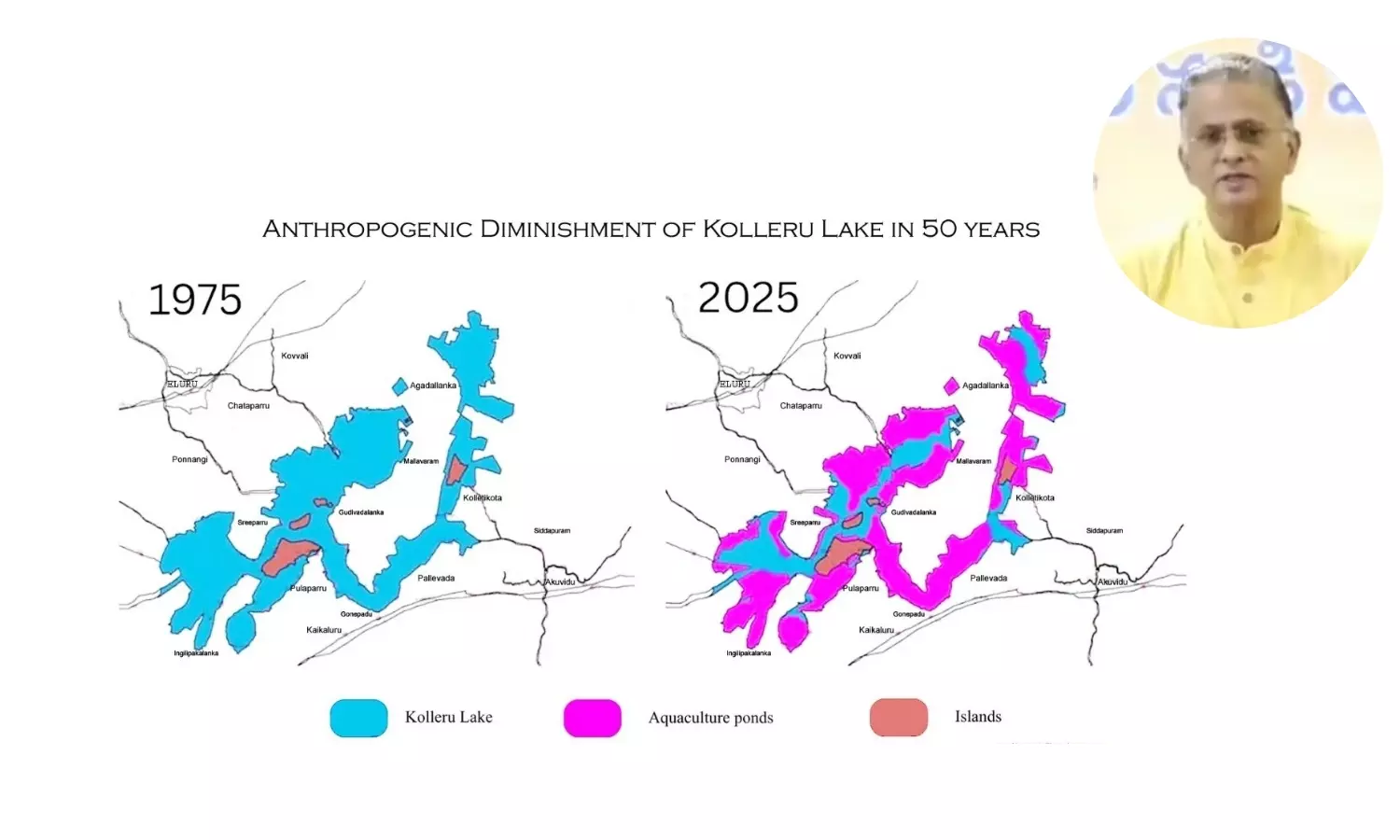
Visakhapatnam: Kolleru Lake, once a vast freshwater expanse of 222,000 acres in 1975, has now shrunk to just 94,000 acres, as per recent satellite data.
This decline, representing nearly a 57 per cent reduction in its natural area, has been attributed to the expansion of aquaculture and encroachment.
Bolisetty Satyanarayana, a senior leader of the Jana Sena party and an environmental activist, cautioned Prime Minister Modi, chief minister Chandrababu, deputy chief minister Pavan Kalyan, and the Union environment ministry, that unchecked human activity has pushed the lake into a crisis.
Located between the Krishna and Godavari deltas, Kolleru Lake is one of Asia's largest freshwater lakes and a Ramsar Site of international importance. For centuries, it served as a natural flood regulator, groundwater recharger, and climate stabiliser for the region.
Satyanarayana noted that the lake remained healthy until the mid-1970s, after which the proliferation of fish ponds altered water flow patterns and led to a steady reduction in its natural area. He criticised the weak enforcement of environmental regulations, noting that previous restoration efforts have failed to yield lasting results.
Satyanarayana raised legal concern, citing Supreme Court directives prohibiting encroachments within the notified plus-five mean sea level boundary. He argued that violations of these regulations not only undermine environmental laws but also breach constitutional duties.
The ecological consequences of this decline have been evident in decreased populations of migratory birds, increased pollution from aquaculture and untreated water, and the erosion of traditional fishing livelihoods. He warned that the lake's diminished capacity could impair its ability to control floods, posing risks to surrounding communities.
While acknowledging that aquaculture contributes to income generation, he cautioned that its unchecked expansion in sensitive areas could cause long-term damage. He urged authorities to enforce existing regulations, eliminate illegal activities, and implement a time-bound restoration plan with regular satellite monitoring to ensure accountability.
He said restoration remains feasible if local communities are involved, but noted the urgent need for action before the situation deteriorates further.
