Safety Code Violations Leave Buses Ill-Equipped

Experts say the government should take steps toensure old buses are upgraded with essential safety features: Reports
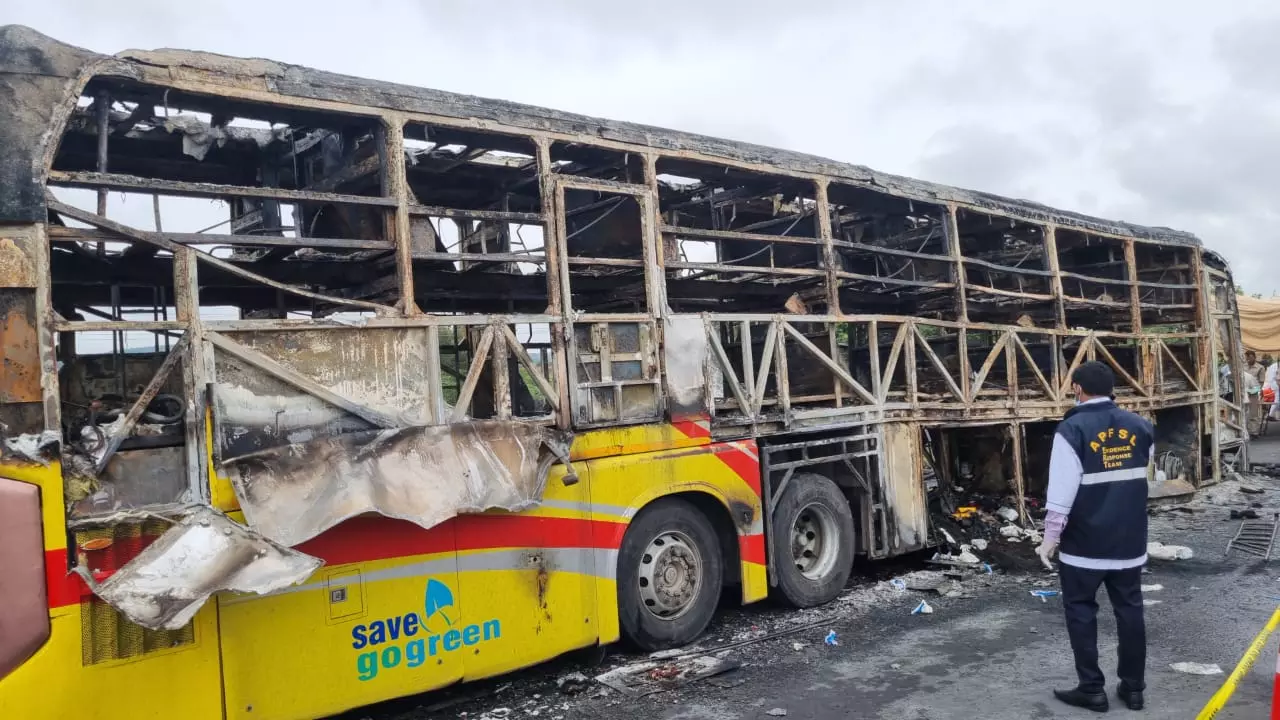
KURNOOL: Many old buses without passenger safety features are plying on the roads in Andhra Pradesh. Experts suggest that the government take strong steps to ensure passenger safety.
The recent bus mishap in Kurnool raised public concern over passenger safety in travel and luxury buses.
With a view to improving passenger safety in buses, the central government issued several guidelines in 2023, but these have not been fully implemented in many states. The updated Bus Body Code provides standards for emergency exits, seat spacing, electrical wiring, structural vibrations, braking performance, and vehicle stability.
Under the new regulations, the Automotive Industry Standard (AIS 153) would become mandatory from Sept 2025, defining how every bus in India must be built. All new buses would have to comply with these norms, ensuring a safer travel experience for passengers.
Many modern buses, such as those from Volvo, meet these standards. However, in states like Andhra Pradesh, several older buses are operating without basic safety measures and carrying thousands of passengers daily. Their body structures are outdated and they are not equipped to meet the new safety requirements.
The 2018-model Scania bus that caught fire near Chinna Tekuru in Kurnool, killing 19 passengers, reportedly lacked advanced safety systems. Experts say the state government should take a decision on such old buses by forming a committee or similar body to ensure they are upgraded with minimum safety features.
In the recent case too, the main driver of the Scania vehicle told the police that poor visibility prevented him from noticing the black-coloured motorcycle, indicating a lack of proper safety infrastructure. Lack of proper street lighting, along most stretches of the highways and even on city roads, causes such mishaps.
The road transport and highways has mandated that all bus bodies must be certified by approved testing agencies and fitted with “indirect vision” systems—camera and monitor devices that help drivers detect vehicles and people in blind spots. These systems would improve visibility and reduce accidents.
The Bus Body Code also makes it compulsory for buses with a seating capacity of 22 passengers and above, especially sleeper coaches, to install fire detection, alarm and suppression systems as per AIS:135 and AIS:153 standards. These measures aim to reduce the risk of major accidents and ensure the safety of passengers even during emergencies.
“Many buses in the state still lack basic passenger safety measures,” said a retired transport official. “Old buses operate without modern equipment while the authorities focus only on vehicle fitness and permits. The government should insist that all operators install essential safety systems within a fixed timeframe so as to prevent future tragedies,” he stated.
A senior cop also expressed a similar opinion.
