Rituals Start at Centuries-Old Gudimallam Temple After Consecration
Architectural features of the temple point to multiple historical layers
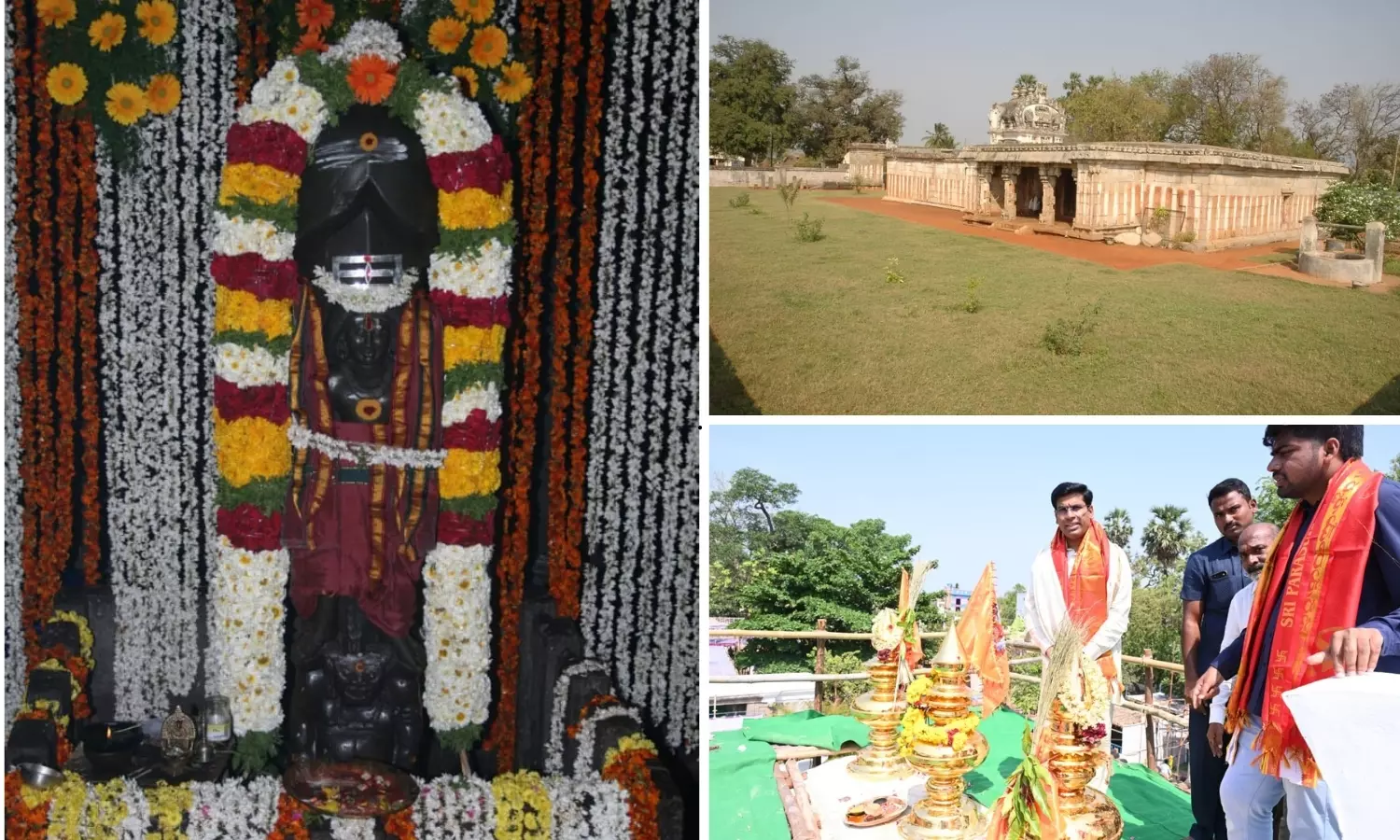
TIRUPATI: After a gap of centuries, regular worship has resumed at the historic Sri Parasurameswara Swamy Temple at Gudimallam, following completion of a five-day Jeernodharana Ashtabandhana Maha Kumbhabhishekam on Thursday.
The ritual has formally revived the temple’s sanctity, marking its return as an active spiritual centre.
For decades, Archaeological Survey of India (ASI) had maintained the shrine in Yerpedu mandal near Tirupati city as a protected monument. However, rituals-wise, the temple remained largely inactive despite its historical importance. Restrictions on certain ritual activity and absence of a temple management body meant that the mandatory consecration, usually held once in 12 years, could not be performed.
This situation changed with a joint initiative by the Endowments department and ASI, which enabled both temple conservation and restoration of rituals. Over the past few months, structural repairs worth about ₹30 lakh had been carried out. The temple committee arranged for the construction of 12 yaga shalas. This led to the five-day Kumbhabhishekam, conducted by more than 60 ritwiks as per Shaiva Agama traditions, which concluded on Thursday, formally reopening the temple for daily worship.
District collector Dr. S. Venkateswar, who visited the temple on Thursday and took part in the rituals, said the Maha Kumbhabhishekam at the ancient shrine has been held after a gap of nearly 500 years. He said kalasa pratishta had been performed with devotion and termed it his privilege to receive the blessings.
The collector said steps would be taken in coordination with the Endowments department to improve the basic amenities for devotees at the temple.
Officials said efforts are underway to improve the temple’s visibility among pilgrims. Srikalahasti MLA Bojjala Venkata Sudheer Reddy has pushed for including the temple in the Tirupati tourism circuit. He contributed five kalasas for the temple tower in the memory of his father, former minister Bojjala Gopala Krishna Reddy.
Located in Yerpedu mandal on the banks of Swarnamukhi River around 30 km from Tirupati, the temple is regarded as one of the earliest surviving centres of Shaivite worship. Historians trace its origins to early dynasties, such as the Cholas and Pallavas. Some scholars trace its antiquity as far back as the 3rd Century BCE.
The temple’s presiding deity is an unusual Shivalinga, regarded as one of the earliest symbolic forms associated with Lord Shiva. As per the local belief, the deity is linked to Parasurama, the sixth incarnation of Vishnu, embodying elements of the Hindu trinity.
Architectural features of the temple point to multiple historical layers. The sanctum’s apsidal brick structure is attributed to the Satavahana period, indicating continuous evolution of the site over centuries.
