Probe Says over 20 Crore Spurious Tirumala Laddus Sold Between 2019–2024

Investigators trace these adulterated consignments to Bhole Baba Dairy (Uttarakhand) and its associated firms, AR Dairy (Tamil Nadu), Vyshnavi Dairy (Andhra Pradesh) and Mal Ganga Dairy (Uttar Pradesh).
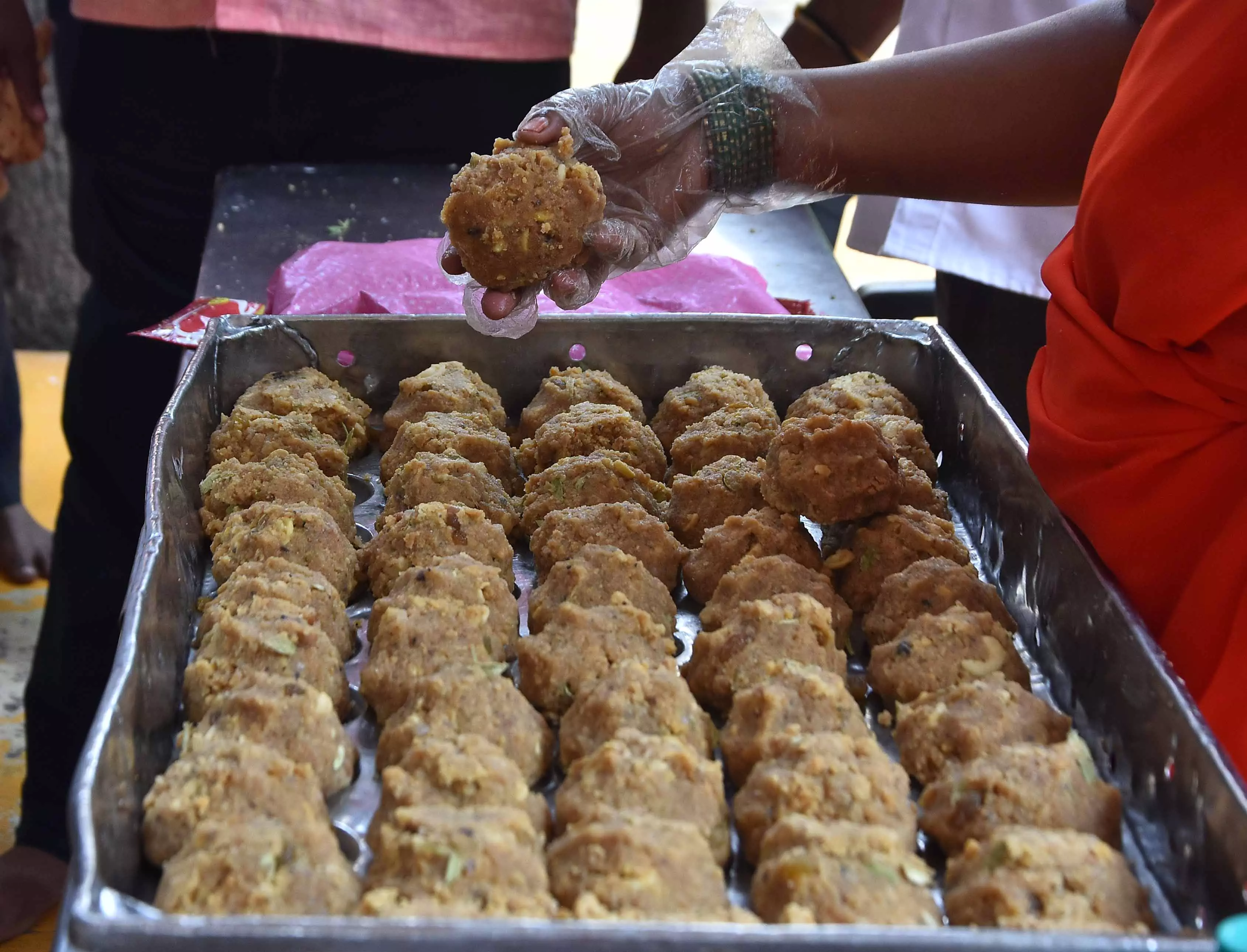
Tirupati: Fresh estimates in the wake of ongoing CBI-led Special Investigation Team (SIT) probe suggest that 20.14 crore laddus prepared in Tirumala between 2019 and 2024 may have been made using spurious ghee. This figure is based on an analysis of the official procurement records, pilgrim data and SIT findings, adding a new dimension to the contentious adulteration case surrounding the temple’s signature prasadam.
Based on the SIT’s findings that 42 per cent of the ghee procured by Tirumala Tirupati Devasthanams (TTD) during this period had been adulterated, it is surmised that almost two out of every five of 48.76 crore laddus prepared during five years had been impure and contained synthetic and chemically treated ghee, and not dairy-derived fat.
TTD Trust Board chairman B.R. Naidu, while acknowledging the figures, said the temple administration could not differentiate laddus made using pure ghee from those prepared with adulterated ghee, because the supplies had been mixed during routine production.
According to him, between June 2019 and 2024, TTD procured 1.61 crore kg of ghee for laddu preparation and daily naivedyam offerings at a total cost of ₹534.7 crore. Lab tests and supplier documentation examined by the SIT revealed that 68 lakh kg of this stock, worth nearly ₹250 crore, had been adulterated.
Investigators trace these adulterated consignments to Bhole Baba Dairy (Uttarakhand) and its associated firms, AR Dairy (Tamil Nadu), Vyshnavi Dairy (Andhra Pradesh) and Mal Ganga Dairy (Uttar Pradesh).
The investigation found that the ghee supplied had not been derived from milk or butter. Instead, palm oil and palm kernel oil had been thickened and coloured with beta carotene, infused with artificial flavour, and treated with emulsifiers such as mono and diglycerides, lactic acid ester and acetic acid ester, which helped mimic the ghee’s natural texture and extend shelf life.
The Tirumala temple kitchen, known as Potu, uses roughly 11,500–13,000 kg of ghee every day to prepare nearly 3.5 lakh laddus, indicating that each laddu contains close to 33 grams of ghee on an average. When this average is applied to the total 48.76 crore laddus prepared in five years, the ghee usage almost entirely aligns with the 1.61 crore kg procured, allowing proportional calculation of the number of laddus affected by adulterated stock.
This correlation between procurement data and kitchen usage formed the basis for estimating the scale of contamination.
During this five-year period, coterminous with the Jagan Mohan Reddy government, 10.97 crore devotees had visited Tirumala, many of whom received laddus as part of temple services. With adulterated ghee mixed into the general stock, officials say identifying who consumed pure or contaminated prasadam is now impossible.
Authorities say the concern lies not in individual tracing but in recognising how a sacred food offering could remain compromised for five years at one of the country’s most revered shrines.
