PPP Projects to Offer Best Opportunity to Accelerate Development: Naidu

16 July 2026 5:48 PM IST16 July 2026 5:48 PM IST
PPP projects should be developed on a sustainable model with adequate opportunities for economic activity: CM
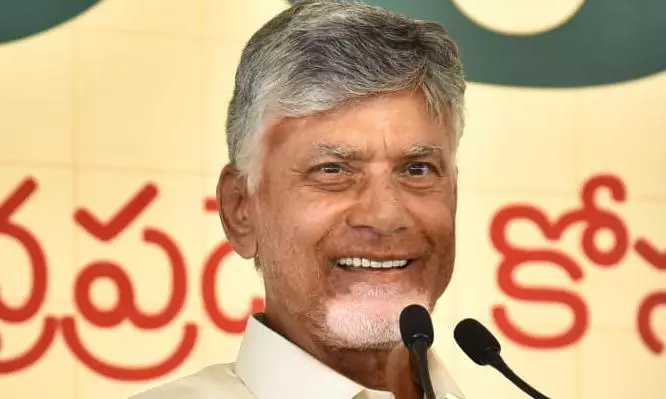
Chief Minister N Chandrababu Naidu (File Photo)
Amaravati: Chief Minister N Chandrababu Naidu stated that Viability Gap Funding (VGF)-supported projects will play a pivotal role in driving future infrastructure development.
He observed that while India witnessed an era of economic reforms in the past, it is now undergoing an infrastructure revolution. He stressed that Public-Private Partnership (PPP) projects offer the best opportunity to accelerate development across multiple sectors.
Reviewing the status of PPP projects and related government investments today the Chief Minister said that all PPP projects should be developed on a sustainable model with adequate opportunities for economic activity built into every project.
He also instructed officials to effectively leverage Central Government support mechanisms such as the Urban Challenge Fund. He called for establishing an efficient institutional mechanism for managing ports, airports and other major infrastructure.
Officials informed the Chief Minister that the State is currently implementing 260 PPP projects, including ports, shipyards, airports, tourism projects and other infrastructure initiatives. Projects worth Rs 1,23,229 crore are under various stages of implementation across sectors such as industries, infrastructure, urban development, tourism, medical colleges, roads and solar power.
The Chief Minister directed that local fishermen should be made stakeholders in coastal tourism projects so that they directly benefit from such developments. He also instructed officials to create better public infrastructure and economic activity zones around 21 major temples across the State.
Officials informed the Chief Minister that the Central Government has sanctioned Rs 178 crore in VGF for the Waste-to-Energy plants in Vijayawada and Tirupati. They further stated that Rs 1,468 crore in VGF is expected for medical colleges and that the Department of Economic Affairs, Government of India, has appreciated Andhra Pradesh's PPP model adopted for establishing these institutions.
The Chief Minister directed officials to place the Andhra Pradesh Public-Private Partnership–VGF Policy 1.0 before the next Cabinet meeting and to issue detailed implementation guidelines at the earliest. He also instructed officials to study various PPP frameworks being implemented by the Central Government.
Officials projected that, in line with the Swarna Andhra 2047 Vision, the State could attract Rs 8 lakh crore of investments annually through PPP projects. They explained that large-scale infrastructure investments would be concentrated in the Visakhapatnam, Amaravati and Tirupati Economic Regions.
The Chief Minister said that all projects should align with the micro and macro objectives of the Swarna Andhra Vision. He stressed the need to continuously identify gaps, improve implementation and seize emerging opportunities.
He noted that supplying water to industries would generate revenue for the Water Resources Department and said irrigation associations would also play an important role in the process.He directed every government department to prepare a comprehensive financial plan with short-medium- and long-term revenue strategies.
The Government departments, he said, should implement PPP projects in a manner that inspires confidence among investors. He further emphasized that Andhra Pradesh should secure a first-mover advantage in every promising sector.
The Chief Minister instructed officials to convert idle government assets into productive economic resources. He directed them to examine the commercial utilisation of government land available at bus stations across the State. He also called for promoting pumped storage and solar power projects under the PPP model.
He observed that significant revenue potential exists in sectors such as mining, NEDCAP, tourism and logistics.The Chief Minister also said the government is working towards doubling the number of students in SC, ST, BC and Minority residential hostels. He directed officials to prepare an action plan for establishing integrated residential schools as mini townships in urban areas with good road connectivity.
The government aims to transform students from weaker sections into highly skilled human resources capable of gaining admission to premier institutions such as the IITs and IIMs, he said.
( Source : Deccan Chronicle )

Next Story