Population Not a Burden, It’s Our Asset: Naidu

A robust policy on population growth soon
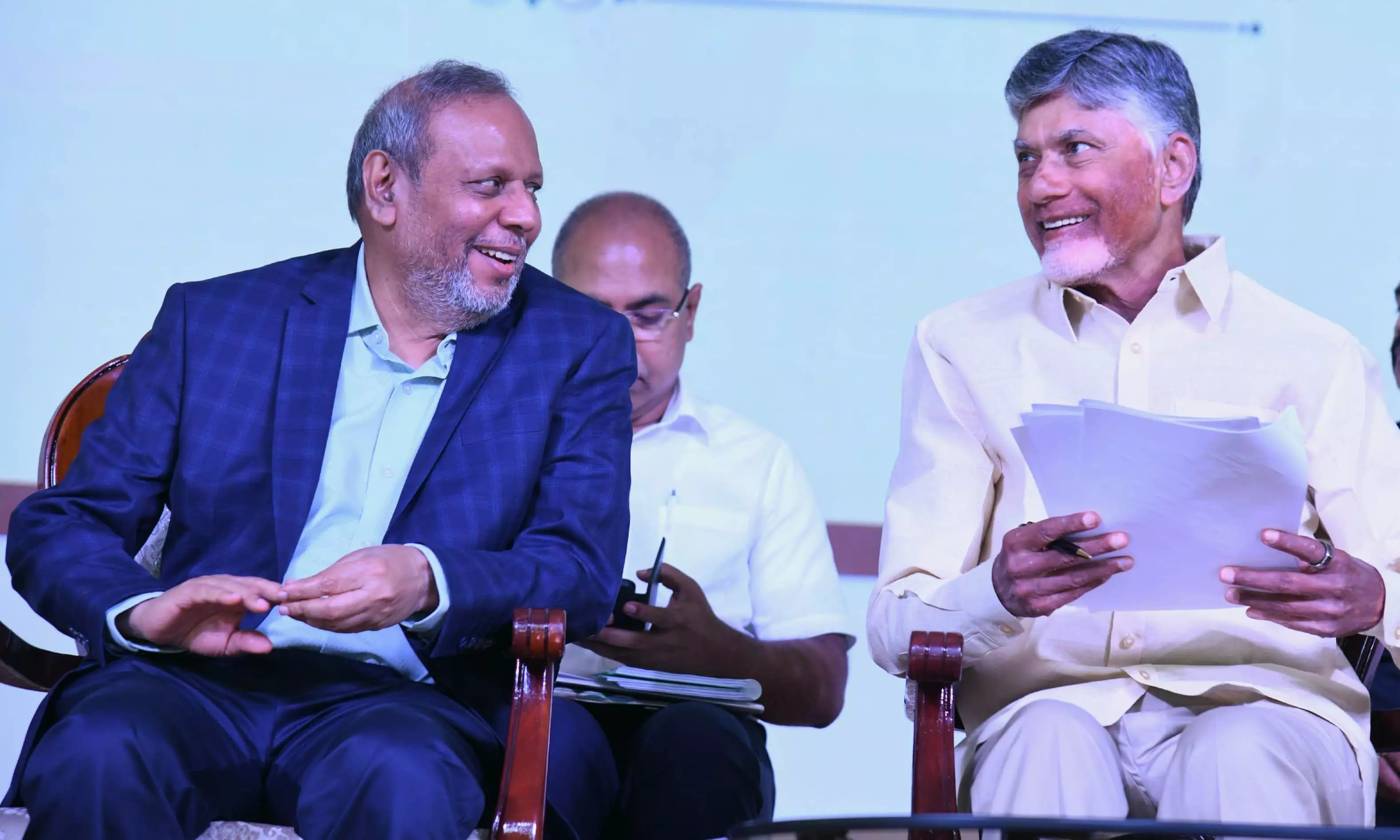
Vijayawada: Chief Minister Nara Chandrababu Naidu has emphasized the need to empower youth in shaping strong families and asserted that a large population is an “asset”, not a burden.
Naidu was addressing the first Amaravati summit on World Population Day, aligning with this year’s global theme, "Empowering young people to create the families they want: fair and hopeful," held at the secretariat on Friday.
The CM said, “There are concerns that the parliament seats from the south will decrease after the nation takes up the constituency delimitation exercise.” The reason for this fall is the southern states’ adherence to the population control norms in recent decades.
In view of this, Naidu announced that a robust policy on population growth will be introduced in AP soon.
Marking the occasion, he launched a survey designed around the concept, ‘Population management starts with every family. Your opinion is our policy guide.’
The CM noted that the government had launched a movement for population control. Now, however, the need was population management. “Developed nations are now compelled to look to populous countries for their manpower requirements. Population is not a burden, it’s our greatest asset.”
“We have turned that population into our advantage. With a lot of 1.4 billion, India’s population number has even surpassed China’s,” he noted.
Naidu expressed concern that the youth population is shrinking worldwide while the population of the elderly is increasing. To maintain population equilibrium, a 2.1 growth rate is essential everywhere. In India, however, Bihar’s population growth rate was 3.0, Meghalaya’s 2.9, UP’s 2.4, Jharkhand’s 2.3, Manipur’s 2.2, Tamil Nadu’s 1.8, Telangana’s 1.8, Kerala’s 1.8, Karnataka’s 1.7 and Andhra Pradesh’s 1.7.
The CM expressed his concern that declining population growth would hamper economic growth. He revealed that a poll conducted at the summit showed 67.41 per cent of families preferred two children, 12.34 per cent only one, and 19.88 per cent preferred three children. “Young people today are unwilling to have children. Many couples are opting not to have kids. The rising cost of living is discouraging people from having children,” he observed.
Naidu noted that joint families, once common, were now disappearing. “Earlier, we provided 5 kg of rice per person in a household. A family of five received 25kg. Now, we’re thinking of giving more than 50kg if there are ten members in a family. Let’s have more children in our families.”
He spoke of a growing concern about the declining population in South India. “While Parliament’s seats may increase in the future, southern states could see reduced representation due to their lower population growth,” he said.
The chief minister interacted with delegates at the summit. He sought their opinions on population management. Some shared their views and posed questions.
Naidu said, “During my recent visit to Kuppam, I met a joint family of three generations living together, sharing both responsibilities and wealth. Governments are giving less support to larger families. Going forward, we will focus not on population control but population management.”
“We’ll closely monitor the growth and offer incentives to those with more children. Children are a wealth to every home. We used to celebrate the birth of children. The gift of childbirth is a divine blessing for women,” he stressed.
