PMAY: CM Rolls Out Energy-Efficient Housing Scheme For 5 Lakh Homes

The chief minister said the government aimed to provide houses to all eligible families by 2029 in a saturation mode; while ensuring they are energy-efficient: Reports
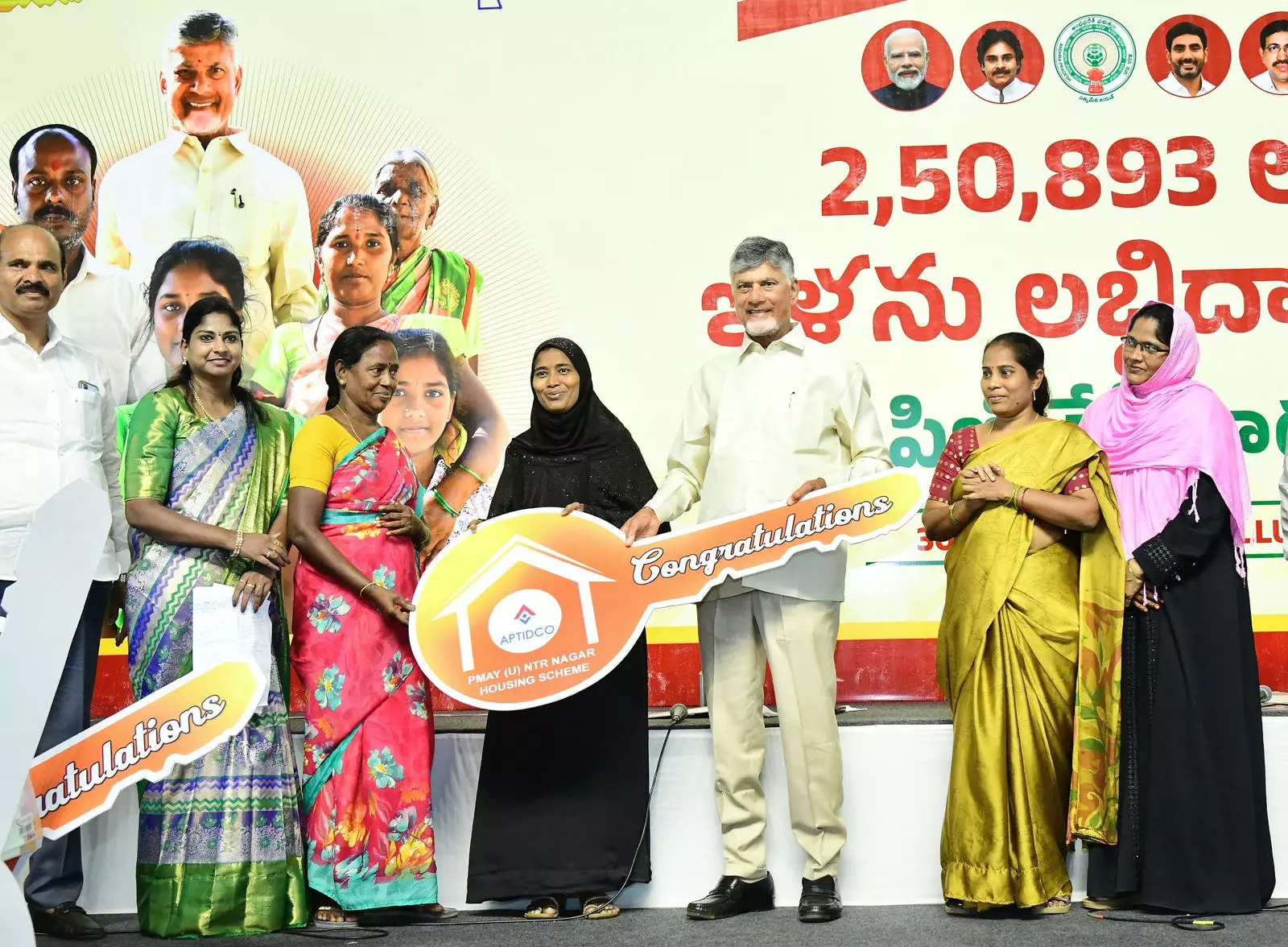
TIRUPATI: Chief Minister N Chandrababu Naidu has launched an energy-efficient housing drive under the Pradhan Mantri Awas Yojana for the state, targeting five lakh beneficiaries in the first phase.
The programme was announced at Naidupeta in Tirupati district on Monday. The state has partnered with Energy Efficiency Services Ltd, along with the AP state housing corporation and AP SEEDCO, to provide energy-efficient appliances to PMAY beneficiaries.
The MoU, originally signed during India Energy Week 2026, was formally exchanged at the event in the presence of the CM and ministers K Parthasarathy and P Narayana. Special chief secretary (housing) Ajay Jain, principal secretary (municipal administration) Suresh Kumar and APSHCL MD Arun Babu, exchanged the documents with EESL CEO Akhilesh Dixit and CGM Animesh Mishra.
The chief minister said the government aimed to provide houses to all eligible families by 2029 in a saturation mode; while ensuring they are energy-efficient. The initiative would help reduce electricity expenses for beneficiary households, improve overall living conditions through better energy use, and contribute to sustainable development by promoting energy efficiency and lowering environmental impact, he said.
Ajay Jain said the initiative was part of the state’s Integrated Clean Energy Policy 2024. Each household will receive energy-efficient appliances on a voluntary basis, including four 6-watt LED bulbs, two 20-watt LED tube lights and two 30-watt BLDC ceiling fans.
These measures, he said, would reduce connected load per household from 266 watts to 124 watts, bringing down electricity consumption by more than 50 per cent. The annual power consumption per house is likely to come down from about 1,013 units to 457 units, resulting in an average saving of around ₹3,300 per year for each beneficiary. This would also ensure a reduction of about 456kg of carbon dioxide emissions annually.
Dixit said AP has set a national benchmark in energy-efficient housing. The state has already demonstrated success through its collaboration with EESL, including distribution of induction cookstoves to over 55,000 Anganwadi centres.
The initiative would also benefit the power sector by reducing peak demand, lowering stress on distribution networks and improving grid stability during high-demand periods. India saved 321 billion units of electricity in 2023–24, resulting in a savings of ₹2 lakh crore and a reduction of 321.9 million tonnes of carbon emissions, with AP contributing significantly, he added.
