Pilot AI-Based Mosquito Surveillance in Tirupati to Control Hotspots

These parameters help distinguish mosquito species such as Aedes, Anopheles, and Culex, which are vectors for dengue, malaria, and filariasis respectively. The devices will estimate the sex ratios, as only female mosquitoes bite and transmit disease.
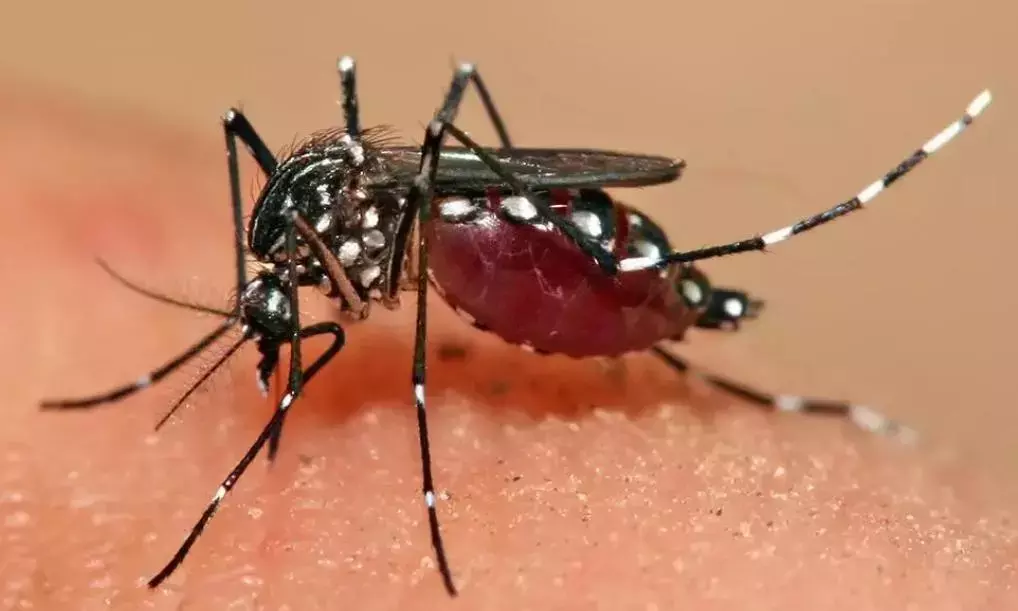
Tirupati: With mosquitos continuing to pose a major public-health challenge in urban areas, Municipal Corporation of Tirupati (MCT) will pilot an artificial intelligence-based smart surveillance system to scientifically track mosquito density and control their menace. The initiative moves beyond routine fogging and larval source reduction. It will use real-time data to identify and manage mosquito breeding hotspots.
Under the project, IoT mosquito traps will be installed at select locations. Each device has pheromone-based or carbon-dioxide cues, which mimic human breath to lure mosquitoes into a capture chamber. Optical sensors and micro-cameras inside the trap record wing-beat frequency, body size, and morphological features.
These parameters help distinguish mosquito species such as Aedes, Anopheles, and Culex, which are vectors for dengue, malaria, and filariasis respectively. The devices will estimate the sex ratios, as only female mosquitoes bite and transmit disease.
Captured data will be transmitted through networks to a central dashboard maintained at the municipal control room. Machine-learning models analyse the incoming stream to calculate mosquito density indices, species prevalence, and temporal activity patterns at each location. The will generate automated risk scores by correlating mosquito counts with environmental variables, such as temperature, humidity, rainfall, and proximity to stagnant-water sources mapped through GIS layers. When thresholds indicating potential outbreak risk are crossed, the dashboard alerts field teams.
Officials said this enables targeted intervention, instead of blanket fogging. “If the dashboard shows a spike in Aedes density in a ward, teams can immediately inspect such areas and remove breeding sources. The system will help us evaluate whether control measures actually reduce mosquito counts over time”, a MCT health official underlined.
The MCT has identified around 250 mosquito-prone locations across Tirupati, including civic-office premises, Vinayaka Sagar surroundings, Srinivasam pilgrim amenities complex, and Indira Priyadarshini Market. In the pilot phase, IoT sensors and electric zap traps will be installed in four high-risk sites at a cost of Rs 20 lakh. Data collected over several weeks will be used to calibrate the AI models as per local ecological conditions and seasonal patterns.
MCT commissioner N. Mourya said their AI-based intervention follows directives of Chief Minister Nara Chandrababu Naidu to adopt technology-driven urban health solutions.
“The data-driven approach will provide early warning of vector-borne disease risk. This will help us optimise deployment of manpower and resources. After validating results from the pilot programme, the system will be scaled across Tirupati to create a citywide mosquito-risk map and control hotspots,” the commissioner stated.
Points
- IoT mosquito traps use pheromones, sensors, and micro-cameras to identify mosquito species and estimate ratios of females, which spread the disease.
- Data transmitted to a central dashboard will generate risk scores, linking mosquito counts to weather and GIS-mapped breeding sources.
- Automated alerts from the dashboard will guide targeted field action, such as focused fogging, instead of blanket spraying.
