No Safety Even For Tigers: Another Big Cat Death Surfaces In Nallamala

The report came against the backdrop of the death of two other tigers in the Nallamala forest that has raised serious concerns over wildlife protection.
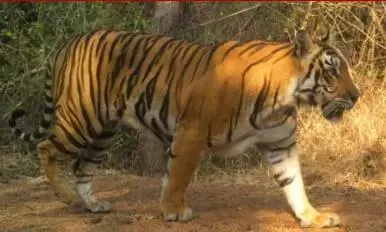
KURNOOL: A tigress died after getting caught in a poacher’s snare in September last at the Nagarjunasagar-Srisailam Tiger Reserve (NSTR), according to reports that became available on Tuesday. Local forest officials quietly cremated the carcass without following due process.
The report came against the backdrop of the death of two other tigers in the Nallamala forest that has raised serious concerns over wildlife protection. One of these tigers also died in a snare, and its claws were taken away. The delayed disclosure of the death of the tigress in the Atmakur forest division has triggered fresh questions over the safety of big cats. According to sources, the tiger was caught in a poacher's snare in the Indireswar section of Atmakur division’s Nagalooti range.
The incident was kept under wraps, with some lower-level forest staff allegedly conducting the cremation of the carcass with the help of locals without informing senior officials. NSTR deputy director Vignesh Appavu confirmed the death of the tigress in September 2025 near Kottacheruvu.
“We conducted a field-level inquiry into the incident and found that the tiger had died after getting caught in a snare. We questioned the person who first noticed the carcass. Samples of suspected tiger bones and soil were sent to a laboratory for scientific examination,” Appavu said. He said action would be taken against those responsible for the tiger's death as well as against any forest staff found to have failed in their duties.
On International Tiger Day, July 29, a tiger reportedly died after becoming trapped in a poaching snare. Its claws were allegedly removed by poachers, who were later caught by forest officials.
Another tiger died on July 31 after its body was pierced by the quills of a porcupine while attempting to hunt it. The arrest of poachers allegedly possessing tiger claws has added another dimension to the issue. Just a week after seven persons were arrested for allegedly transporting tiger claws, Atmakur forest officials arrested three more persons for possessing six claws suspected to be those of a tiger.
According to officials, Y. Thimmaiah, Kunchala Mallikarjuna and Karavula Venkateswarlu were taken into custody under relevant provisions of the Wildlife Protection Act, 1972. During the investigation, officials reportedly identified the involvement of two more persons and took them into custody. The probe is focusing on the alleged collection and illegal possession of wildlife articles and an attempt to hand them over to another person. Officials said the seized claws would be subjected to scientific examination to establish whether they were extracted from a tiger.
The repeated recovery of tiger claws and the deaths of tigers in snares have raised suspicions about the possible involvement of organised wildlife smugglers operating in the region. Sources said there were indications that international wildlife trafficking networks with links to Myanmar and Cambodia could be attempting to source tiger parts from the Nallamala region for illegal trade, allegedly targeting markets in China.
However, this aspect is yet to be conclusively established by investigators. The use of snares in remote forest locations and the removal of tiger claws from carcasses have strengthened suspicions that the incidents may not be isolated.
The Nallamala forest, spread over nearly 3,467 sq km, is one of the most important wildlife habitats in the region and is known for its rich biodiversity. The shortage of frontline forest personnel has emerged as a major challenge in protecting the vast forest landscape. Sources said nearly 750 personnel are required for effective protection and surveillance, while only around 250 are currently available. The shortage has made regular patrolling and monitoring of remote forest areas difficult, particularly during the monsoon when dense vegetation provides cover for poachers.