No One In The Village Sells Milk; It Is Freely Distributed To Anyone In Need, Especially Children

Village elder Srinivasulu explained that his family produced three liters of milk daily but used only two, giving the remaining litre to neighbours free of cost.
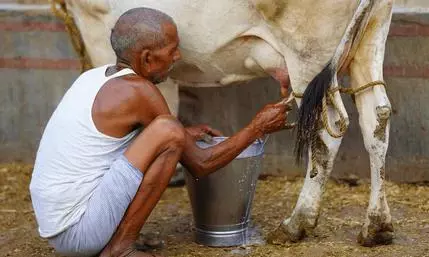
Kurnool: A unique tradition exists in Ganjihalli village in Gonegandla mandal of Kurnool district. Milk and milk products are given free to those in need – and not sold.
The villagers have followed this tradition for generations following the guidance of a revered spiritual leader, Sadguru Bade Saheb.
“We use milk produced by our cows and buffaloes solely for household consumption and community sharing. Surplus milk is given free to fellow villagers,” villagers said, adding, the origin of this tradition is traced back to several centuries.
Syed Chinna Mudgola, the honorary president of Badesaheb Dargah and an eighth-generation descendant of the Sadguru family explained the context.
The story goes like this: “One day, Bade Saheb asked his son to bring milk from the village. The son returned empty-handed, saying that many cattle had died due to drought and diseases, and farmers sold the rest of the animals. Bade Saheb then named a farmer in the village who had a cow. The cow, though in a life-threatening condition, was milked, and the milk brought to the Sadguru.”
Bade Saheb then gave a piece of his advice to the villagers – that cows in the village should no longer be slaughtered, there be no sale of milk anymore, and calves should be fed properly.
Since then, no one in Ganjihalli has sold milk. The excess milk at home is distributed by cattle-rearing villagers to others free of charge; especially for children.
Ganjihalli is a predominantly agricultural village with about 4,000 residents spread over 1,100 houses. The village now has around 400–500 milk-yielding animals, producing an average of 1,000 litres of milk daily.
A part of the surplus milk is made into curd or buttermilk. These too are largely distributed to neighbours and the needy from nearby villages.
“Milk, buttermilk and curd are available freely for anyone in need,” said SS Basha, a villager.
Village elder Srinivasulu explained that his family produced three liters of milk daily but used only two, giving the remaining litre to neighbours free of cost. Based on the current market rate, a litre of milk costs Rs 80. His family gives away milk worth Rs 2,400 a month to the community.
Notably, the villagers built a dargah in the area, where people of all religions come to offer prayers. Fodder is cultivated on about 50 acres for feeding the livestock.
