Millet Demand Grows but Farming Lags in Kurnool

Millets, once considered staple food of the poor, are now regaining importance as a healthy and nutritious dietary choice.
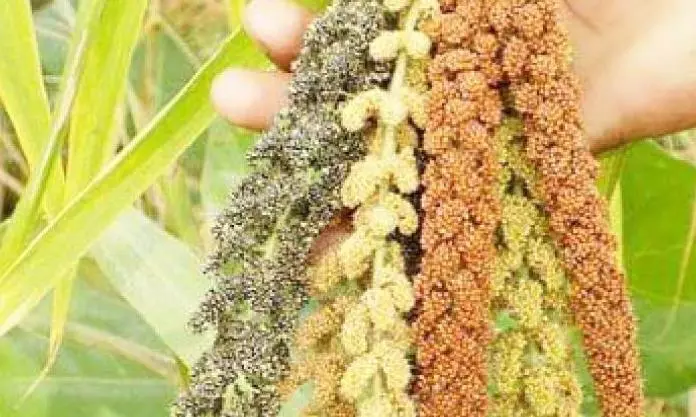
Kurnool: Even though the number of millet consumers is gradually increasing, only 3–4 varieties are currently available in the district. Farmers are cultivating limited varieties due to inadequate government support in seed distribution. Of the 20 quintals of mini kits that were supposed to be distributed by June 20, only 8 quintals have been supplied so far.
Millets, once considered staple food of the poor, are now regaining importance as a healthy and nutritious dietary choice. With increasing awareness of their health benefits, demand has grown significantly. Many restaurants and snack bars have started including millet-based dishes, catering to a rising number of health-conscious consumers. However, despite the growing market, millet production in the combined Kurnool district remains limited.
Farmers are showing little interest in expanding millet cultivation due to lack of seed supply and institutional support. While the number of consumers is increasing, the number of farmers cultivating small grains remains low. Government schemes promoting millet cultivation have failed to make a significant impact at the grassroots level, as agricultural officers are unable to ensure timely seed distribution or raise adequate awareness among farmers.
Of the 10 lakh hectares of cultivable land in the region, only 1.50 lakh hectares are utilised for crops during the Kharif and Rabi seasons. During the last Kharif, millets were grown in more than 23,500 hectares—sorghum (12,300 ha), bajra (10,890 ha), and jowar (425 ha). This year, out of the targeted 13,360 hectares, only 5,079 hectares have been so far.
The Central and state governments aimed to distribute mini seed kits of ragi, korra, and jowar by June 20, but only 7.4 quintals have reached farmers. No seeds were allotted for other varieties such as sajja, andukorra, samalu, or arikelu. Although subsidies under Prime Minister Formalisation of Micro Food Processing Enterprises (PMFME) scheme are offered for millet-based processing units, poor publicity has hindered their implementation.
While milled millet rice sells for Rs 2,000–2,500 per quintal in the open market, farmers earn less as they sell directly to traders. Experts suggest that encouraging value addition and establishing more processing units—like the one at Banavasi Krishi Vigyan Kendra at Yemmiganur could enhance farmer incomes and help revive millet cultivation in the region.
Further, a senior agriculture official said that mini kits are being supplied in a phased manner and all eligible farmers will receive them shortly.
