Madanapalle Turns 9.4-Acre Dumpsite Into Green Space; Removes Legacy Waste

Municipal officials said these efforts are helping Madanapalle move steadily towards becoming a Zero Dump and Zero Littering City.
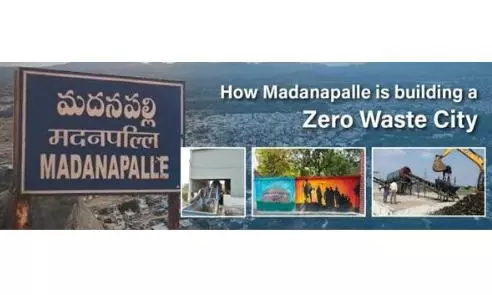
Tirupati: Once known for its towering heaps of garbage, a dumpsite in Madanapalle has been transformed into a green space after the municipality scientifically cleared more than 36,500 metric tonnes of legacy waste as part of its "Zero Waste City" drive.
The municipality remediated around 36,512 metric tonnes of legacy waste through biomining and bioremediation, reclaiming nearly 9.40 acres of land. Of this, five acres have been developed into a green space with plants. Refuse Derived Fuel recovered while processing the waste is being supplied to cement plants for co-processing, while soil and inert materials are being reused to fill low-lying areas.
According to officials, the transformation is part of a waste management strategy being implemented under the Swachh Bharat Mission Urban 2.0. Madanapalle generates about 62 tonnes of municipal solid waste every day, including 36 tonnes of wet waste, 25.50 tonnes of dry waste, and 0.50 tonnes of domestic hazardous waste. The municipality has introduced source-level segregation by classifying waste into biodegradable, non-biodegradable, and up-cycling categories for scientific processing and better recycling.
Wet waste is managed through a mix of onsite and municipal composting. Bulk waste generators have been encouraged to set up composting units, while households are taking up home composting and terrace gardening. Every day, about 15.50 tonnes of wet waste is processed through windrow composting, producing 4.65 tonnes of compost for parks and plantations. Another three tonnes is processed through vermicomposting, yielding around 1.20 tonnes of nutrient rich compost daily.
Dry waste is segregated into recyclable and non-recyclable categories. Recyclable materials are sent to the Material Recovery Facility for processing and supplied to authorised recycling units. Non-recyclable waste is transported to cement factories for co-processing, improving revenue for the civic body.
Officials said source-level segregation has improved recycling and reduced the quantity of mixed waste reaching disposal sites.
Madanapalle municipality has strengthened its Reduce, Reuse, and Recycle Centre, which collects e-waste, old clothes, toys, books, and footwear through door-to-door collection drives. Usable materials are repaired and redistributed to slum communities, homeless people, and old age homes, reducing waste while extending the life of reusable items.
Discarded tyres and other waste materials are being put to use through waste to art initiatives. Parks and public spaces have been developed with installations made from discarded materials. The Waste to Art Park at NVR Layout showcases the creative reuse of discarded materials. Wall paintings and murals promoting cleanliness, hygiene, and waste segregation have been created across the town to spread public awareness.
Municipal officials said these efforts are helping Madanapalle move steadily towards becoming a Zero Dump and Zero Littering City.
