Lokesh Pitches Resilient Systems, Smart Logistics at Davos Meet

Lokesh said governments must anticipate future risks, identify new opportunities and create systems that reassure investors while delivering stable development.
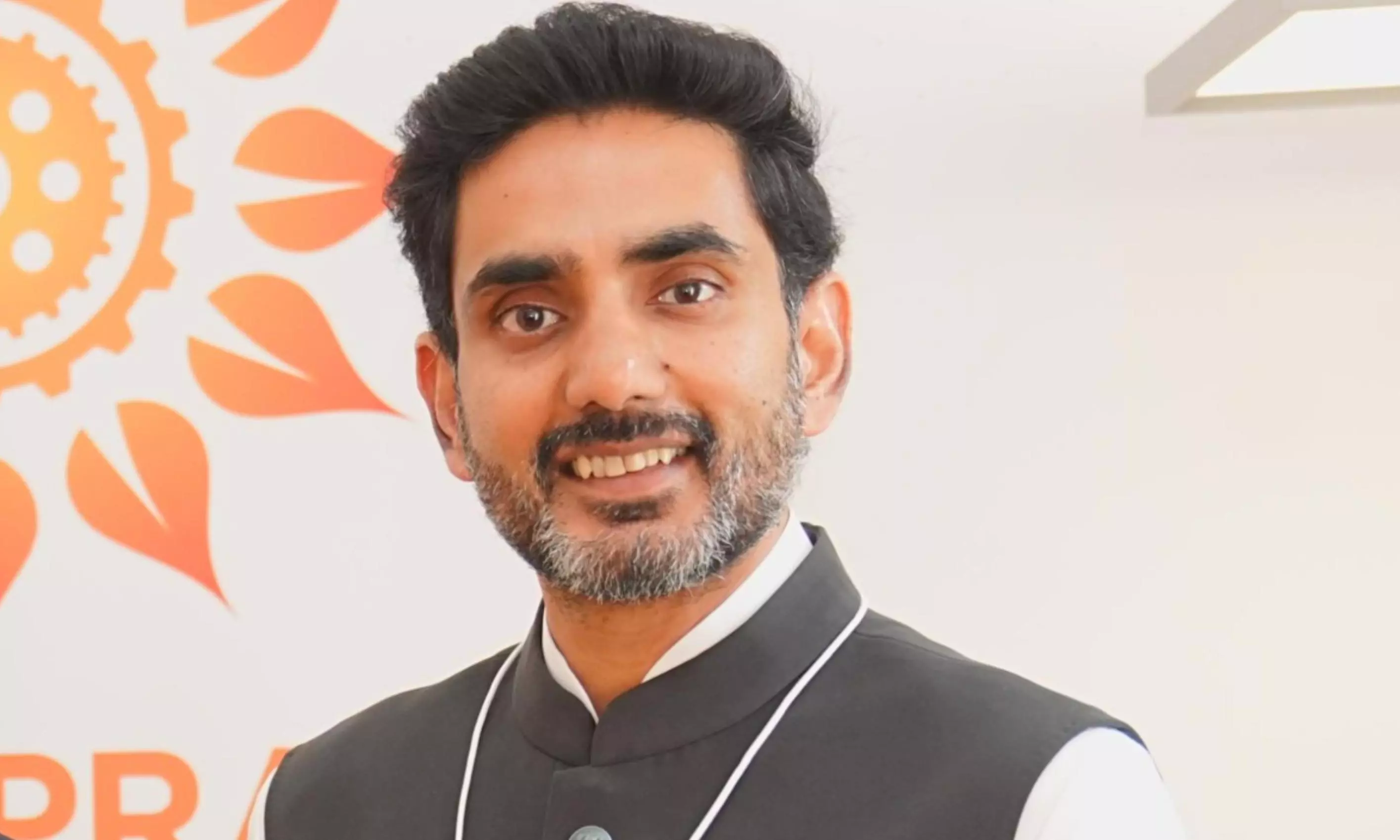
Vijayawada: Calling for urgent reforms to help governments navigate a rapidly-changing global landscape, education and IT minister Nara Lokesh on Wednesday proposed creation of resilient systems that balance economic growth, social welfare and sustainability.
At the annual World Economic Forum meet in Davos, Lokesh participated in a session titled “Horizon Scan: How can governments innovate?”
The minister said geopolitical shifts were disrupting global supply chains while climate change was straining water and food systems. At the same time, artificial intelligence was transforming work and society faster than institutions could adapt, making it harder for economies to pursue inclusive and sustainable growth simultaneously.
Lokesh said governments must anticipate future risks, identify new opportunities and create systems that reassure investors while delivering stable development. Inclusive growth and poverty eradication remained core priorities for Andhra Pradesh, he said, warning that inequality of opportunity, skill gaps and rural–urban, digital, financial and gender divides were pushing vulnerable communities further into poverty.
Quoting the 2025 Global Multidimensional Poverty Index, the minister noted that nearly 99 per cent of India’s poor lived in climate-risk zones, facing extreme temperatures, floods and pollution. Aligning state priorities with national goals such as the Sustainable Development Goals and Vision India@2047, he said coordination was being strengthened through the national governing council of chief ministers under the framework of cooperative federalism.
Highlighting Andhra Pradesh’s P4 (Public–Private–People Partnership) model, Lokesh said the state was linking the top 10 per cent of affluent citizens with the bottom 20 per cent of the poorest families to lift households out of poverty. Rural and urban poverty eradication agencies have been integrated around the “one family, one entrepreneur” approach to create sustainable livelihoods.
On infrastructure, he said regions lacking smart connectivity—ports, broadband, power and logistics—cannot compete in the global economy, leading to migration, deeper rural–urban divides and rising social inequality. “India’s PM Gati Shakti and National Logistics Policy (2022), along with Andhra Pradesh’s logistics policy, are addressing these gaps through multimodal integration of ports, airports, roads, railways and inland waterways.”
With six operational and four greenfield ports along a 1,053-km coastline, AP has emerged as a key eastern gateway, handling about 40 per cent of India’s east coast maritime trade. Three industrial corridors, multiple clusters and mega parks, he said, are strengthening manufacturing, exports and local employment.
Lokesh also stressed the urgency of skilling for future jobs. Andhra Pradesh has set up Centres of Excellence with industry partners, launched a Quantum Education Initiative and rolled out advanced skilling programmes in electronics, IT and manufacturing.
Emphasising deep tech and intelligent governance, he said the state plans India’s first dedicated Quantum Innovation District and has attracted over $26 billion in data centre investments in Visakhapatnam, positioning it as a global AI infrastructure hub.
