KID Capsule Delivers Rare Success Amid PSLV-C62 Failure

Experimental payload survives anomaly, transmits data after rocket’s third-stage failure
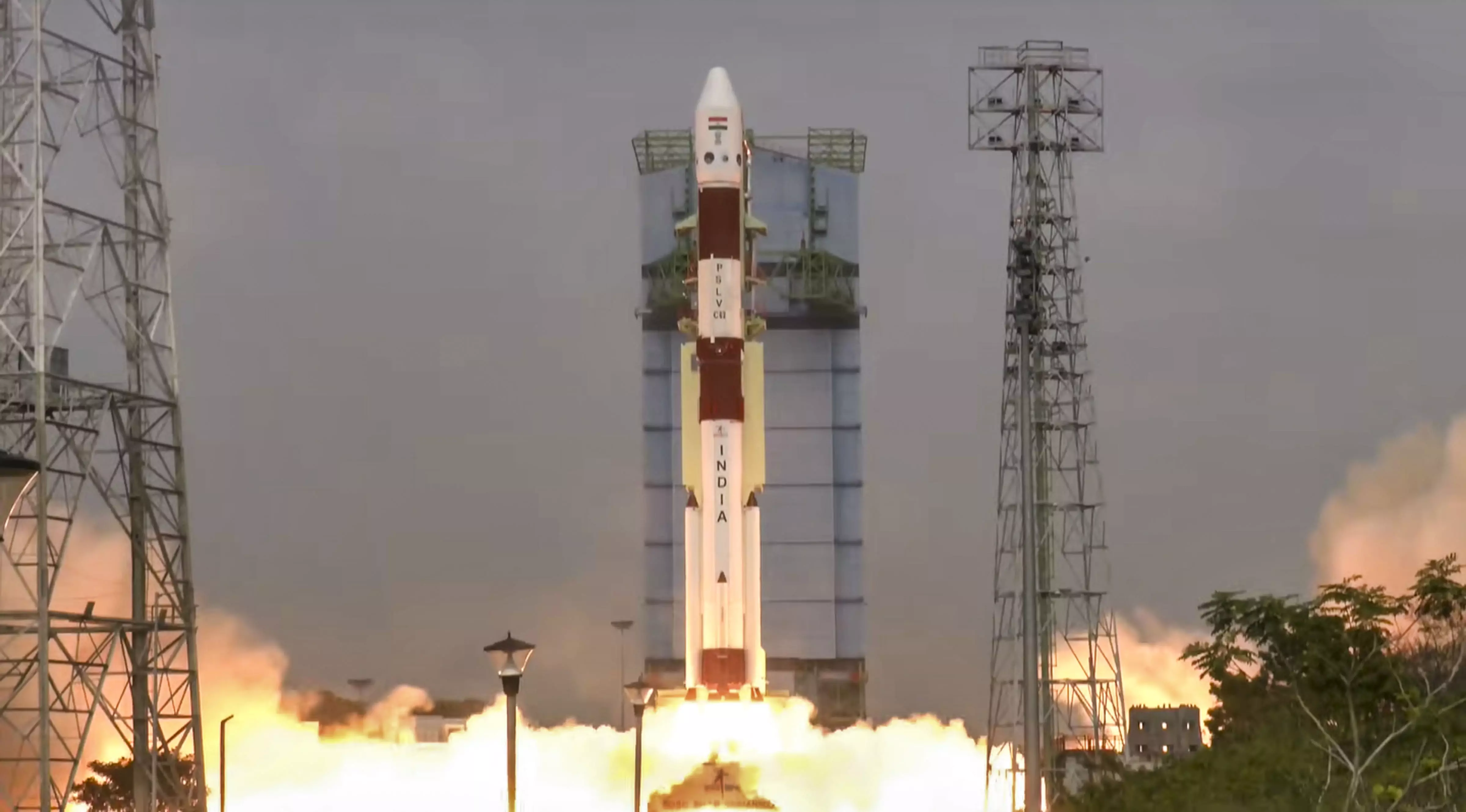
Nellore: In a rare silver lining to an otherwise disappointing mission, the KID capsule has emerged as a bright spot in the PSLV-C62 launch on January 12, 2026, which was declared unsuccessful following an anomaly in the rocket’s third stage.
According to updates from Spanish space start-up Orbital Paradigm, the experimental KID (Kinetic Impact Demonstrator) capsule not only survived the mishap but also performed largely as intended during the critical moments after separation.
The company said in a post on X (formerly Twitter) that the capsule successfully separated from the launch vehicle, powered on and transmitted telemetry data for more than three minutes — a significant achievement under off-nominal conditions.
Engineers revealed that the capsule withstood extreme stress, surviving peak heating conditions and recording a maximum G-load of about 28g. Orbital Paradigm said it has already recovered valuable internal temperature data and is now reconstructing the capsule’s trajectory, with a detailed technical report expected soon.
The KID capsule’s performance stood in sharp contrast to the fate of the mission’s primary payload, EOS-N1 (Anvesha), along with 14 co-passenger satellites, which are believed to have been lost after the launch vehicle failed to place them into the intended orbit.
While the overall mission remains a setback, the partial success of the KID capsule is being viewed as a notable technological gain, providing engineers with critical data that could support future small-payload and re-entry experiments.
“In space exploration, even limited success under failure conditions can yield valuable insights — and in this case, the KID capsule appears to have delivered exactly that,” a former Isro official said.
