ISRO Conducts Sea-Level Test of CE20 Cryogenic Engine at 22-Tonne Thrust

13 March 2026 11:53 AM IST13 March 2026 11:53 AM IST
ISRO conducts sea level test of cryogenic engine at 22 tonne thrust level with full area nozzle
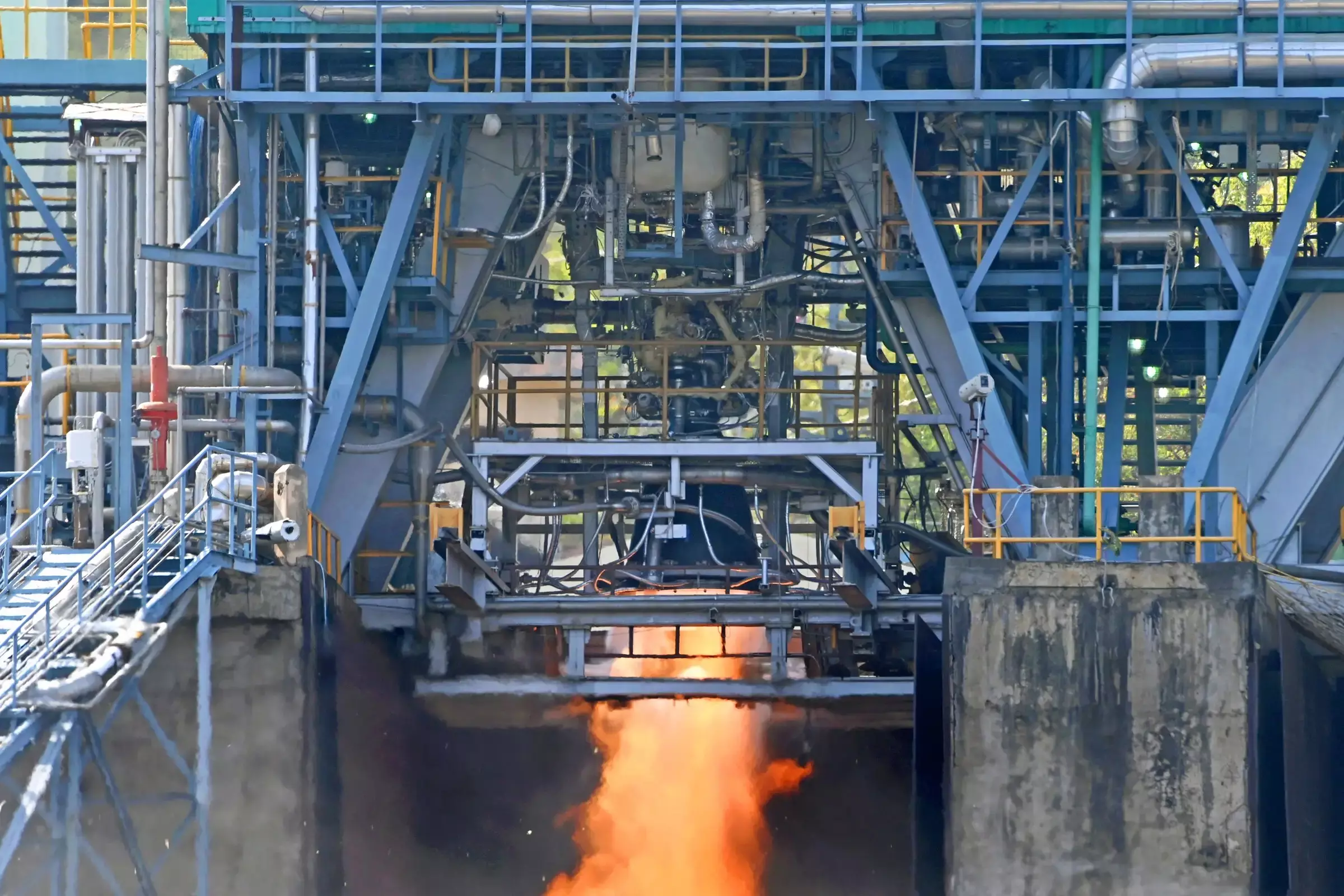
The CE20 cryogenic engine powers the upper cryogenic stage of LVM3 launch vehicle. In order to enhance the payload capability of the LVM3 vehicle, future missions of LVM3 are planned to be operated with an uprated C32 stage with 22 tonne thrust for the CE20 engine.
Summary is AI-generated, newsroom-reviewed
Hot test at Mahendragiri marks key step toward enhancing payload capacity of LVM3 launch vehicle.
Nellore: The Indian Space Research Organisation (Isro) has successfully conducted a sea-level hot test of its CE20 cryogenic engine at an upgraded thrust level of 22 tonnes at the Isro Propulsion Complex in Mahendragiri on March 10, marking an important step towards enhancing the payload capacity of the LVM3 launch vehicle.
The test was carried out using a nozzle protection system and a multi-element igniter. Earlier, sea-level tests with the nozzle protection system were conducted only at the 19-tonne thrust level.
The CE20 cryogenic engine powers the upper cryogenic stage of the LVM3 launch vehicle. To improve the payload capability of the vehicle, future LVM3 missions are planned to operate with an uprated C32 stage using the CE20 engine at 22-tonne thrust.
Accordingly, flight acceptance tests of the CE20 engine also need to be conducted at the higher thrust level. During the recent test, the engine operated for 165 seconds at 22-tonne thrust using the nozzle protection system. ISRO said the performance of both the engine and the test facility remained as expected throughout the test duration.
Testing the CE20 engine at sea level poses significant challenges, mainly because of the high area-ratio nozzle, which has an exit pressure of about 50 mbar. One of the major concerns during such tests is flow separation inside the nozzle, which can cause severe vibrations and thermal stresses at the separation point, potentially leading to mechanical damage.
The cryogenic engine used for the test has undergone a record 20 successful hot tests. These tests helped demonstrate several key technologies using a single engine, including ignition using a multi-element igniter, ignition margin validation for the Gaganyaan mission over a wide range of propellant tank pressures and pre-ignition chamber pressures, engine qualification for Gaganyaan at the 20-tonne thrust level, and demonstration and qualification of 22-tonne thrust operation.
The tests also validated the bootstrap mode start of the CE20 engine without a start-up system for enabling in-flight restart, as well as the qualification of indigenous turbopump bearings, sensors and the nozzle protection system for high area-ratio nozzle hot testing at sea level.
( Source : Deccan Chronicle )

Next Story