ISRO and JAXA Gear Up for Joint Chandrayaan-5, LUPEX Mission

The meeting was attended by senior officials, project executives and technical team members from ISRO, JAXA and the Mitsubishi Heavy Industries, Japan.
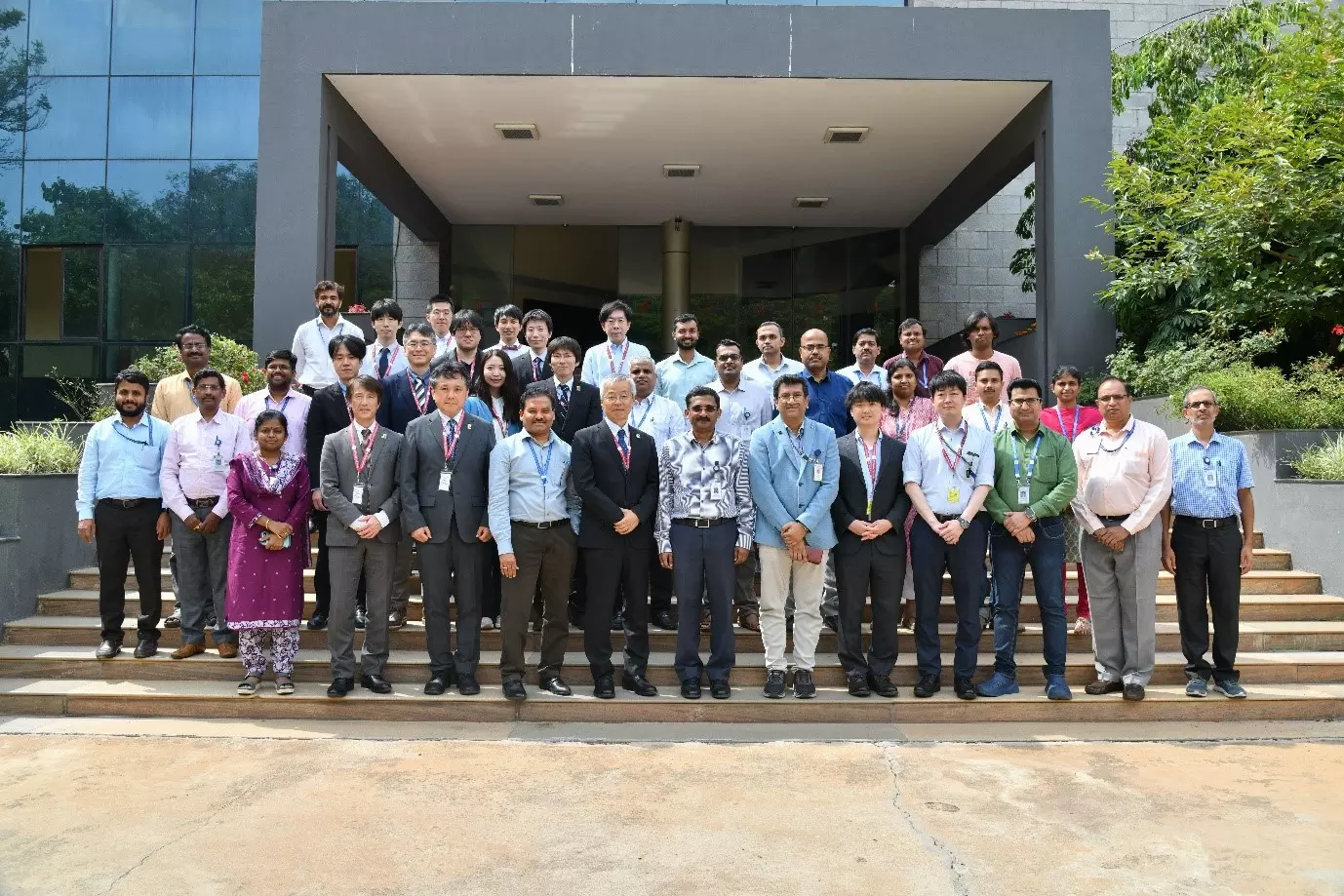
Nellore: ISRO and Japan’s space agency JAXA jointly conducted the third face-to-face technical interface meeting towards the Chandrayaan-5/LUPEX mission, at ISRO headquarters in Bengaluru on May 13-14.
The meeting was attended by senior officials, project executives and technical team members from ISRO, JAXA and the Mitsubishi Heavy Industries, Japan.
Following the legacy of Chandrayaan-1, Chandrayaan-2 (orbiter-based lunar exploration), Chandrayaan-3 (lander-rover based in-situ exploration) and the forthcoming Chandrayaan-4 (India’s first lunar sample return mission), the Chandrayaan-5 / LUPEX (LUnar Polar Exploration) mission will be the fifth in the Chandrayaan series of lunar missions undertaken in collaboration with JAXA.
This is meant to study the lunar volatile materials, including lunar water, in the vicinity of a Permanently Shadowed Region in the lunar south pole. The mission would be launched by JAXA onboard its H3-24L launch vehicle, carrying the ISRO-made lunar lander, which would carry the MHI, Japan-made lunar rover.
ISRO, apart from developing the lunar lander, is also responsible for developing a few scientific instruments for the mission. These would be contributed by ISRO, JAXA, ESA and NASA, all thematically connected with the exploration and in-situ analysis of the volatiles reserved in the lunar polar region.
The approval for the Chandrayaan-5 / LUPEX mission was received from the government on March 10 in the form of a financial sanction.
The two day face-to-face meeting deliberated on the various technical interfaces, joint mission implementation plan, as well as the potential landing sites for the mission.
The Chandrayaan-5 / LUPEX missions will be one of the major short-term milestones in India’s lunar exploration odyssey, which envisions Indian Gaganyatris (astronauts) landing on the Moon by 2040.
During the meeting, scientific secretary to ISRO, M Ganesh Pillai, congratulated both the teams for the technical achievements and emphasized on the importance of the collaborative endeavor for the scientific and technical aspects of the mission.
Director of the ISRO science programme office, Tirtha Pratim Das, explained the major milestones achieved vis-a-vis the landing site selection, payload optimization, mission design, as well as the ground segment and communication aspects.
