India’s Space Footprint Expands As ISSAR-2025 Records Boom in Global Launch

ISSAR report highlights rising missions, satellites, and India’s expanding role
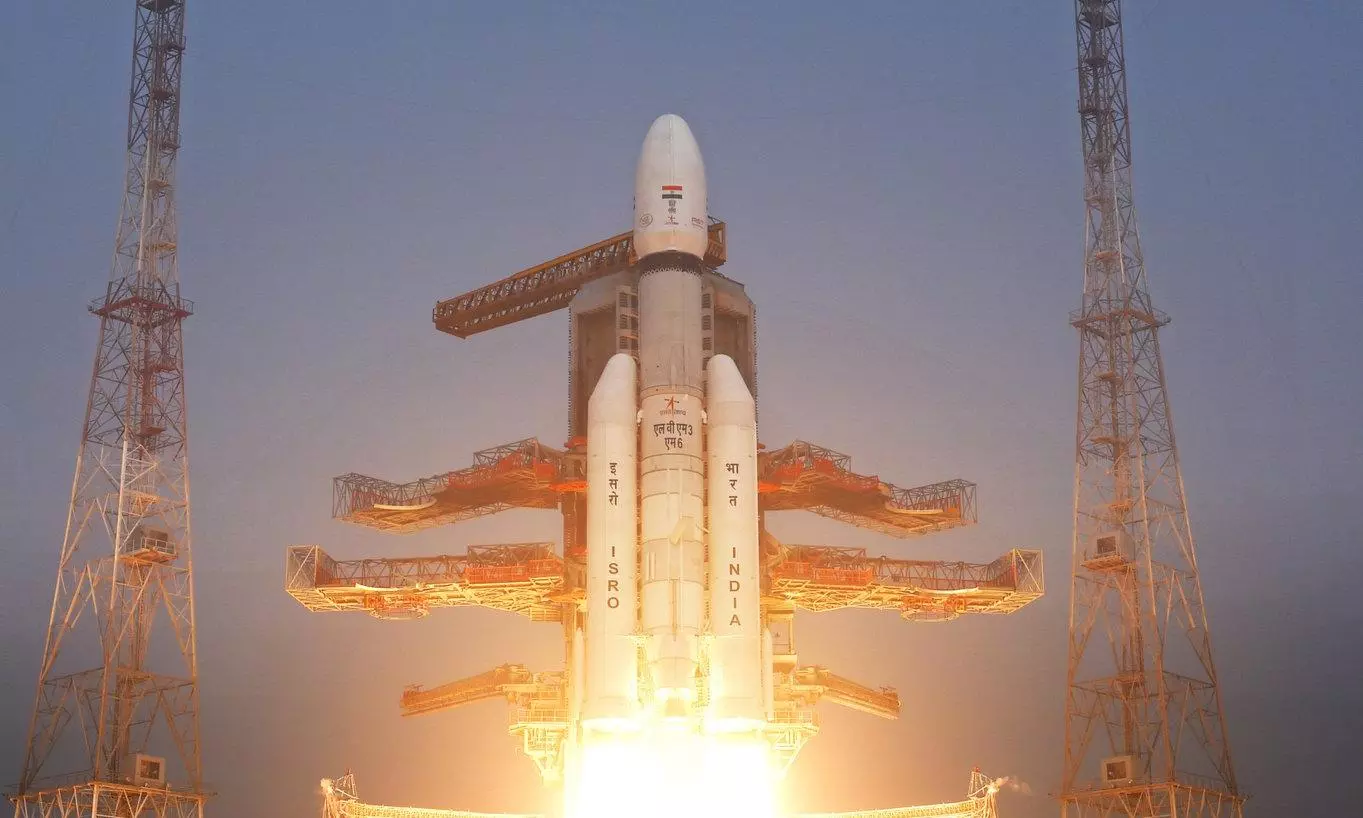
Nellore: India’s growing presence in Space and its rising global activity took centre stage with the release of the Indian Space Situational Awareness Report 2025 (ISSAR-2025) by V. Narayanan during the international SMOPS-2026 conference in Bengaluru.
The report highlights 2025 as a landmark year for global space activity, recording the highest-ever launches since the beginning of the space age. A total of 328 launch attempts were made worldwide, with 315 successful missions placing 4,198 operational satellites into orbit. Overall, 4,651 new objects were added to space, marking a sharp surge compared to previous years.
India’s space programme also showed steady expansion. By the end of 2025, a total of 144 Indian spacecraft had been launched, including those from private and academic sectors. Currently, 22 Indian satellites operate in Low Earth Orbit (LEO) and 31 in Geosynchronous Orbit (GEO), reflecting a strong and diversified satellite network.
Significantly, India continues to maintain a presence in deep space, with missions like Chandrayaan-2 Orbiter and Aditya-L1 actively functioning. A notable milestone was the Chandrayaan-3 propulsion module’s unexpected lunar flyby in 2025, re-entering the Moon’s gravitational sphere due to deep-space dynamics.
The report also tracks space debris and rocket stages, noting that 36 Indian rocket bodies have re-entered Earth’s atmosphere so far, while a few GSLV and LVM3 stages remain in orbit.
During 2025, India conducted five launches from Sriharikota, including missions such as GSLV-F15/NVS-02 and the landmark NASA-ISRO joint mission NISAR. While most missions were successful, PSLV-C61 faced a setback due to a stage anomaly, and the NVS-02 satellite could not reach its intended orbit due to a propulsion issue.
Despite these challenges, India placed eight satellites into orbit during the year, underlining its resilience and growing capability in the global space sector.
