Skyroot’s Vikram-1 Marks Historic First Private Orbital Launch

Maiden “Mission Aagaman” launch from Satish Dhawan Space Centre marks India’s entry into private orbital launch capability
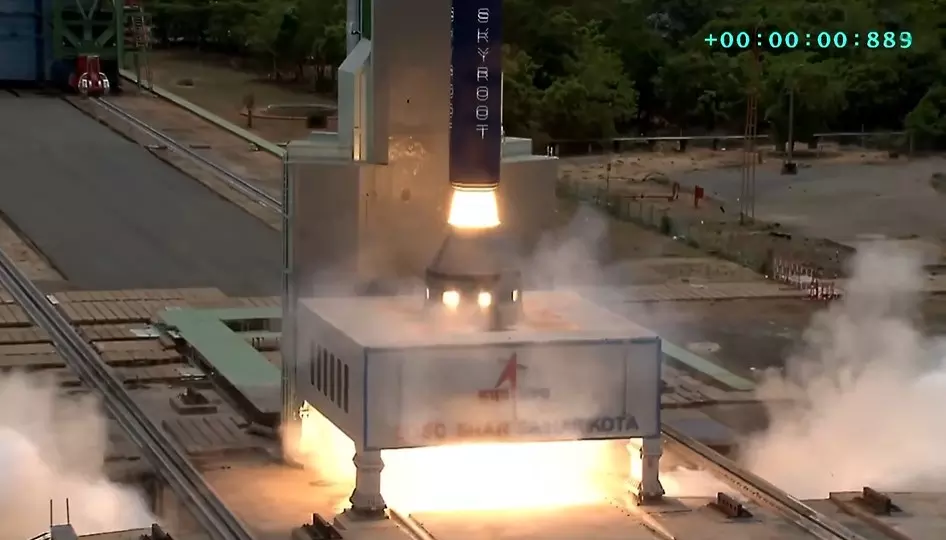
India’s space sector entered a new era as Hyderabad-based Skyroot Aerospace successfully launched Vikram-1, the country’s first privately developed orbital-class rocket, from the Satish Dhawan Space Centre.
Dubbed “Mission Aagaman,” the maiden flight marks a major shift in India’s space narrative, opening orbital access to private players in a domain historically dominated by government-led programmes.
The 24-metre rocket, built using carbon-composite structures, features a three-stage solid propulsion system along with a liquid-fuelled orbital adjustment module. Designed to carry payloads of up to 350 kg to a 450-km Low Earth Orbit (LEO), Vikram-1 aims to enable rapid and on-demand satellite launch services.
Among the unique payloads onboard is “Diamond Lotus,” a lab-grown diamond developed by Bengaluru-based Cosmos Diamonds, highlighting the growing commercial potential of India’s private space infrastructure.
Adding a symbolic touch to the mission, a handwritten postcard by Prime Minister Narendra Modi bearing the words “Vande Mataram” was also sent into space. Messages from Skyroot team members, investors, policymakers, and well-wishers worldwide accompanied the launch, making it a collective celebration of India’s expanding space ambitions.
Earlier, Modi described the launch as a “historic new frontier” in India’s space journey. In a post on X, he said the mission reflects the “talent, determination and entrepreneurial spirit of India’s youth” and underscores how space-sector reforms are unlocking new opportunities for innovation and enterprise.
He extended his best wishes to the Skyroot team, urging citizens, especially the youth, to follow the mission and support it using the hashtag #IndiaWithVikram1.