India Prepares for Launch of Nisar Satellite

The Nasa-Isro synthetic aperture radar (Nisar) satellite will be the only one in space studying the Earth’s surface in two frequencies, known technically as the L and S bands.
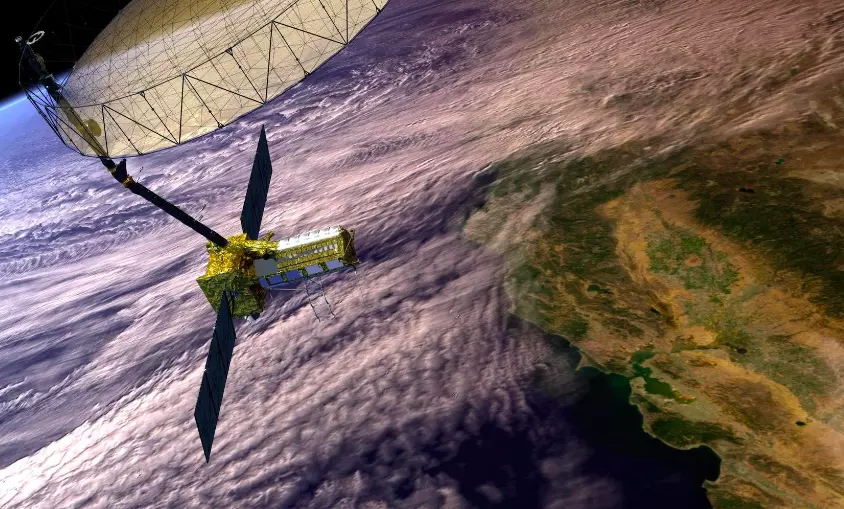
Nellore:India is preparing for the launch on Wednesday of what is being called the most expensive tool to monitor the Earth’s health from space: The $1.5 billion ‘twin eyed’ Nisar satellite. The Nasa-Isro synthetic aperture radar (Nisar) satellite will be the only one in space studying the Earth’s surface in two frequencies, known technically as the L and S bands.
Nisar can monitor changes on the Earth’s surface that are as small as 1 cm. The 2,392-kg satellite will be in a sun-synchronous orbit, meaning it will be always in sunlight as it takes pictures of the Earth. It will offer repeat imaging of the Earth’s land and ice surfaces every 12 days.
This is the first joint Earth observation mission between the Indian Space Research Organisation (Isro) and the United States’ National Aeronautics and Space Administration (Nasa).
All data generated by the Nisar satellite will be made freely accessible within one to two days of observation, and in near real-time in case of emergencies. This democratisation of data is expected to support global scientific research and decision-making.
Nisar’s capabilities extend well beyond traditional Earth observation. It will allow continuous monitoring of ecosystem disturbances and help assess natural hazards such as earthquakes, tsunamis, volcanic eruptions and landslides. It will track even subtle changes in the Earth’s crust and surface movement.
The satellite’s data will also be used for sea ice classification, ship detection, shoreline monitoring, storm tracking, crop mapping and changes in soil moisture-all of which are vital for governments, researchers and disaster management agencies.
The Nisar mission combines the technological expertise of both agencies. Nasa has contributed the L-Band Synthetic Aperture Radar (SAR), a high-rate telecommunication subsystem, GPS receivers and a deployable 12-metre unfurlable antenna.
Isro has provided the S-Band SAR payload, the spacecraft to accommodate both payloads, the GSLV-F16 launch vehicle and associated launch services.
Union minister Dr Jitendra Singh has called the Nisar “not just a satellite.” He said: “It is India’s scientific handshake with the world.”
Dr Singh stated that India’s space programme under the guidance of Prime Minister Narendra Modi was steadily transitioning from traditional utility-based missions to those that position the country as a knowledge contributor to the global commons.
