Gooty Fort Utsavalu Begin Today After Six-Year Gap

Two-day festival to showcase 1,000-year-old fort’s heritage
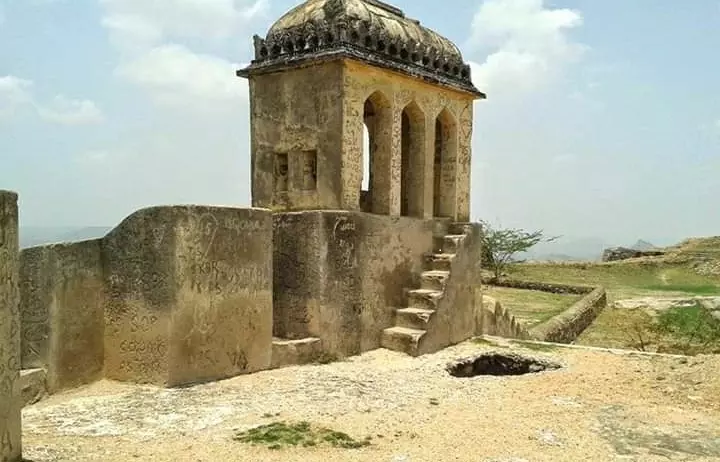
Anantapur: The historic Gooty Fort Utsavalu will be held in Gooty in Anantapur district on March 14 and 15, with the festival returning after a gap of six years following the state government’s sanction of ₹50 lakh for the celebrations.
Joint collector C. Vishnucharan said elaborate arrangements have been made for the two-day event. Reviewing the preparations, he instructed officials to ensure that the celebrations are conducted smoothly without causing inconvenience to the public.
The football ground will serve as the main venue for the festivities. Special arrangements have also been made for a heritage walk to highlight the historical importance of Gooty Fort. Officials of various departments have been directed to coordinate closely to ensure the success of the event.
The infrastructure committee has been asked to complete BT patchwork on approach roads and ensure that the venue is properly cleaned. Officials of the Rural Water Supply (RWS) department were instructed to arrange adequate drinking water facilities and temporary toilets.
Vishnucharan said stage arrangements have been completed and cultural programmes finalised. Exhibition stalls, food stalls and other activity stalls will also be set up as part of the celebrations.
Gooty Fort, which has a history spanning more than 1,000 years, features several remarkable structures and landmarks from different periods. Eight inscriptions found on rocks near the Narasimha temple within the fort premises date back to the reign of Western Chalukya king Vikramaditya VI (c. 1076–1126 CE). The earliest existing fortifications and structures are believed to belong to the late Chalukya period.
The fort later came under the control of the Vijayanagara Empire. During the reign of Venkata II (c. 1584–1614), it was captured by the Qutb Shahi dynasty. The Mughals are believed to have taken control of the fort after conquering the Qutb Shahi capital of Golconda.
Around 1746 CE, Maratha general Murari Rao captured the fort and made it his permanent residence eight years later. He undertook repairs and commissioned stucco ornamentation for several gateways within the fort complex.
