Free Bus Travel Turns Economic Lifeline For North Andhra Women

Since its launch in the Parvathipuram Manyam district on August 15, 2025, the scheme has served nearly 7.1 million women passengers as of November.
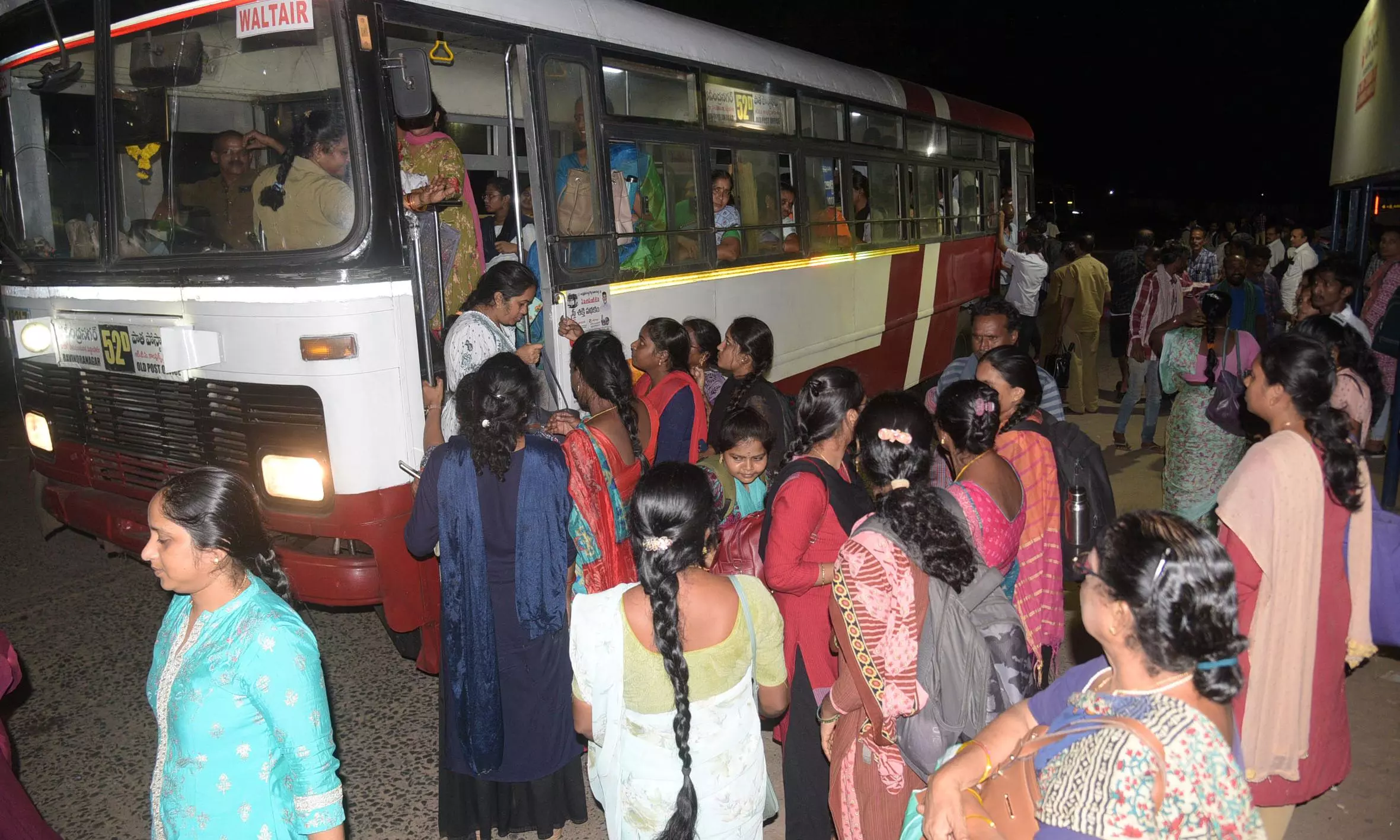

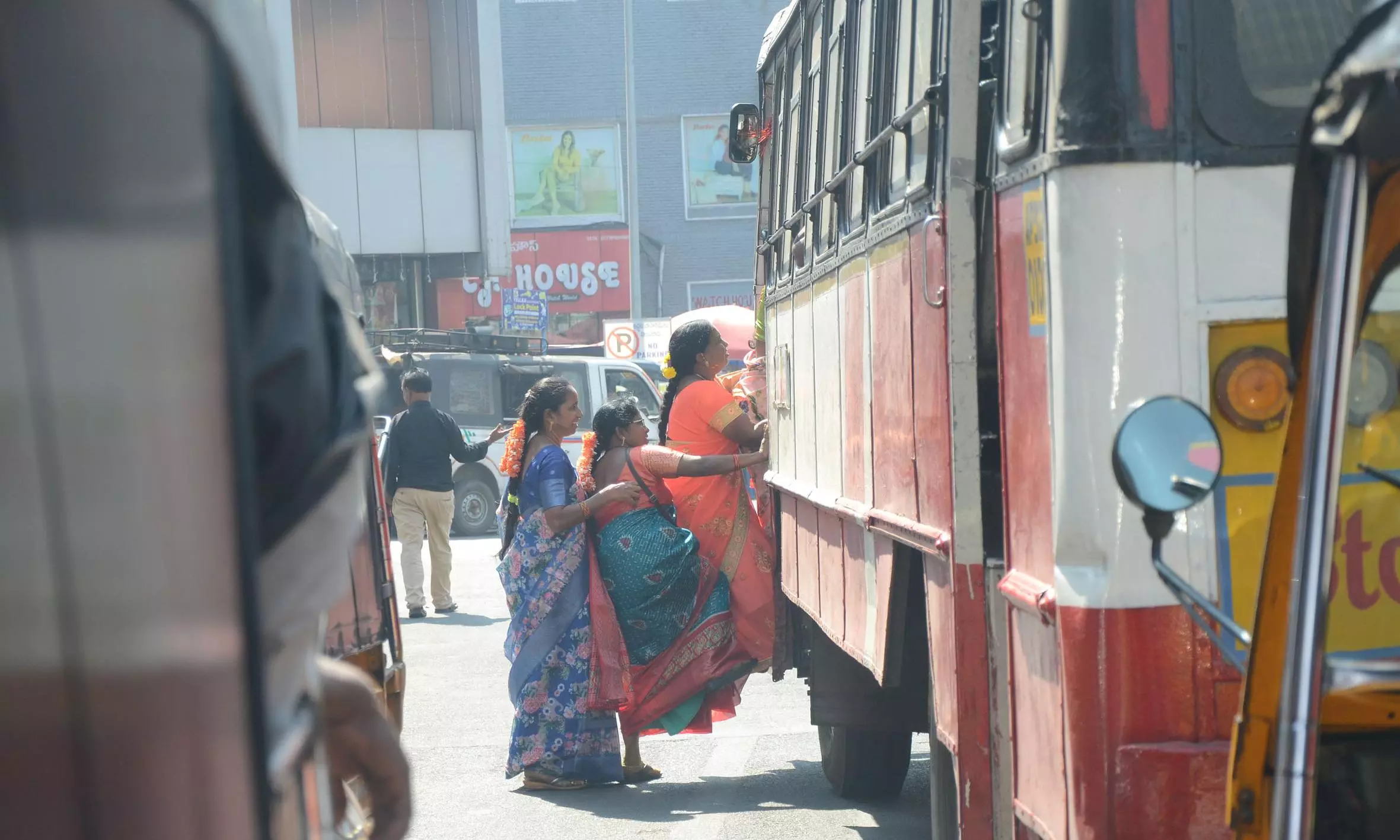
Visakhapatnam: The free RTC bus travel scheme for women in the state has turned into an essential support system for women farmers, students, workers and those seeking healthcare in North Andhra, especially in tribal and rural areas.
Since its launch in the Parvathipuram Manyam district on August 15, 2025, the scheme has served nearly 7.1 million women passengers as of November. Of the district’s 238 buses, 185 are earmarked for women to travel free. They are helping women farmers reach weekly markets without paying any transportation costs.
Manyam district public transport officer (PTO) P. Venkateswarlu told Deccan Chronicle that the scheme includes Palle Velugu, Ultra Palle Velugu and Express services, whose 63 per cent of passengers are women. Most of them are tribal farmers relying on public transport to support their livelihoods. Venkateswarlu noted that disputes among women passengers are considerably less common in tribal regions than in urban areas, where competition for seats is more intense.
In Alluri Sitarama Raju district, 41 buses operate on 15 routes under the same scheme. District PTO P. Srinivasa Rao noted that women farmers use this service to mainly transport their produce to markets. Students taking advantage of this scheme are lesser. Tribal women from Araku, Paderu and Chintapalli are among the most frequent users.
In Anakapalli district, the scheme has experienced a significant rise in ridership, with 6.018 million women passengers using the free bus services to date. The service currently operates on 51 routes, all of which are high-traffic corridors, including Anakapalli, Visakhapatnam, Payakaraopeta, Narsipatnam and Chodavaram. They indicate women commuters' growing dependence on free buses for both work and to meet household needs.
Vizianagaram district has similarly reported high utilisation by women. District public transport officer G. Varalakshmi confirmed that 137 out of 160 allocated buses are operational, covering 35 of the district’s 40 routes. Popular routes include Cheepurupalli, Anakapalli, Simhachalam, Parvathipuram, Visakhapatnam, Srikakulam, and S. Kota. Officials have noted an increase in temple tourism among women during festivals, such as Dasara, Diwali and Kartikamasam.
In Srikakulam, RTC regional manager A. Vijayakumar said women are primarily using the scheme to visit spiritual centres. In Visakhapatnam, the programme operates across six depots with 100 buses allocated to each. As the city is a major educational hub, a significant proportion of beneficiaries are women students commuting to colleges and coaching centres.
Woman conductor A. Seethalakshmi observed that competition for seats is notably higher in urban areas. Viral videos of women arguing with men over seats reflect this urgency. Women working in factories of Vizag and Anakapalli are keen to use the scheme, but often encounter difficulties when overcrowded buses skip stops, forcing many to take private transport to avoid delay in reaching for work.
With the rise in women’s mobility and economic participation, C. Sundarayya of the RTC Staff and Workers Federation highlighted the urgent need to increase the number of RTC buses to meet the growing demand from women commuters.
