Foreign Fruits ‘Take Root’ In AP’s Native Soil

21 July 2025 2:55 PM IST21 July 2025 2:55 PM IST
Noticing the shift in demand, farmers across AP are encouraged to explore cultivation of foreign fruits, viewing them as promising alternatives to traditional crops.
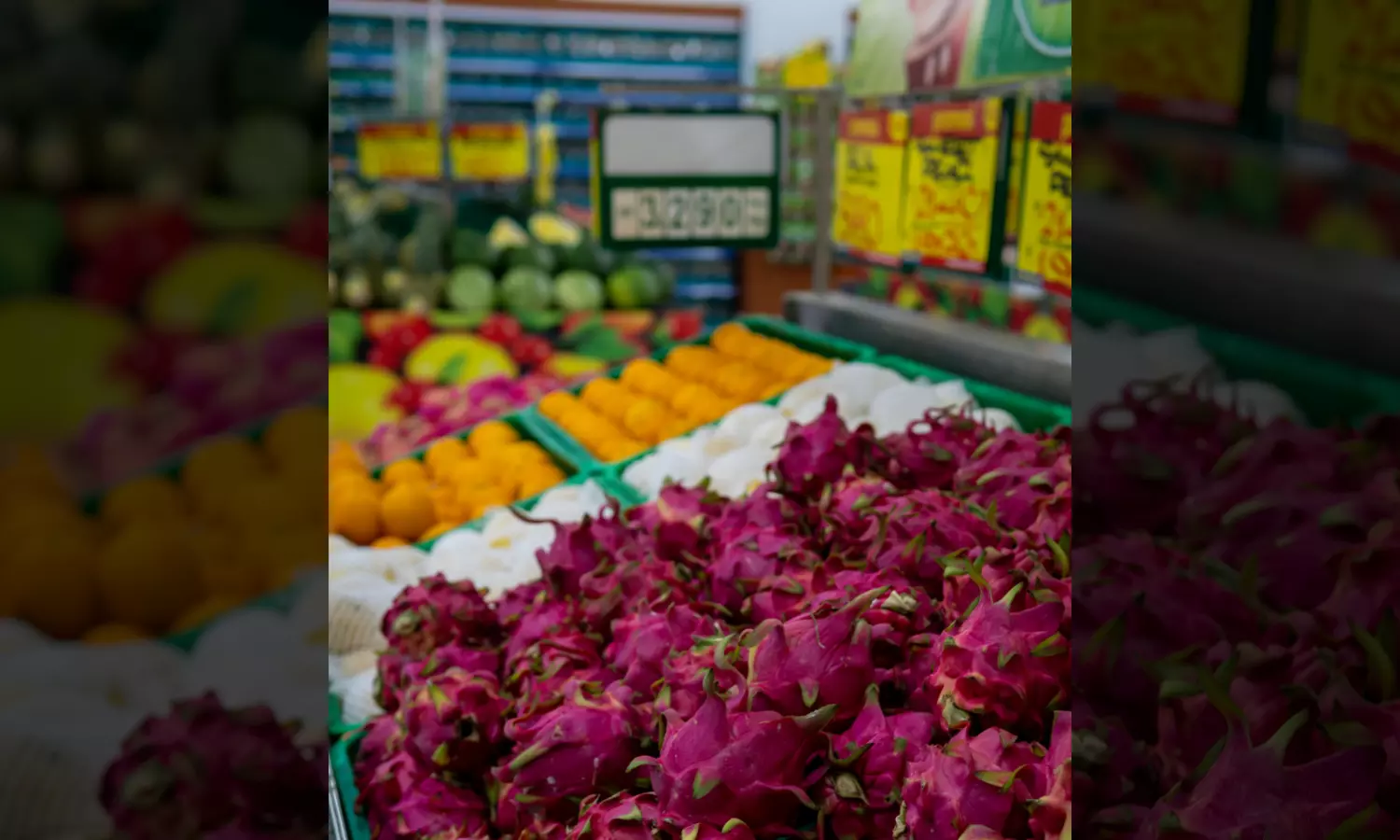
Representational Image/Pexeles
Visakhapatnam: Exotic fruits that dotted the shelves in upscale malls and supermarkets are now propping up prominently at roadside stalls across Andhra Pradesh.
With changing consumer preferences and a growing awareness about nutritional benefits, these are being sold like hot cakes. While these imported fruits are unaffordable to many, the local varieties attract more customers because of its price difference.
Noticing the shift in demand, farmers across AP are encouraged to explore cultivation of foreign fruits, viewing them as promising alternatives to traditional crops.
Dragon fruit, for instance. From Rayalaseema to Manyam, such plantations are proliferating, the advantages being the region’s warm climate and long harvesting cycles.
Meanwhile, strawberries, avocados, gac fruit, and macadamia nuts, which are traditionally grown in China and Southeast Asia, are finding experimental roots in Andhra soil. The visibility of these fruits on social media, often highlighted for their medicinal and antioxidant properties, has enhanced their market presence and consumer appeal.
In the ASR district, cultivation of strawberries and avocados is thriving alongside dragon fruit. Experts from the Dr YSR Horticultural University have confirmed that this region offers optimal conditions for both crops.
Gac fruit, native to Southeast Asia and valued for its high beta-carotene and lycopene content, is also being cultivated near Polavaram, marking a significant step in the diversification of the region’s horticultural landscape.
Farmers in Rayalaseema are also venturing into date palm cultivation, motivated by a belief that the area’s high temperatures may replicate desert-like conditions. Dates, commonly grown in arid regions of the Middle East, require minimal irrigation and promise high returns.
Experts are skeptical, however. Dr K Subramanyam, principal scientist at the horticultural research station in Mahanandi, says the region’s moist air hampers the plant's growth.
“There are five developmental stages in a date palm crop. But those grown in Rayalaseema often rot at the base without progressing beyond the first stage,” he explained to Deccan Chronicle.
In the combined Kurnool district, dragon fruit farming is already transforming the region’s agricultural practices. Farmers have dedicated more than 70 acres to this crop, with additional plantations extending across 30 acres in Nandyal and 12 acres in villages within the Allagadda constituency.
Given its ability to bear fruit for over two decades, dragon fruit is gaining favour among farmers.
Additionally, macadamia nuts, a niche crop on a global scale, are now being cultivated on a trial basis by growers in the Anantapur district. These ventures often involve sourcing saplings from abroad, demonstrating farmers’ willingness to embrace innovation and take risks.
As the perception of health-enhancing foreign fruits strengthens, the acreage devoted to their cultivation continues to expand in the state.
Experts urge caution, though, emphasizing the need for thorough agronomic research and studies on soil-climate compatibility to ensure sustainable adoption. Dr Subramanyam stresses, “There is a need for extensive research to fully understand these crops.”
( Source : Deccan Chronicle )

Next Story