Fire Dept To Audit Fire Safety In Vizag Buildings

Regional fire officer S. Niranjan Reddy said the department is equipped with AP’s tallest crane, capable of reaching 90 metres, and has been conducting regular mock drills in about 50 high-rise buildings in the city.
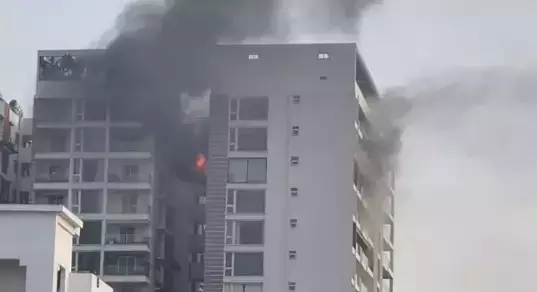
Visakhapatnam: The district fire services department will undertake a comprehensive fire-safety audit across Visakhapatnam following two fire incidents—one at RK Beach and another near Bheemili—reported on Wednesday.
District fire officer S. Renukaiah said the initiative would begin with awareness programmes rather than issuing notices. “We will first train residents on handling basic firefighting equipment and guide them on applying for No Objection Certificates,” he said.
Around 300 buildings above 15 metres will be inspected in the first phase, followed by commercial establishments, schools and hospitals.
During an inspection at the RK Beach building, commissioner of police Dr Sankhabrata Bagchi found expired firefighting equipment and residents unfamiliar with operating basic systems.
Regional fire officer S. Niranjan Reddy said the department is equipped with AP’s tallest crane, capable of reaching 90 metres, and has been conducting regular mock drills in about 50 high-rise buildings in the city.
The recent spate of fires in apartments, hospitals and commercial complexes has renewed concerns over safety compliance, said CREDAI Vizag chapter president E. Ashok Kumar. He noted that several affected buildings held valid fire NOCs, raising questions over maintenance and follow-up inspections.
While the NOC is issued only after verifying hydrants, pumps, alarms, staircases, fire lifts and water storage, experts say ageing wiring, flammable interiors and blocked escape routes continue to pose major risks. One consultant warned that relying solely on an NOC without periodic testing “creates a false sense of security.”
Ashok Kumar said the latest incidents underscore the need for continuous preparedness. He urged builders, associations and residents to conduct internal audits, hold regular drills and strengthen safety practices at every stage.
