Endangered Cactus Blooms at RCD Biodiversity Park in Vizag

These cacti, commonly known as star cactus or sand dollar cactus, are native to south Texas and northern Mexico. Their survival is a poignant reminder of the delicate balance our planet's biodiversity is in, reminding us of our responsibility to protect it.
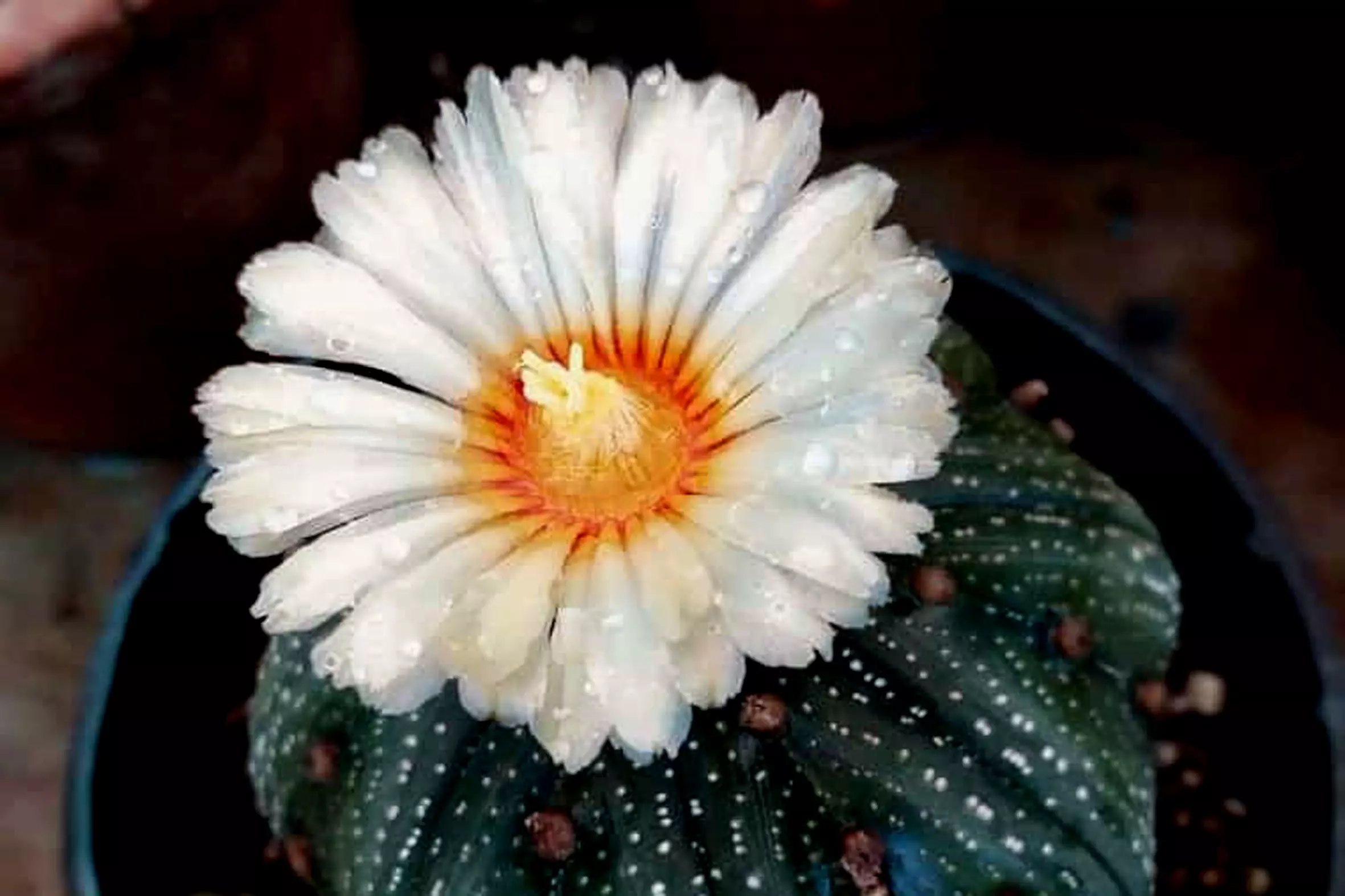
Visakhapatnam: Residents of Visakhapatnam are being treated to a rare sight of an endangered Astrophytum asterias in full bloom at the Rani Chandramani Devi (RCD) Government Hospital Biodiversity Park in Pedda Waltair.
These cacti, commonly known as star cactus or sand dollar cactus, are native to south Texas and northern Mexico. Their survival is a poignant reminder of the delicate balance our planet's biodiversity is in, reminding us of our responsibility to protect it.
Apart from the star cactus, there are also other cacti, such as Astrophytum capricornae, Astrophytum myriostigma and Astrophytum ornatum at the RCD Biodiversity Park. Visitors have a chance of witnessing these extraordinary plants, while nurturing a sense of commitment to conserve them.
Star cactus is facing numerous challenges that threaten its very existence. Their illegal collection and habitat loss are posing serious risks. This plant has been classified as endangered by the United States Fish and Wildlife Service. It is listed as vulnerable on the Red List of Threatened Species of the International Union for Conservation of Nature (IUCN). The plant's survival is safeguarded under Appendix I of the Convention on International Trade in Endangered Species of Wild Fauna and Flora (CITES), which prohibits international trade in specimens collected from the wild.
Compassionate conservationists are tirelessly working on preserving the habitat of star cactus, propagating and preserving the species, so that future generations can appreciate their beauty.
M. Mangathayi, co-founder and academic coordinator of the Dolphin Nature Conservation Society and RCD Biodiversity Park, a passionate advocate of Astrophytum asterias, has brought this special cactus to Visakhapatnam from Chandigarh.
She says this remarkable plant requires a delicate potting mix of perlite, pumice stone, and sand and pebbles, with minimal organic manure. It must be watered only once a week during summer. The pot should drain properly to prevent waterlogging.
Visitors at the RCD Biodiversity Park are profoundly moved by the breath-taking flowers of the star cactus. They bloom with a stunning white and yellow mix, highlighted by red or orange centres gracefully emerging from the plant's crown.
A thoughtful 9th-grade student K. Shahiti, who visited the park, expressed her admiration: “The blooming of Astrophytum asterias is truly captivating. The vibrant flower beautifully contrasts with the cactus’s round, ribbed, green body; adorned with white speckled markings.”
With a warm smile, Mangathayi adds, "The flowers are funnel-shaped, soft to the touch and relatively large compared to the plant’s size, often reaching 5–6 cm in diameter. They fully open during the day, joyfully embracing the sunlight to showcase their stunning beauty."
